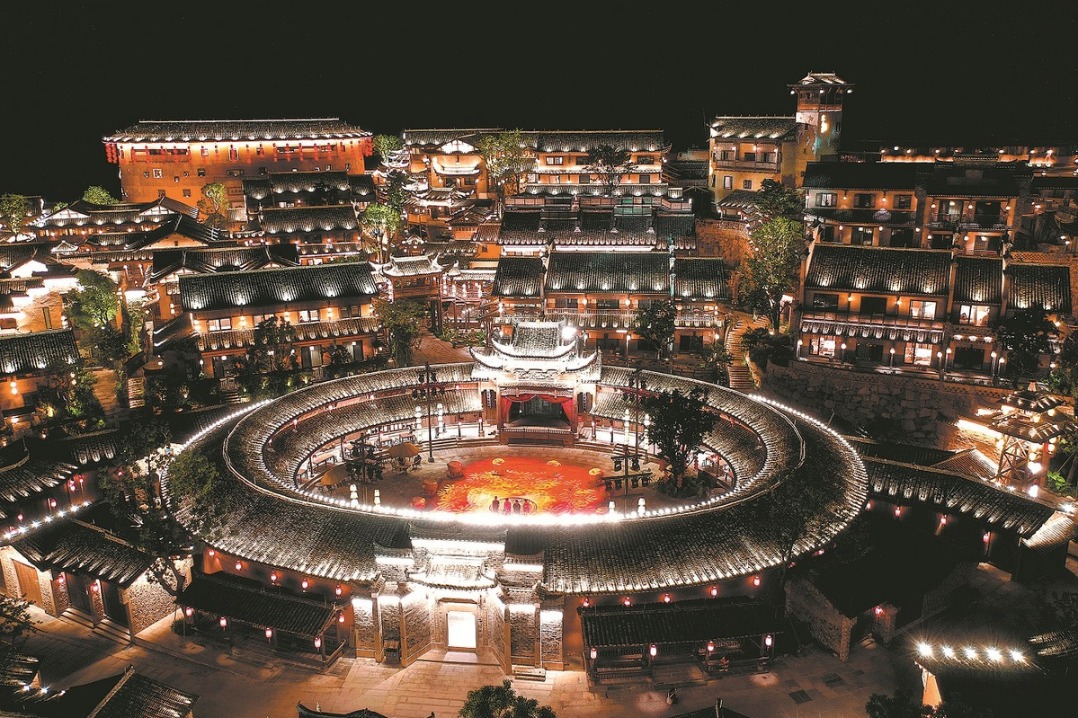
A breathtaking video showcasing mist-shrouded cliffs that went viral on international social media platforms has been correctly identified as featuring Wangxian Valley in China’s Jiangxi province, not Japanese locations as originally mislabeled. The viral clip, which amassed over 1.3 million likes on TikTok, had been erroneously tagged as depicting scenery from Tokyo and Hokkaido, Japan.
Operators of the Jiangxi tourist attraction confirmed the video’s actual origin after noticing the significant international attention it generated. Xiong Hui, a representative of Wangxian Valley, expressed surprise at the unexpected global exposure. “We observed substantial interest emerging on overseas social platforms Wednesday morning,” Xiong stated. “Wangxian Valley is unequivocally situated in Shangrao, Jiangxi. Its distinctive deep gorges and dynamic mist create an immediately recognizable landscape. We’re delighted that viewers appreciated the footage and extend an invitation for international visitors to experience Jiangxi’s authentic mountainous splendor firsthand.”
The site represents a remarkable transformation story, having been converted from a discontinued mining area into a comprehensive cultural resort destination that harmoniously blends natural scenery with folk traditions and performance activities. Official statistics indicate the area welcomed 3.1 million visitors in 2024, including over 150,000 international tourists, demonstrating its expanding global appeal.
The misidentification prompted diplomatic clarification from Yu Jing, spokeswoman for the Chinese embassy in India, who utilized social media platform X to correct the record on December 8. “Chinese landscapes are being mislabeled as ‘#Tokyo’ and ‘#Hokkaido’ in this viral video that’s already hit 1.3M likes,” Yu wrote. “In reality, this is Wangxian Valley in Jiangxi province, China.” Her post attracted numerous engaged responses, with one user noting the importance of proper geographical attribution while acknowledging that all countries possess beautiful landscapes.
This incident marks neither an isolated case nor a novel phenomenon. Earlier this year, footage purportedly demonstrating “Japanese subway discipline” was subsequently identified as having been filmed at Beijing’s Xi’erqi station—a similar misattribution that had previously circulated in 2020. Commentary from China.com suggests these recurrent misidentifications reflect persistent perceptual filters within Western media and popular culture, which have historically portrayed East Asia through narrow, one-dimensional frameworks. The analysis contends that China’s rapidly evolving realities—from futuristic urban skylines to scenic sites like Wangxian Valley that merge traditional aesthetics with contemporary tourism design—often transcend these outdated conceptual boundaries, resulting in frequent misinterpretations and misplaced assumptions.