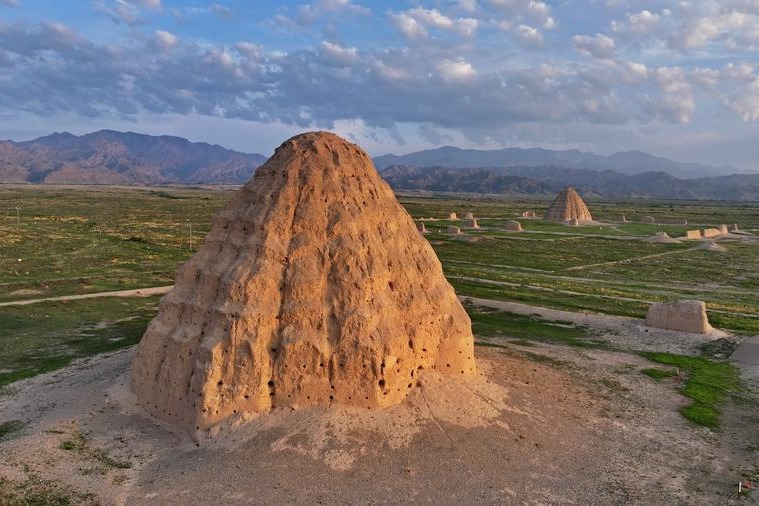
China is implementing a comprehensive strategy to safeguard its extensive cultural legacy, combining legislative reinforcement, technological innovation, and international partnerships to preserve its 5,000-year civilization for future generations.
Between 2021 and 2025, China successfully secured UNESCO World Heritage status for four significant sites: the Beijing Central Axis, Jingmai Mountain’s Ancient Tea Forests, the Xixia Imperial Tombs, and the historic maritime trade hub of Quanzhou. These additions bring China’s total World Heritage count to 60, positioning the nation second globally, trailing only Italy’s 61 recognized sites.
The National Cultural Heritage Administration (NCHA) reveals several promising candidates in the nomination pipeline, including Jingdezhen’s porcelain heritage, Sichuan’s Sanxingdui and Jinsha archaeological sites, Yangtze River waterfront towns, and the Maritime Silk Road corridor.
Underpinning this expansion is China’s evolving preservation philosophy, transitioning from reactive restoration toward an integrated approach combining emergency response with preventive conservation. The country has established a robust legal framework anchored by the Cultural Relics Protection Law, supplemented by six administrative regulations, ten ministerial directives, and over 400 local statutes.
Technological advancements are revolutionizing heritage monitoring and public engagement. Satellite remote sensing, drone surveillance, and artificial intelligence enable continuous assessment of site conditions, facilitating early risk detection. Digital archiving initiatives have created intricate 3D models of Longmen Grottoes sculptures and high-resolution virtual tours of Dunhuang’s Mogao Caves.
Public accessibility has dramatically improved through expanded cultural infrastructure. Over 7,000 museums nationwide—91% offering free admission—record approximately 1.5 billion annual visits. The network includes 65 national archaeological parks and 200+ thematic heritage routes connecting urban and rural communities through shared historical resources.
Internationally, China has pioneered the Alliance for Cultural Heritage in Asia—the continent’s inaugural intergovernmental preservation body—and leads the ISO technical committee on heritage conservation standards. Chinese experts have conducted six restoration projects across four nations and initiated 49 joint archaeological programs involving 28 countries.
Additionally, repatriation efforts have successfully recovered 537 lost cultural artifacts across 35 separate batches over the past five years, with commitments to strengthen institutional mechanisms for further returns.