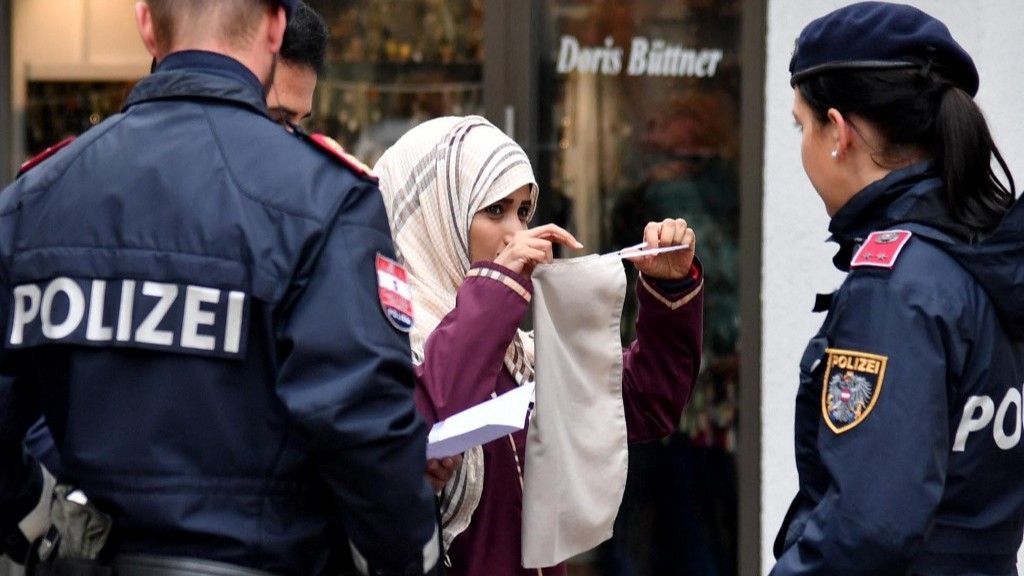
Austria’s government has implemented a new prohibition on headscarves for schoolchildren under the age of 14, triggering widespread accusations of institutional Islamophobia and religious discrimination. The controversial legislation, presented by authorities as a progressive measure for gender equality, applies to both public and private educational institutions across the nation.
This legislative move revives a previously rejected policy after the Constitutional Court overturned a similar 2018 ban targeting girls aged 6-10 in public schools, ruling it constituted unlawful discrimination against Muslim communities. The current mandate specifically prohibits ‘traditional Muslim coverings’ in educational settings, with potential penalties reaching €800 ($940) for violations through a graduated enforcement system involving school authorities.
Yannick Shetty, parliamentary leader of the liberal Neos party within the ruling coalition, defended the prohibition as protective rather than discriminatory. ‘This is not a measure against a religion but instead a measure to protect the freedom of girls in this country,’ Shetty stated, asserting that approximately 12,000 children would be affected and characterizing the headscarf as an instrument of premature sexualization.
However, the legislation has drawn severe criticism from human rights organizations and religious representatives. Amnesty International condemned the ban as Islamophobic and an explicit ‘expression of anti-Muslim racism,’ warning that it legitimizes prejudice against Muslim communities. The Islamic Religious Community in Austria (IGGOe), the officially recognized representative body for Austrian Muslims, announced plans to challenge the law’s constitutionality.
IGGOe president Umit Vural emphasized the community’s dual commitment to religious freedom and child welfare: ‘Children need protection, education and enlightenment, not symbolic politics. We reject coercion. We defend freedom. Both simultaneously, for every child.’ The development highlights ongoing tensions between secular policies and religious expression in European educational systems.