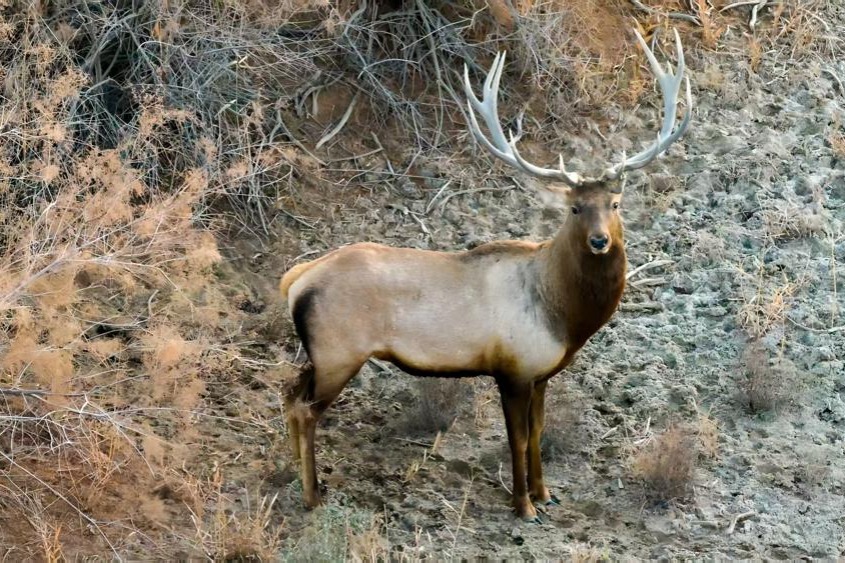
In a significant ecological breakthrough, advanced monitoring technology has documented a rare gathering of five Tarim red deer (Cervus elaphus yarkandensis) along the Tarim River banks in Alaer city, Xinjiang Uygur Autonomous Region. This marks the first confirmed sighting of this endangered species group using combined infrared camera and drone surveillance systems.
The Tarim red deer represents a remarkable desert-adapted subspecies endemic to Xinjiang, distinguished as the world’s exclusive population of red deer capable of surviving in arid environments. These resilient creatures demonstrate extraordinary biological adaptations, enduring extreme temperatures, prolonged drought conditions, and highly saline-alkaline terrain. Their survival capabilities include consuming heavily mineralized water sources and maintaining a diverse dietary range, establishing them as critical indicator species for assessing overall ecosystem health within the Tarim River Basin.
Professor Wang Zhichao of Tarim University’s School of Life Sciences and Technology emphasized the sighting’s conservation significance, attributing this success to comprehensive ecological management initiatives throughout the river basin. The expansion of ecological barriers along the adjacent Taklimakan Desert has further contributed to creating favorable habitats for wildlife rehabilitation.
Current ecological surveys indicate the basin now supports 249 distinct wildlife species, with populations demonstrating sustained growth patterns. Among these, 50 species enjoy national protected status, reflecting China’s strengthened commitment to biodiversity conservation and habitat restoration efforts in ecologically sensitive regions.