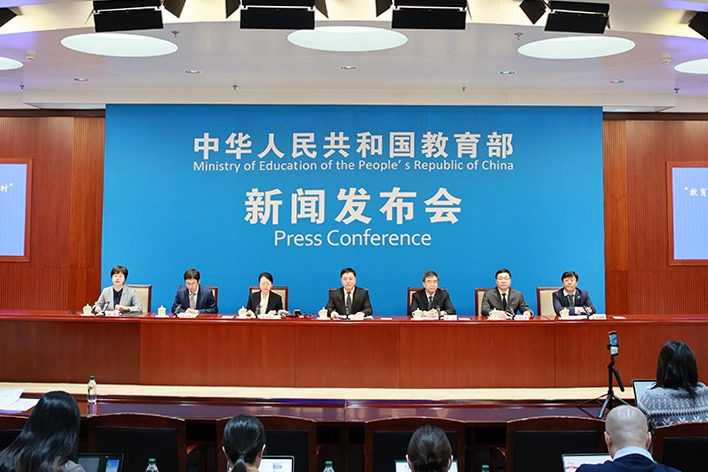
China’s groundbreaking Excellence Engineer Initiative has successfully enrolled approximately 26,000 master’s and doctoral students since its inception three years ago, marking a transformative shift in engineering education. Launched in 2022 through collaboration between nine government bodies including the Organization Department of the CPC Central Committee and the Ministry of Education, the program represents a comprehensive redesign of traditional training methodologies.
The program’s core innovation lies in its deep integration of academic institutions and industrial enterprises. Universities and corporations jointly manage student enrollment, define research objectives, supervise training processes, and share outcomes. This collaborative framework extends to integrated faculties, interconnected curricula, shared platforms, and aligned policies, creating a seamless ecosystem for engineering education.
To operationalize this initiative, the Ministry of Education partnered with the State-owned Assets Supervision and Administration Commission to establish 50 national Excellence Engineer institutes, involving eight major centrally administered State-owned enterprises and 32 leading universities. Authorities have additionally approved 41 new engineering master’s and doctoral programs with individually allocated recruitment quotas, featuring joint enrollment teams co-led by university presidents and corporate executives.
Wu Gang, Director of the Ministry of Education’s Department of Degree Management and Postgraduate Education, emphasized that developing world-class engineers is essential for integrating education, technology, and human resources development. The initiative addresses urgent needs for modern industrial system construction and represents a strategic move to enhance national competitiveness, particularly during China’s upcoming 15th Five-Year Plan period (2026-30).
A distinctive feature requires mandatory enterprise practice—minimum one year for master’s students and two years for doctoral candidates—ensuring students tackle real-world problems with actual industrial resources. The curriculum has been fundamentally reshaped with enterprises contributing over 10,000 industry challenges as primary research topics. More than 13,000 enterprise experts, including 2,000 chief engineers, serve as industry mentors, while hundreds of university professors have assumed roles within enterprises.
In alignment with China’s Degree Law, solving significant engineering problems has become the primary criterion for degree conferment, moving away from purely academic metrics. Already, over 60 students have earned degrees based on practical achievements including product designs and major equipment innovations.
The inaugural cohort of 2,000 engineering master’s graduates has generated more than 2,500 innovation results, with over 81% choosing to remain with key enterprises in their field. Many received direct employment offers, waived probation periods, and seniority recognition.
Tsinghua University Vice-President Wu Huaqiang cited the example of student Lu Yang, whose research on superthick coatings for heavy-duty gas turbines resolved a critical bottleneck, with results directly applied to a domestically developed engine. Wang Mingfeng of the Chinese Aeronautical Establishment noted that the model effectively closes the ‘last mile’ for graduates to become immediately productive professionals.