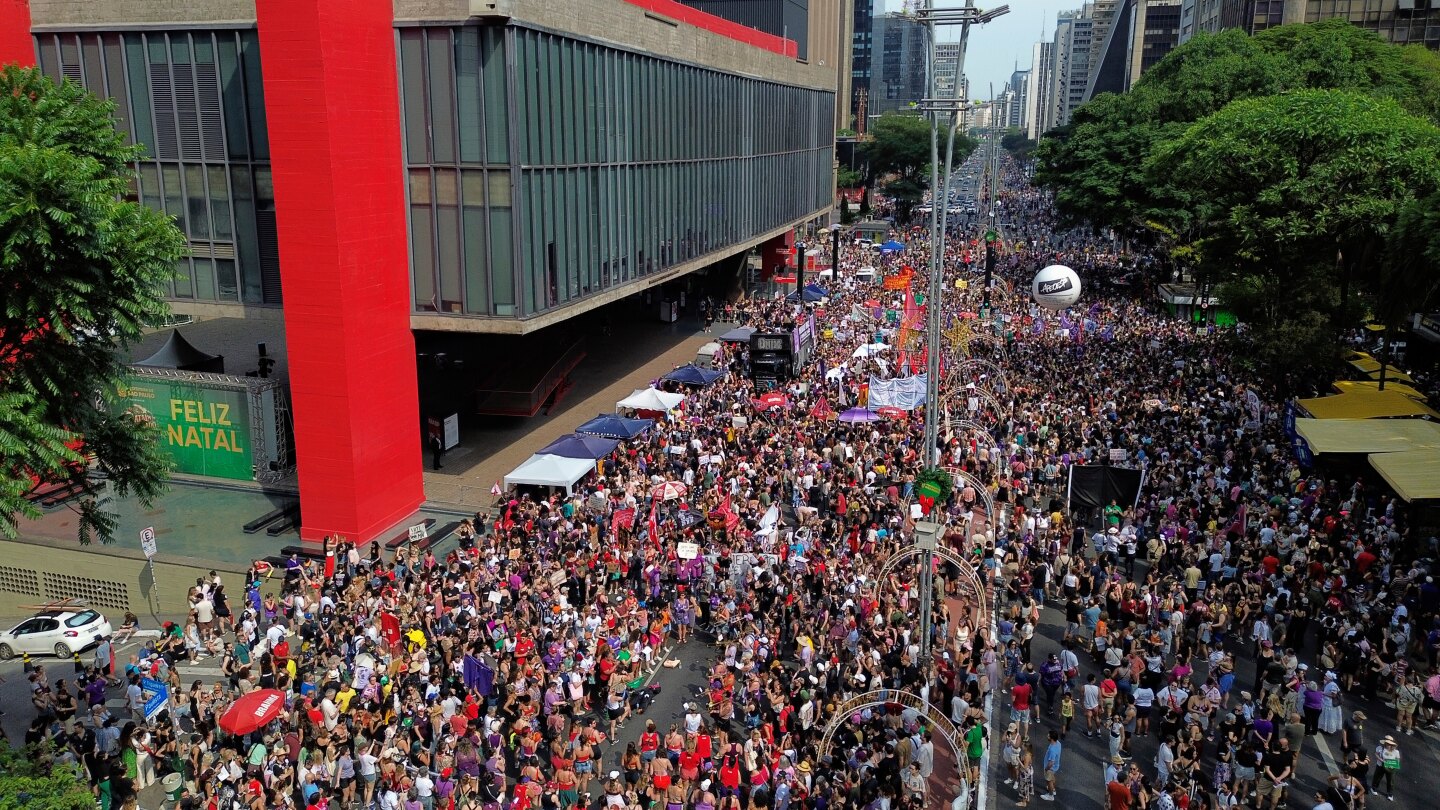
RIO DE JANEIRO — A massive wave of civil unrest swept across Brazil on Sunday as tens of thousands of demonstrators flooded urban centers to denounce an escalating epidemic of gender-based violence. The nationwide mobilization, marked by unprecedented participation, represents a watershed moment in Brazil’s feminist movement following a series of brutal femicides that have shocked the nation.
In a powerful display of solidarity, women across generations alongside male allies occupied the iconic boardwalks of Copacabana and São Paulo’s Paulista Avenue, demanding immediate legislative action against femicide, sexual violence, and systemic misogyny. The protests gained momentum from recent high-profile cases that have exposed the alarming normalization of gender-based brutality.
Among the victims remembered was Alline de Souza Pedrotti’s sister, an educational administrator murdered on November 28th by a male colleague who reportedly resented female authority. “I’m devastated but fighting through the pain,” Pedrotti stated from the Copacabana demonstration. “I demand legal reforms and preventive protocols to stop these tragedies.”
The movement gained further urgency from two additional atrocities that captured national attention. Taynara Souza Santos, 31, suffered traumatic amputations after being deliberately run over and dragged nearly a kilometer by her former partner in São Paulo. English instructor Catarina Kasten was sexually assaulted and strangled near a Florianopolis beach trail on November 21st while en route to a swimming lesson.
These cases exemplify a disturbing national trend documented by the Brazilian Forum on Public Safety. Their 2025 report reveals over one-third of Brazilian women endured gender violence within the past year—the highest rate since monitoring began in 2017. Last year recorded 1,492 femicides, the most since the 2015 legislation that recognized femicide as a distinct crime category.
Juliana Martins, institutional relations manager at the Brazilian Forum, noted the dual crisis of increasing frequency and intensifying brutality: “Social transformations toward gender equality have triggered violent backlash aimed at reaffirming female subordination.”
Protest symbolism included black crosses representing victims and green scarves symbolizing reproductive rights. Evelyn Lucy da Luz, a 44-year-old educator who survived an attempted femicide decade ago, declared: “I almost died, but I didn’t—and now I fight.”
Historical context emerged from 79-year-old Lizete de Paula, who connected rising violence to the erosion of protective policies during former President Bolsonaro’s administration. “Women are entering new spaces, and macho men can’t tolerate this,” she observed.
The demonstrations notably included male participants like João Pedro Cordão, father of three daughters, who emphasized: “Our duty is to challenge misogyny daily—not just at protests—if we hope to reduce this violence.”