A disturbing trend is emerging across European migration routes as growing numbers of women undertake perilous journeys alone, facing unprecedented risks of sexual violence and systemic challenges in obtaining asylum protection.
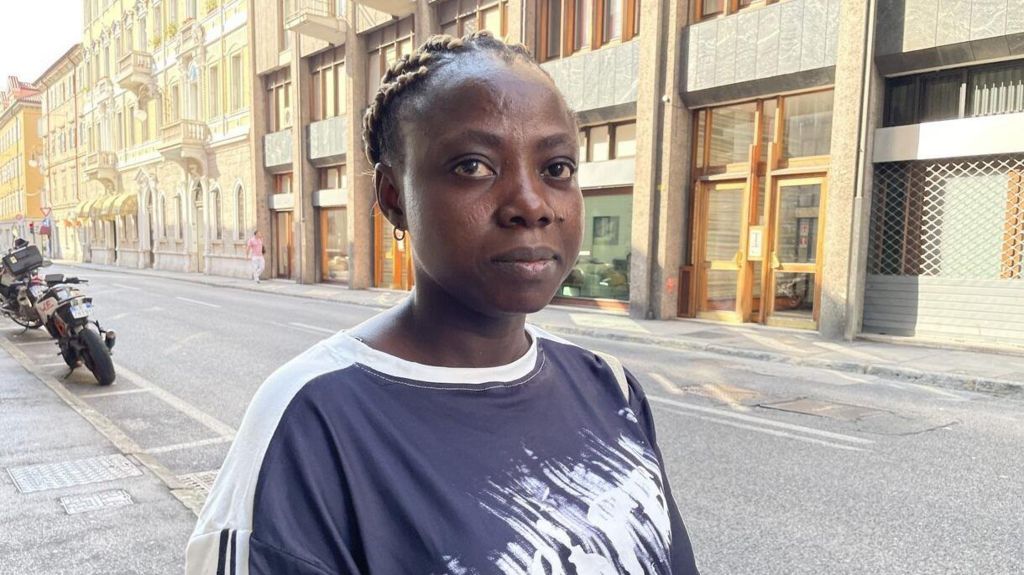
Esther’s harrowing experience exemplifies this crisis. Having fled an abusive foster home in Lagos in 2016, she was lured by promises of European opportunity only to be forced into sexual slavery in Libya. ‘She locked me in a room and brought in a man. He had sex with me, with force. I was still a virgin,’ Esther recounts. Her traumatic journey included desert crossings, Mediterranean sea rescue, and four years of navigating complex asylum systems across multiple countries.
Statistical evidence confirms this alarming pattern. The International Rescue Committee’s 2024 report documented a 250% annual increase in single adult women arriving in Italy via the Balkan route, while family migrations grew by 52%. Despite men comprising approximately 70% of irregular migrants according to the European Agency for Asylum, women face distinctly dangerous circumstances.
‘Their experiences are different and often riskier,’ explains Ugochi Daniels of the International Organization for Migration (IOM). ‘Even women travelling in groups frequently lack consistent protection, exposing them to abuse by smugglers, traffickers, or other migrants.’
The IOM recorded 3,419 migrant deaths or disappearances in Europe last year—the deadliest year on record. For women, the journey carries additional threats of sexual exploitation. Many women consciously prepare for the likelihood of rape, packing condoms or obtaining contraceptive devices beforehand.
Hermine Gbedo of anti-trafficking network Stella Polare reveals the grim economic reality: ‘All migrants must pay smugglers, but women are often expected to offer sex as part of the payment.’
Legal frameworks theoretically protect gender-based violence survivors. The Council of Europe’s Istanbul Convention and a landmark EU court ruling last year recognize gender-based violence—including psychological, physical, and sexual violence plus FGM—as legitimate grounds for asylum. However, implementation remains inconsistent.
Marianne Nguena Kana of the End FGM European Network identifies critical shortcomings: ‘Many asylum officials are inadequately trained men who may dismiss cases with flawed reasoning—such as assuming previously mutilated women face no further risk.’
Proof remains another significant hurdle. Carenza Arnold of Women for Refugee Women notes: ‘Sexual violence leaves no visible scars like physical torture, and cultural taboos complicate disclosure to strangers in rushed immigration procedures.’
Political responses are increasingly restrictionist. Italian MP Nicola Procaccini asserts: ‘We cannot sustain mass migration. We can guarantee safety only to those genuinely in danger.’ Policy Exchange’s Rakib Ehsan advocates ‘controlled compassion’ that prioritizes ‘women in conflict zones where rape is a weapon of war.’
Yet many women from ‘safe’ countries like Kosovo report unbearable gender-based persecution. Nina, granted asylum in Italy after sexual exploitation by partners, explains: ‘People think everything is well in Kosovo, but that’s not true. Things are terrible for women.’ An OSCE report indicated 54% of Kosovar women experienced intimate partner violence.
For survivors like Esther who finally obtained refugee status in 2019 after three attempts, the psychological scars endure. Reflecting on her decade-long journey, she questions: ‘I don’t even know the reason why I came to this place.’ As European nations tighten asylum regulations, the protection gap for vulnerable women migrants continues to widen.