In the evolving landscape of luxury retail, temporary installations have transcended their marketing origins to become the industry’s most potent narrative vehicle. These ephemeral brand experiences represent a fundamental shift from traditional retail paradigms toward immersive, photographable worlds that prioritize emotional engagement over mere commerce.
The phenomenon manifested dramatically when a luminous lemon-yellow cube materialized overnight in Seoul’s Seongsu-dong district. This minimalist structure, devoid of branding yet immediately recognizable as Loewe’s artistic statement, functioned as a walk-in seasonal universe that existed merely days yet became the city’s most photographed destination. This exemplifies luxury’s new reality: the most influential retail moments now emerge from exquisitely crafted temporary spaces designed to imprint deeply before vanishing completely.
Leading maisons have mastered this art of impermanence with remarkable creativity. Dior’s desert installation in Qatar featured earth-toned structures emerging from the sands like a mirage, blurring boundaries between fashion, art, and environment. The experience leveraged atmospheric elements—shifting light, desert winds—to create something feeling simultaneously tangible and dreamlike.
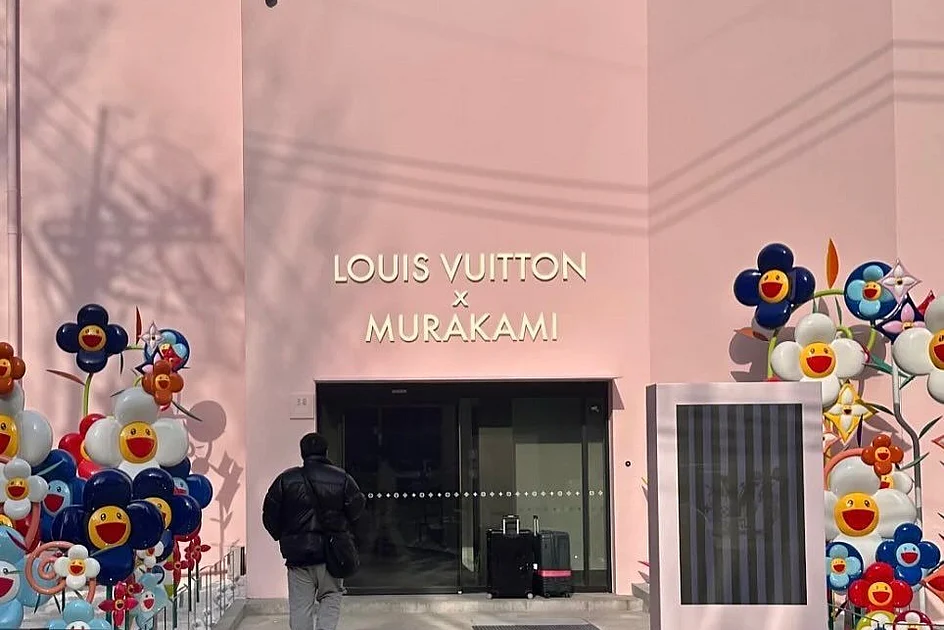
Jacquemus approaches pop-ups as cinematic whimsy, exemplified by Paris’s walk-in Bambino bag sculpture and Mediterranean beach snack stands that function as three-dimensional mood boards. Conversely, Louis Vuitton creates monumental architectural statements like Tokyo’s mirrored sphere that reflected the skyline in distorted panoramas, or Miami’s beachfront walk-in trunk that became a temporary landmark.
This strategic evolution responds to profound changes in luxury psychology. Contemporary consumers, particularly younger demographics, seek sensation, novelty, and cultural participation beyond ownership. Pop-ups offer emotional currency through limited-time access, creating scarcity through temporality rather than product availability. The ‘I was there’ badge of honor generates deeper brand connection than traditional purchasing.
While social media amplifies their impact, the core appeal lies in experiences that cannot be replicated. In an oversaturated content landscape, truly unique, non-repeatable experiences become extraordinary. These temporary installations allow brands to express daring creativity, humor, and poetry impossible within permanent retail constraints. When they disappear, they leave behind what no flagship can replicate: enduring memory and cultural resonance.