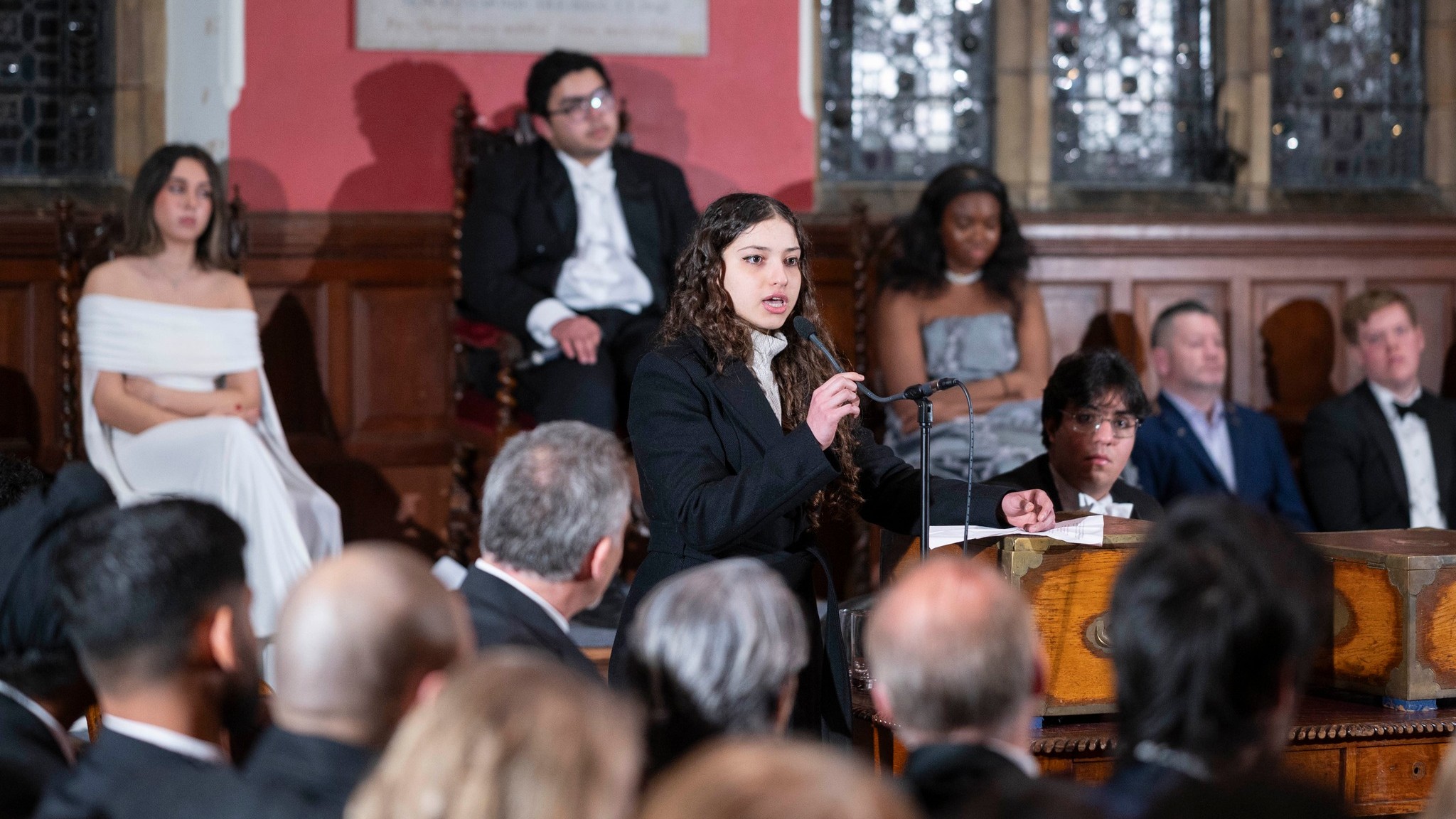
In a groundbreaking electoral victory, Arwa Hanin Elrayess has become the first Palestinian, first Arab woman, and first Algerian to assume the presidency of the prestigious Oxford Union. However, her triumph is shadowed by revelations of systematic targeting of pro-Palestinian candidates within the influential debating society.
Elrayess, a second-year Philosophy, Politics, and Economics student from Gaza, disclosed to Middle East Eye that her campaign faced unprecedented opposition characterized by smear tactics and institutional pushback. She reported being labeled an extremist, accused of supporting terrorist organizations, and subjected to baseless counter-terrorism investigations that discouraged potential allies from joining her campaign.
This pattern of discrimination mirrors the experience of her predecessor, Ebrahim Osman-Mowafy, the Union’s first Arab president, who was temporarily removed from office after organizing a debate on Israeli apartheid and genocide allegations. Osman-Mowafy was only reinstated following significant student mobilization and intervention from former presidents who acknowledged the disproportionate targeting of individuals from ‘non-traditional’ backgrounds.
Elrayess’s election occurs against a backdrop of escalating suppression of pro-Palestinian activism across UK universities. Since October 2023, student groups have faced increased surveillance, disciplinary actions, and police intervention for expressing solidarity with Gaza. Muslim and Arab students report being disproportionately targeted through Prevent strategy referrals and accusations of extremism.
Despite these challenges, Elrayess views her presidency as a watershed moment for representation within an institution that has produced numerous members of Britain’s ruling class. She emphasizes the critical importance of ensuring Palestinian voices are included in conversations about self-determination and autonomy, particularly when these discussions have historically occurred without their participation.
Elrayess remains committed to transforming the institution from within, arguing that withdrawal would concede vital spaces needed for meaningful change. Her leadership represents not just a victory for Palestinian representation but for all marginalized causes within influential institutions.
The Oxford Union did not respond to requests for comment regarding these allegations.