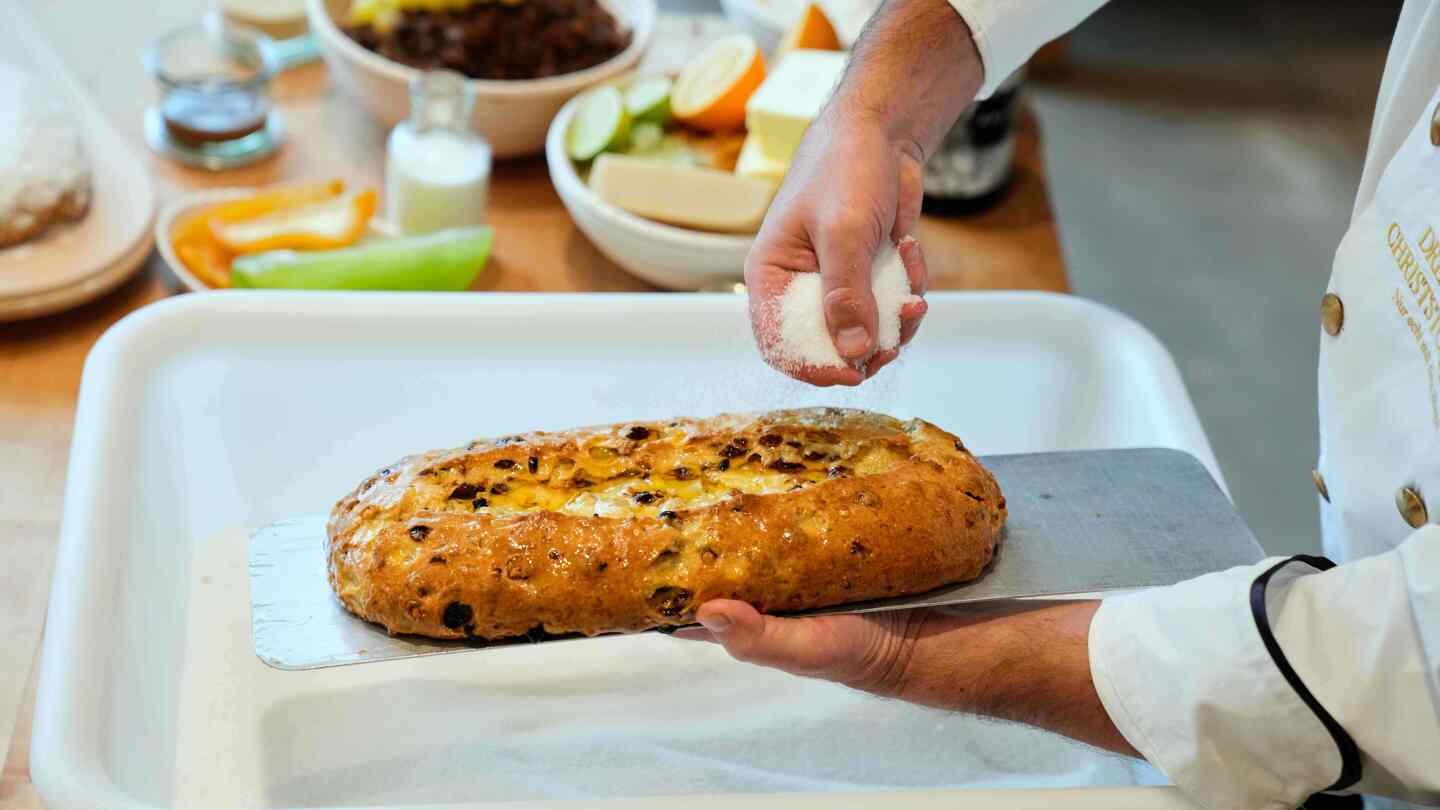
DRESDEN, Germany — In the historic eastern German city of Dresden, master pastry chef Tino Gierig embodies the living tradition of Christstollen, a seasonal delicacy that has defined Christmas celebrations for centuries. With passionate enthusiasm, the 55-year-old artisan describes the rich pastry filled with raisins and dried fruits as tasting “like Christmas, like family, like tradition, like hominess, peace, serenity.”
The Dresdner Backhaus bakery where Gierig works maintains meticulous standards for creating what locals consider not merely bread or cake, but a specialized pastry exclusively crafted for the Advent season. The preparation process involves careful kneading of buttery yeast dough, folding in golden raisins, and finishing with precise butter brushing and sugar dusting.
This culinary tradition operates under stringent protection from the Dresden Stollen Protection Association, which awards a golden quality seal to bakeries meeting specific geographical and compositional requirements. Authentic Dresden stollen must contain at least 50% butter relative to flour content, generous quantities of golden raisins, candied citrus peel, and almonds, while excluding margarine, artificial preservatives, or flavors.
The product enjoys European Union protected status alongside other regional specialties like Lübecker Marzipan and Schwarzwälder Schinken. While maintaining core ingredients, generational bakeries incorporate their distinctive spice blends featuring vanilla, cardamom, and sometimes tonka beans, cinnamon, nutmeg, or cloves.
Historical records indicate stollen first appeared in 1474 as a fasting pastry made simply of flour, yeast, and water. The transformation into today’s rich delicacy began after 1491 when Pope Innocent VIII granted Saxony’s Elector Ernest permission to use butter during Advent. The pastry maintained its cherished status even during East Germany’s Communist era, when exotic spices were scarce, and became a symbolic gift connecting families across divided Germany.
Modern production reaches impressive commercial scale with over 5 million loaves sold annually in 2024, approximately 20% exported primarily to Austria and Switzerland, with growing online sales to the United States. When stored in cool, dark, dry conditions, the pastry remains edible for several weeks, making it both a culinary treasure and practical Christmas gift.