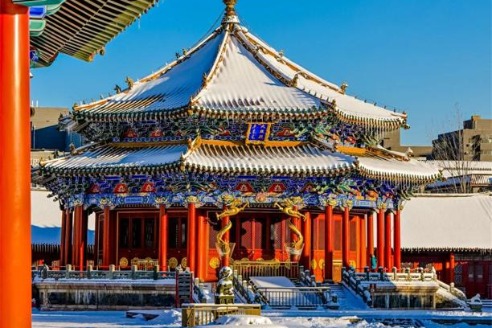
The historic Shenyang Imperial Palace, a UNESCO World Heritage Site located in northeastern China’s Liaoning province, experienced its inaugural winter snowfall on Thursday, creating a breathtaking visual spectacle that attracted photographers and visitors alike. This meteorological event occurred shortly after the arrival of the year’s 20th solar term in the traditional Chinese calendar, marking a significant seasonal transition.
The architectural masterpiece, which served as the royal residence during the early Qing Dynasty, underwent a remarkable transformation as a delicate layer of fresh snow blanketed its ancient structures. The striking contrast between the pristine white snow accumulation and the palace’s distinctive vermilion walls created a visually captivating scene that highlighted the site’s historical grandeur against the winter backdrop.
Photography enthusiasts and cultural admirers flocked to the palace grounds to capture this ephemeral beauty, with the snow-enhanced landscape offering unique compositional opportunities. The precipitation event not only enhanced the palace’s aesthetic appeal but also demonstrated how natural elements can complement and elevate the appreciation of cultural heritage sites.
The timing of this first snowfall holds particular significance within the context of traditional Chinese seasonal observations, occurring during a period of astronomical importance in the lunar calendar. This synchronization of natural phenomena with cultural heritage provides a poignant reminder of China’s rich historical tapestry and the enduring beauty of its architectural treasures throughout seasonal changes.