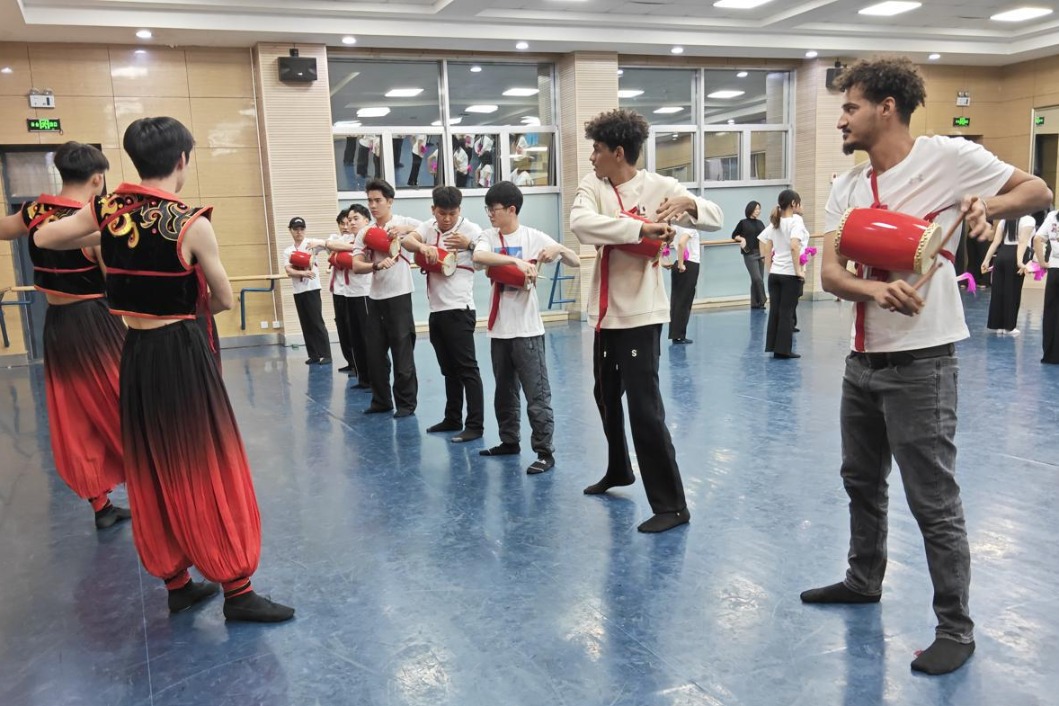
TAIYUAN – In an innovative cultural initiative, Shanxi University hosted an immersive folk dance workshop exclusively for its international student community this past Saturday. The event saw over twenty overseas scholars actively engaging with the rich tapestry of Shanxi’s intangible cultural heritage through hands-on dance instruction.
The workshop featured three distinct regional dance forms: the vigorous Yangko Dance from northern Shanxi, the elegant Small Flower Dance characteristic of central regions, and the rhythmically complex Flower Drum Dance from the province’s southern territories. Participants received professional guidance on intricate footwork, traditional gestures, rhythmic patterns, and the artistic application of cultural props unique to each performance style.
For numerous attendees, this represented their inaugural exposure to China’s provincial folk traditions. Pengkasit Jirapha, a 20-year-old Thai exchange student, expressed particular fascination with the dynamic movements and visual spectacle of the spinning fans employed in the Small Flower Dance. “The whirling fans create such mesmerizing patterns – I’m eager to share this extraordinary experience with my friends back home,” she remarked.
The drum-accompanied choreography presented a distinctive challenge, requiring dancers to maintain precise rhythm while executing complex movements. Pham Trong Tuan, a 26-year-old Vietnamese graduate student, found the coordination demands both challenging and enjoyable. “This workshop provided unparalleled access to authentic Chinese cultural traditions that few international visitors experience,” he noted.
According to Zhang Bowen, an instructor from the University’s School of Music, this event constitutes part of a broader strategy to integrate traditional Chinese arts into the institution’s international education curriculum. She emphasized that these dance forms not only possess profound local historical significance but remain vibrant components of contemporary community celebrations throughout Shanxi Province.
“These traditional dances serve as dynamic conduits for cross-cultural dialogue,” Zhang observed. “Through firsthand experience with these living traditions, we enable our international scholars to become cultural ambassadors who can authentically represent Chinese heritage to global audiences.”
The workshop represents growing efforts by Chinese educational institutions to combine cultural preservation with international exchange programs, creating meaningful intercultural connections through shared artistic experiences.