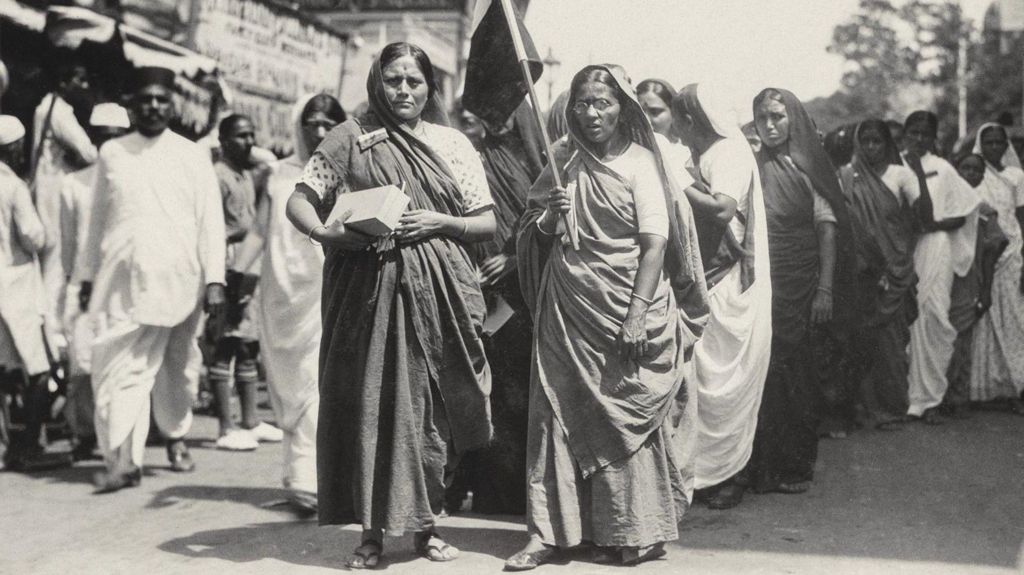
A remarkable photographic collection has emerged as transformative evidence documenting the previously underrecognized leadership of women in India’s historic civil disobedience movement of 1930-31. The Alkazi Foundation’s acquisition of the Nursey album—a previously obscure photographic record discovered at a London auction two decades ago—has fundamentally reshaped historical understanding of this critical anti-colonial struggle.
The collection captures unprecedented visual testimony of women commanding political activities during Mahatma Gandhi’s civil disobedience campaign, often relegating male participants to supportive roles. These images document female volunteers manufacturing contraband salt, leading boycott processions through Bombay’s markets, confronting British police forces, and orchestrating mass demonstrations. Particularly striking are images of Congress leader Lilavati Munshi directing male volunteers at government salt pans and standing defiantly before boycotted British establishments.
Historical significance extends beyond recognized figures like Munshi to thousands of anonymous women who joined the movement. The photographs reveal mothers bringing young daughters to protests, intergenerational transmission of political consciousness, and remarkable inversions of traditional gender dynamics. Middle-class men—many previously unfamiliar with domestic spaces—are shown conducting impromptu salt production classes, while women dominated public demonstrations carrying spindles symbolizing Gandhi’s homespun khadi movement.
Scholars from Duke University note the collection’s unique value in capturing spontaneous action rather than staged imagery. The photographs reveal violent confrontations, monsoon-soaked marches, and wounded volunteers being loaded into ambulances—scenes absent from conventional historical accounts. This visual record demonstrates how women seized nationalist activities through direct action: challenging police authority, drumming support for boycotts, addressing crowds, and courting arrest.
The rediscovery has prompted major scholarly reappraisal. As historian Sumathi Ramaswamy notes, while history associates civil disobedience with Gandhi, these images demonstrate how Bombay’s citizens fundamentally shaped the movement that subsequently amplified Gandhi’s global fame. The photographs now circulate publicly through the publication ‘Photographing Civil Disobedience’ and museum exhibitions titled ‘Disobedient Subjects’ at Mumbai’s CSMVS Museum and Duke University’s Center for Documentary Studies, offering belated recognition to women whose resolve remains palpable nearly a century later.