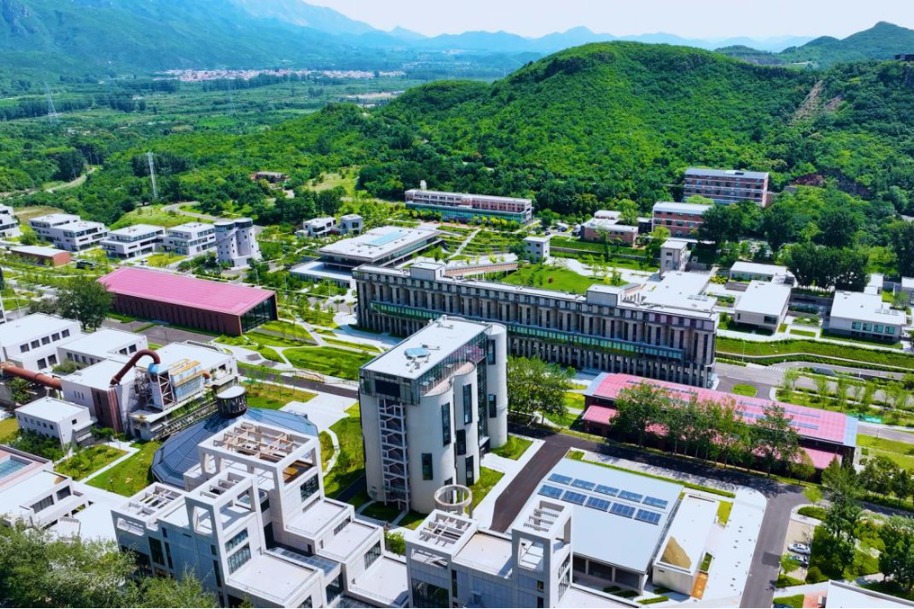
The Huairou district of Beijing has formally opened its extensive network of major scientific research facilities to international partners, marking a significant advancement in global scientific cooperation. District officials announced on Thursday that this strategic initiative aims to bolster Beijing’s standing as a central hub for international research collaboration.
According to Liang Shuang, District Head, 16 major scientific installations have been specifically designated for international partnership within a broader network totaling 37 research facilities. The majority of these facilities are already operational and conducting cutting-edge research across multiple disciplines including materials science, space exploration, earth sciences, and ecological studies.
Huairou has undergone a remarkable transformation in recent years, evolving from isolated scientific developments into an integrated cluster of research excellence. This evolution has established the district as a powerhouse for national strategic scientific innovation. A landmark achievement this year was the commissioning of a high-energy synchrotron radiation light source, positioning China at the forefront of this critical technological field globally.
The district’s innovative approach includes creating an “innovation matrix” that integrates national laboratories, specialized research institutions, leading technology corporations, and premier research universities. This collaborative ecosystem has already yielded substantial results, with 63 breakthroughs in key technologies and 430 significant scientific outcomes. Many of these achievements have received recognition through national and municipal science and technology awards, demonstrating the district’s growing influence in the global scientific community.