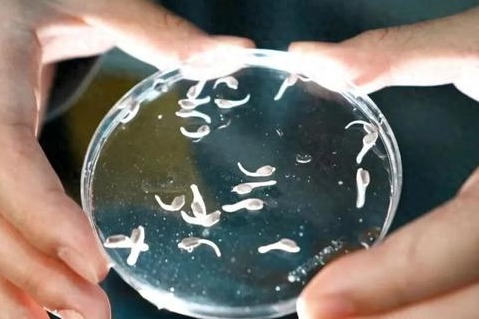
In a landmark achievement for wildlife conservation, Chinese scientists have successfully bred the third filial generation of Chinese sturgeon entirely through artificial propagation techniques. The breakthrough was announced on November 27, 2025, by the China Three Gorges Corporation (CTGC), representing a critical advancement in the preservation of this endangered species.
The historic breeding occurred at CTGC’s Yangtze River Rare Fish Conservation Center, where researchers utilized second-generation captive-bred sturgeon as parent fish. The selected specimens—a 13-year-old female and 14-year-old male—underwent meticulous preparation beginning early this year. This involved specialized nutritional enhancement and carefully controlled environmental simulations to replicate natural breeding conditions.
The actual artificial induction and fertilization procedures were conducted during November 6-7, coinciding with the species’ optimal reproductive window. The scientific team recorded an extraordinary fertilization rate exceeding 95 percent. Following a five-day incubation period, approximately 112,000 third-generation fry emerged, demonstrating the program’s remarkable success.
According to Jiang Wei, Deputy Director of CTGC’s Yangtze River Biodiversity Research Center, this achievement proves that second-generation sturgeon can reach full maturity and reproduce under controlled conditions. This milestone enables a significant transition where the more numerous second-generation population will replace the first generation as the primary breeding group, establishing a sustainable model for large-scale conservation.
The Chinese sturgeon, endemic to China and often described as a ‘living fossil,’ represents one of the world’s most ancient migratory fish species. Conservation efforts began decades ago, with the first generation successfully bred from wild parents in the 1980s, followed by the second generation in 2009. The new breakthrough paves the way for developing comprehensive ‘artificial-plus-natural’ protection systems that could ultimately support the restoration of wild sturgeon populations.