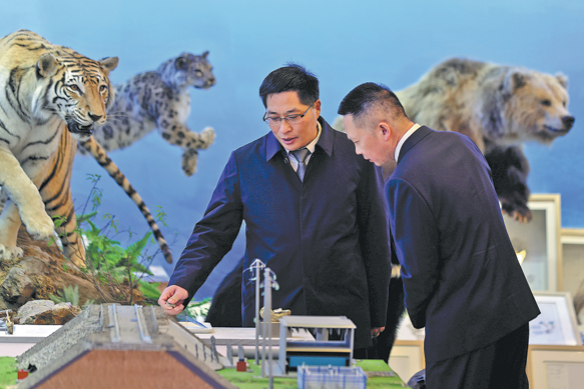
The second Qinghai-Tibet scientific expedition has significantly influenced the formulation of ecological protection legislation for the Qinghai-Tibet Plateau, as highlighted by academicians during a recent news conference in Lhasa, the capital of the Xizang autonomous region. The expedition’s top 10 application achievements, unveiled at the event, span ecological conservation, disaster prevention, resource exploration, carbon accounting, traffic safety, and border area development. Yao Tandong, an academician with the Chinese Academy of Sciences, emphasized that the expedition’s core legislative recommendations—such as enhancing glacier change monitoring, protecting ecological barriers, and promoting integrated environmental management—were integrated into the new legislation. This led to the adoption of the ‘Measures for the Implementation of the Qinghai-Tibet Plateau Ecological Protection Law’ by the 15th meeting of the Standing Committee of the 12th People’s Congress of Xizang in March, which took effect on August 1. Beyond legislative impact, the expedition has deepened scientific understanding of the plateau’s unique ecological challenges, particularly concerning the Asian Water Tower, a vital water source for over 2 billion people. Research indicates a significant increase in water supply capacity, with runoff from major basins projected to rise by 49% by the century’s end. However, the region faces growing threats from cryosphere disasters, such as glacier avalanches and glacial lake outburst floods, which have increased in frequency and severity. To address these challenges, the expedition team has established a comprehensive Earth system multisphere observation platform and developed an intelligent monitoring and early warning system for cryosphere-related disasters. These innovations aim to provide precise solutions for disaster prevention and mitigation, safeguarding major projects and local communities.