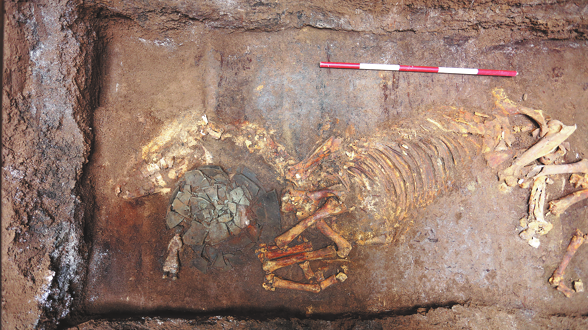
A groundbreaking DNA analysis of horse bones unearthed from the mausoleum of Emperor Wen of the Western Han Dynasty (206 BC-AD 24) has revealed significant evidence of cultural and trade exchanges between the dynasty and Central Asia over two millennia ago. The study, published in the journal Archaeology and Cultural Relics in September, identified two distinct mitochondrial haplogroups in the horses buried alongside the emperor. One belonged to haplogroup G, commonly found in Central Asia, while the other was of haplogroup Q, typical of East Asia, indicating different maternal origins. This discovery provides the first genetic confirmation of the presence of both Central Asian and local horse breeds in the imperial court during Emperor Wen’s reign. The mausoleum, known as the Baling Mausoleum, is located in Xi’an, Shaanxi province. Hu Songmei, a key contributor to the study, emphasized the importance of this finding, noting that it predates Zhang Qian’s official mission to the Western Regions and offers new insights into early Han Dynasty interactions with Eurasia. The horses, believed to be military steeds, were buried in pits symbolizing government institutions, reflecting the emperor’s emphasis on military preparedness and martial strength. The study also highlights the broader cultural and political significance of the mausoleum, which was designed to mirror the emperor’s governance and daily life.