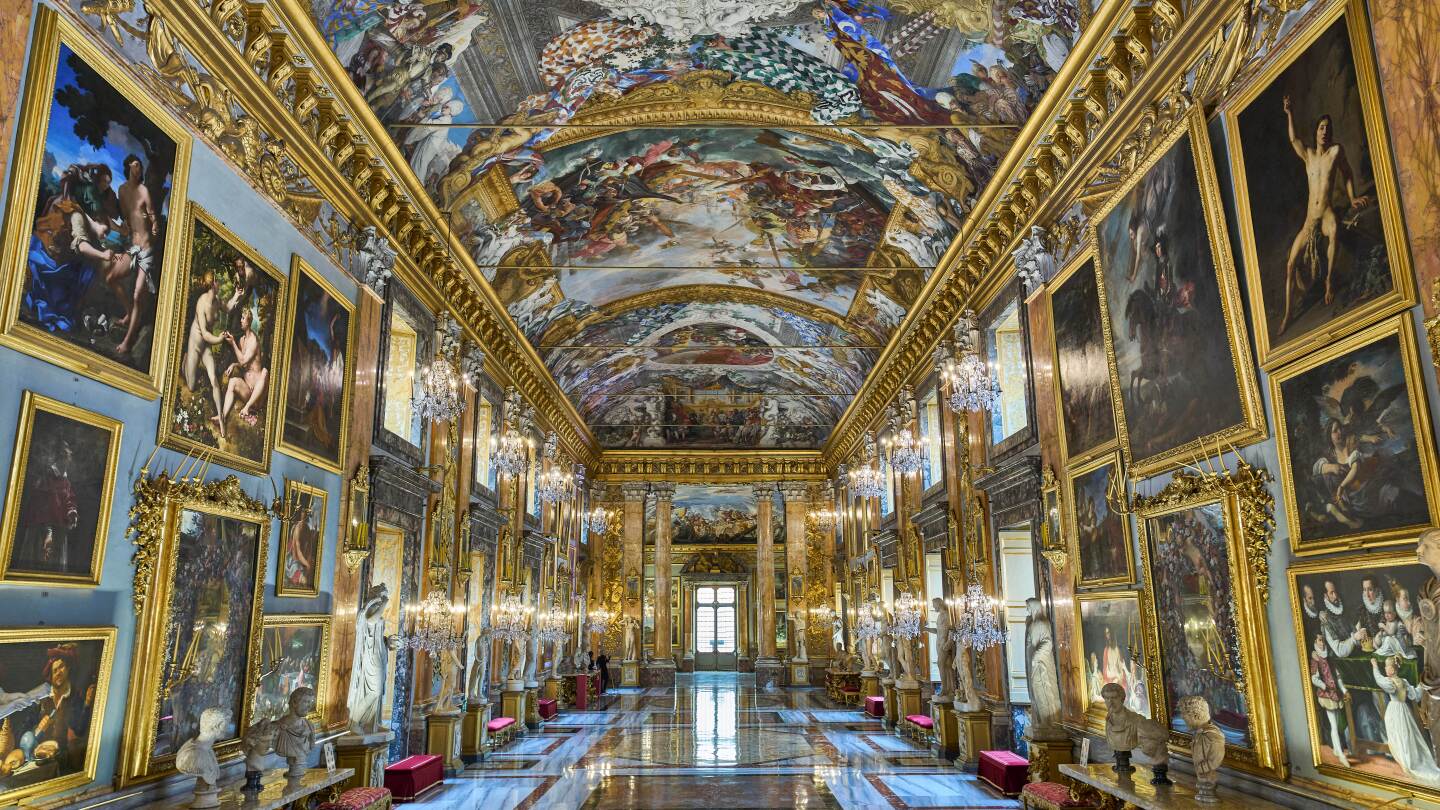
Nestled in the heart of Rome, the Colonna Palace remains one of the city’s best-kept secrets, a private home-museum that stands in stark contrast to the bustling tourist hubs of the Colosseum and the Sistine Chapel. Spread across four wings and occupying an entire city block, this baroque masterpiece houses an extraordinary collection of paintings, sculptures, busts, and tapestries, including the awe-inspiring 76-meter Great Hall. Yet, its doors open only sparingly, welcoming small groups of 10 visitors on Friday and Saturday mornings, guided by art historians. ‘Mass tourism is not our wish,’ explains Elisabetta Cecchini, a restorer at the palace, emphasizing that the limited access ensures the preservation of its artistic integrity. ‘Art dies without public appreciation, but this is not a museum meant for commodification.’
The palace remains the residence of Don Prospero Colonna, the family’s sitting prince, who has occasionally permitted high-profile events, such as the 2005 release of Pope John Paul II’s book and the 2018 Metropolitan Museum of Art exhibition on Catholic fashion, attended by luminaries like designer Donatella Versace and Vogue’s Anna Wintour. These rare occasions have allowed journalists fleeting glimpses into this exclusive world. Claudio Strinati, a former superintendent of Rome’s museums, lauds the palace’s seclusion, calling it ‘one of humanity’s greatest artistic heritages’ and a legacy the Colonna family is duty-bound to protect. ‘These spaces were not conceived as tourist attractions,’ he notes. ‘They are for those who truly understand history.’
The Colonna family’s ties to the palace date back to the 12th century, when they became part of the ‘black nobility,’ Roman families loyal to the Pope during Italy’s unification in 1870. Their black banners symbolized mourning for the Papal State, while their walls safeguarded priceless masterpieces. Over the centuries, the family has maintained a trust ensuring the palace’s treasures remain intact. Princess Isabella Colonna played a pivotal role in preserving these artifacts during World War II, ordering them to be hidden in a sealed wing as the Nazis invaded. Today, the palace’s opulent interiors reflect its storied past, from the Throne Room’s portrait of Pope Martin V to the Great Hall’s frescoed ceiling depicting the naval victories of Commander Marcantonio Colonna. ‘The Colonna family and Rome are inseparable,’ says Patrizia Piergiovanni, the palace’s gallery director. ‘Their contributions have shaped the city’s history.’
Adding to its allure, the Great Hall served as the setting for the final scene of the 1952 classic ‘Roman Holiday,’ where Audrey Hepburn, portraying a princess, declared her love for the Eternal City. ‘Rome,’ she said with conviction. ‘By all means, Rome.’ The Colonna Palace, with its blend of art, history, and exclusivity, continues to embody the timeless elegance of Rome itself.