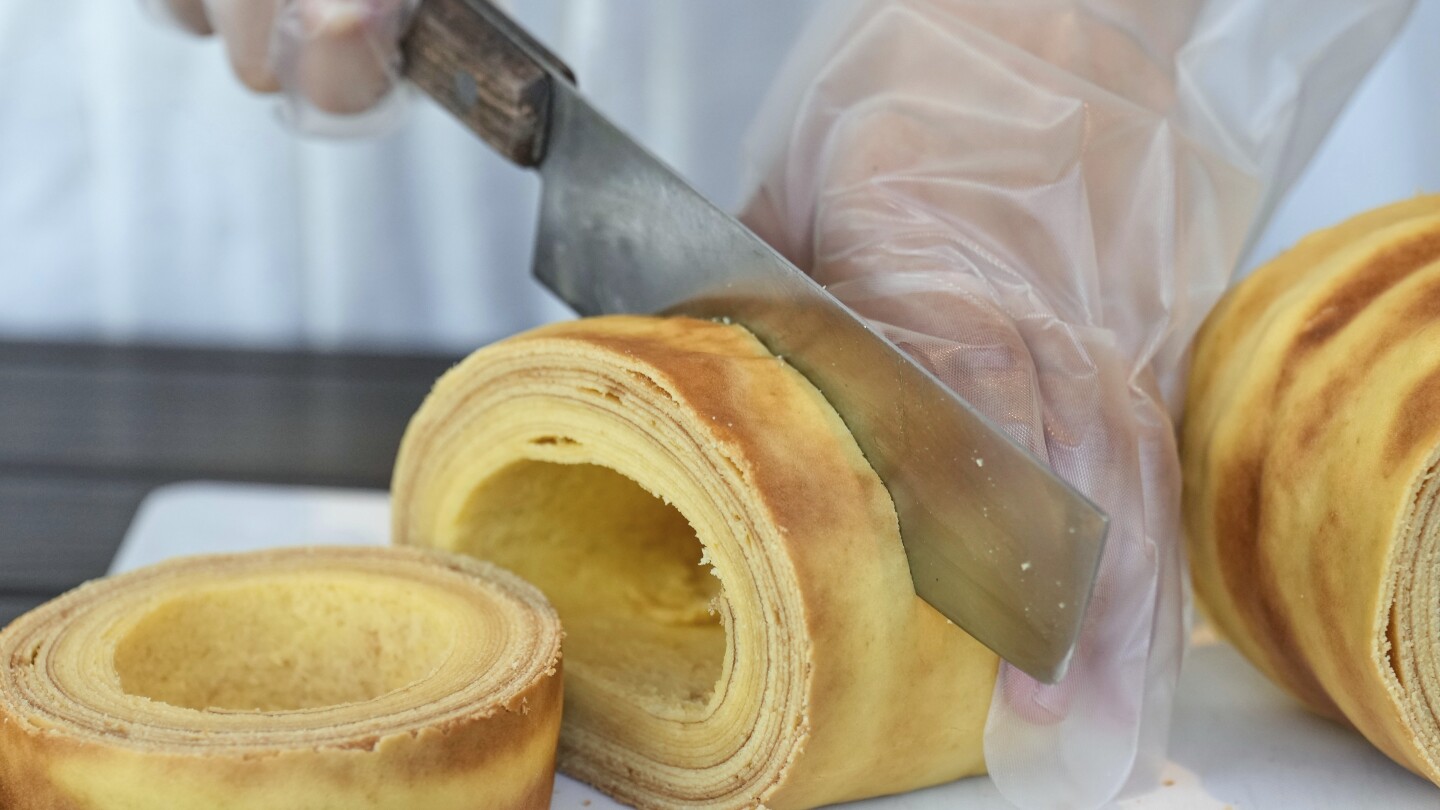
Baumkuchen, a traditional German cake, has found an unexpected home in Japan, where it has evolved into a symbol of longevity and prosperity. This culinary journey began over a century ago on the small island of Ninoshima, near Hiroshima, where Karl Juchheim, a German prisoner of war, first introduced the treat during World War I. Today, Baumkuchen is celebrated across Japan, with festivals dedicated to the cake and various Japanese adaptations, such as those incorporating matcha and sweet potatoes, becoming popular gifts for weddings and birthdays. The cake is widely available, from luxury department stores to convenience stores, reflecting its deep integration into Japanese culture. However, the origins of Baumkuchen in Japan are intertwined with the island’s wartime history. Ninoshima served as a quarantine station during Japan’s militarist expansion and later as a treatment center for victims of the Hiroshima atomic bombing. Juchheim’s resilience and dedication to his craft, despite the devastation of war, left a lasting legacy. His story, as told by Kazuaki Otani of the Juccheim Ninoshima Welcome Center, serves as a poignant reminder of the human desire for peace and the power of cultural exchange. Visitors to Ninoshima can now participate in Baumkuchen-making activities while learning about the island’s historical significance. Juchheim’s journey from prisoner to confectionery pioneer highlights the enduring impact of his work, which continues to bring joy and reflection to people across Japan.
German Baumkuchen ‘tree cake’ survived a disaster and world wars to become a Japanese favorite