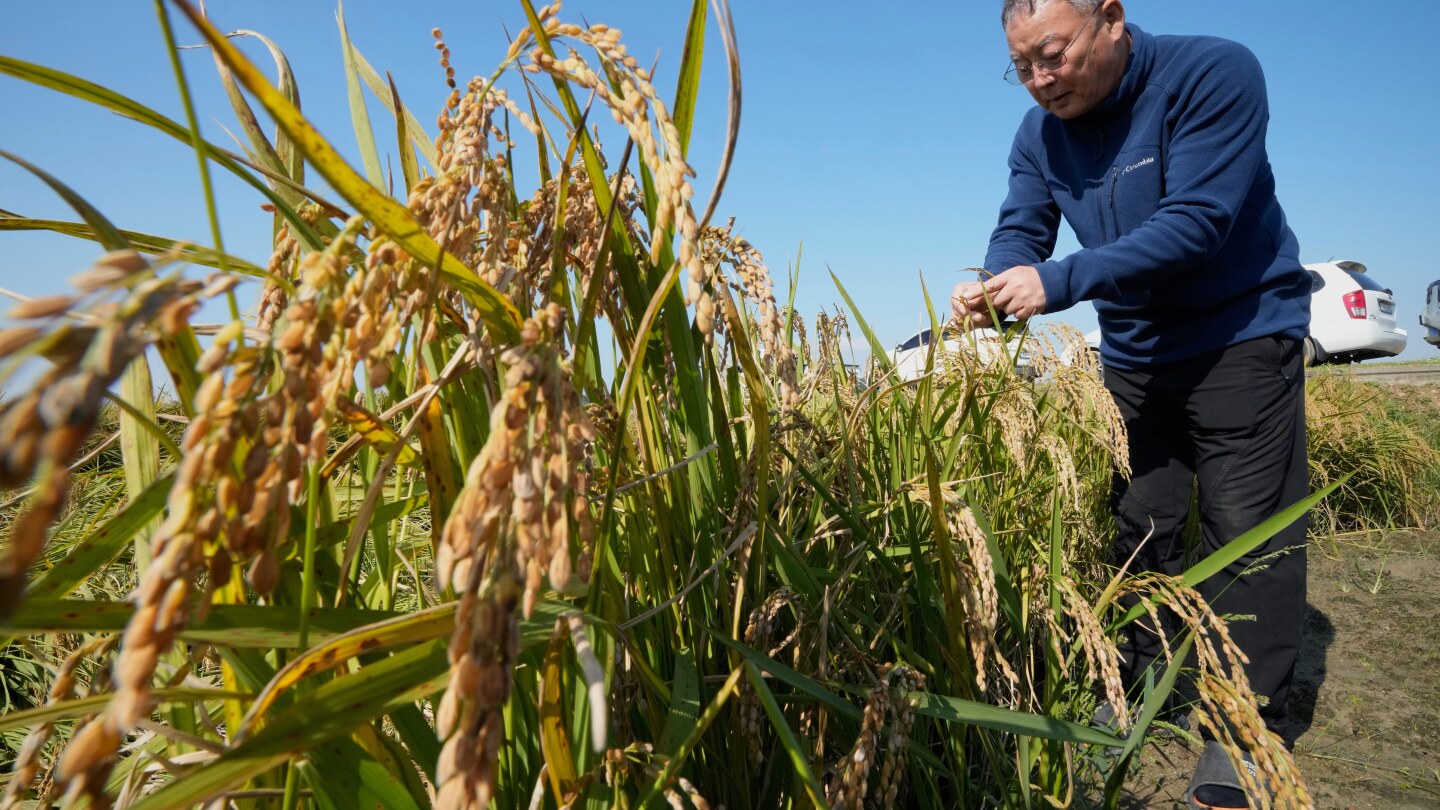
In Seosan, South Korea, Hwang Seong-yeol, a seasoned farmer with over three decades of experience, watched anxiously as a combine harvester navigated his waterlogged rice field. This marked the end of what he described as one of his most challenging farming seasons, plagued by erratic weather patterns attributed to climate change. Hwang is among five South Korean farmers who have filed a lawsuit against Korea Electric Power Corporation (KEPCO) and its subsidiaries, accusing them of exacerbating climate change through their reliance on coal and fossil fuels, which has led to significant crop damage.
The lawsuit, the first of its kind in South Korea, raises critical questions about the accountability of power companies in driving climate change and the subsequent agricultural losses. Represented by Yeny Kim, a lawyer from the nonprofit Solutions for Our Climate, the plaintiffs argue that KEPCO’s excessive carbon emissions and slow transition to renewable energy have contributed to destabilized weather conditions. From 2011 to 2022, KEPCO and its subsidiaries were responsible for approximately 30% of South Korea’s greenhouse gas emissions and 0.4% of global emissions, according to Kim’s analysis.
The farmers are seeking initial compensation of 5 million won ($3,400) per client, with the amount subject to adjustment as the case progresses. Additionally, they are symbolically demanding 2,035 won ($1.4) each to urge the government to accelerate the phase-out of coal power plants by 2035, ahead of the current 2040 target. Despite KEPCO’s commitment to reducing emissions by 40% by 2030, experts argue that the utility’s mounting debt, exceeding 200 trillion won ($137 billion), hampers its ability to invest in renewable energy and modernize the power grid.
The lawsuit, while largely symbolic, highlights South Korea’s broader challenges in transitioning to cleaner energy. Renewable energy accounted for only 10.5% of the national energy mix in 2024, with KEPCO’s subsidiaries relying on coal for over 71% of their electricity production. Professor Yun Sun-Jin of Seoul National University emphasized the need for deregulating solar investments, expanding offshore wind energy, and ending KEPCO’s monopoly to encourage competition and innovation.
The impact of climate change extends beyond rice farming, affecting apple, tangerine, and strawberry growers across the country. Farmers face rising costs, increased labor, and lower yields as they grapple with pests, diseases, and extreme weather events. Ma Yong-un, an apple farmer in Hamyang, shared his struggles with prolonged heat and humidity, which have forced him to use more pesticides and protective measures to safeguard his crops. As South Korea’s agricultural sector confronts these challenges, the lawsuit serves as a stark reminder of the urgent need for systemic change to mitigate the effects of climate change on livelihoods and food security.