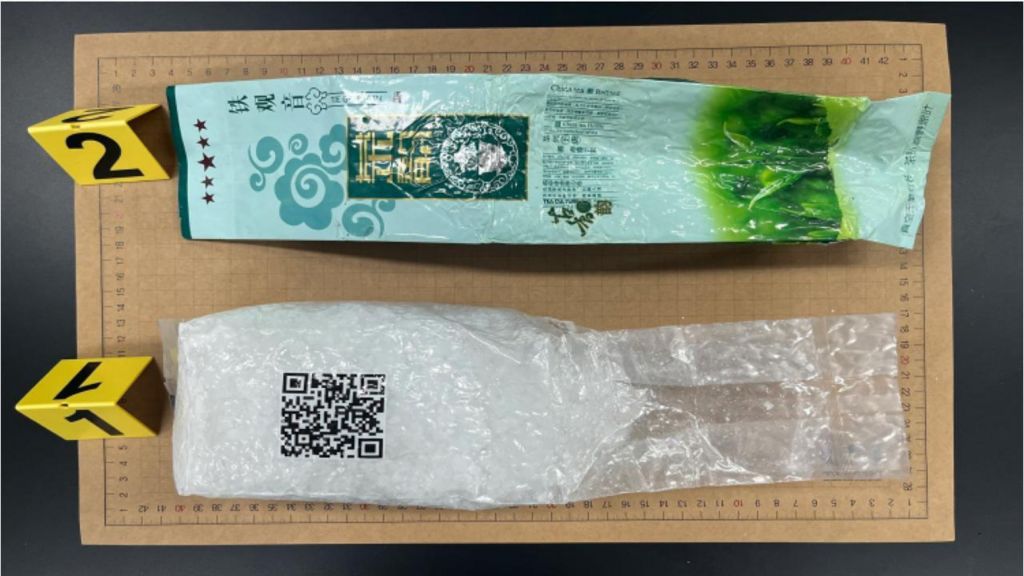
In a startling discovery, South Korea’s Jeju Island has become the focal point of a significant drug smuggling operation involving ketamine disguised as Chinese tea. Since September, residents have reported finding small foil-wrapped packages labeled with the Chinese character for ‘tea’ washed ashore. Upon investigation, authorities confirmed these packages contained ketamine, a potent anesthetic with severe health risks when misused. Approximately 28kg (62 lbs) of the drug have been recovered in at least eight separate incidents, with the largest haul—20kg—discovered by a beach cleaner in Seogwipo on October 15. The Jeju Coast Guard has mobilized a specialized team to trace potential sea and land routes used for smuggling. Authorities have issued warnings to residents, urging them to avoid touching suspicious objects and to report findings to the police. A massive search operation involving over 800 soldiers, police officers, and civilian volunteers was conducted this week along Jeju City’s northern coast. Investigators are exploring the possibility that ocean currents carried the drugs to Jeju, with similar discoveries reported in Pohang, South Korea, and Tsushima Island, Japan. Professor Yoon Heung-hee of Hansung University suggested that criminal syndicates may be employing a ‘sea bump’ method, dropping drug bundles equipped with trackers into the ocean for later retrieval. Residents have expressed concern over the presence of illicit drugs on their coastlines, with one parent voicing fears about children accidentally encountering the substances. Authorities are under pressure to enhance inspections at airports and ports to prevent further smuggling attempts.