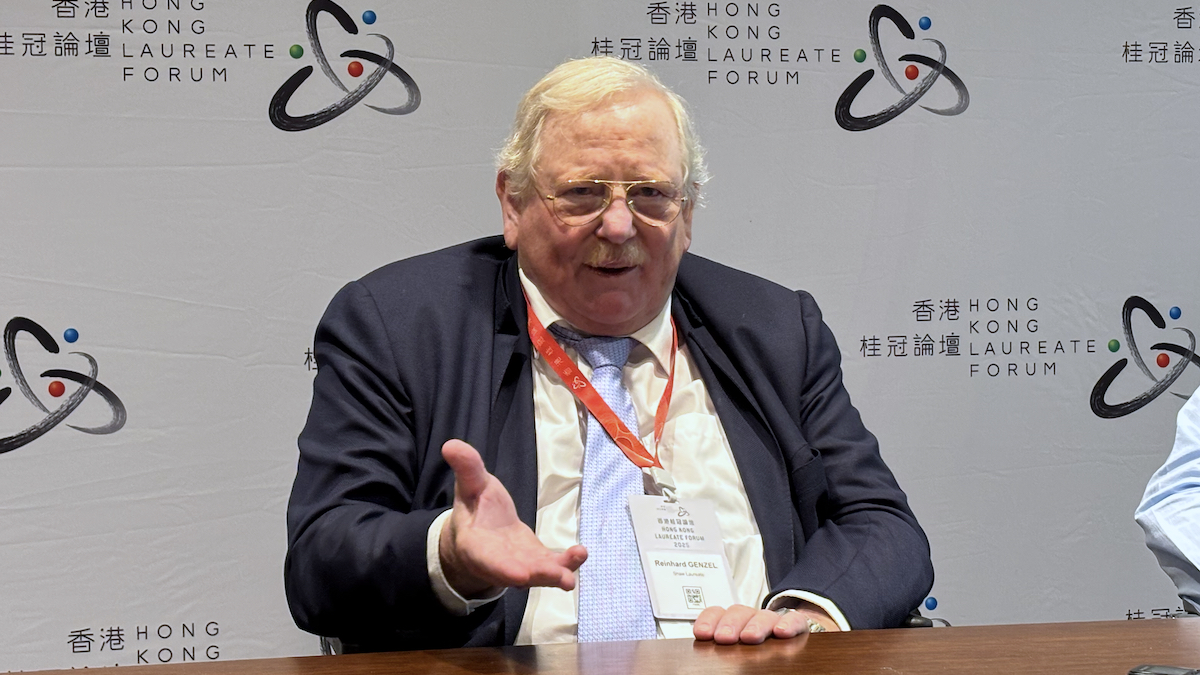
Renowned astrophysicist Reinhard Genzel, recipient of the 2020 Nobel Prize in Physics, has emphasized the necessity for China to embed long-term scientific endurance into its national strategy to secure a leading role in space exploration. Speaking at the Hong Kong Laureate Forum, Genzel highlighted that while China has made significant investments in space projects over the past decade, it must now transform this technological momentum into institutional permanence to avoid falling behind in the global race for space supremacy. Genzel, who also serves as co-director of the Max Planck Institute for Extraterrestrial Physics and professor at Ludwig Maximilian University of Munich and the University of California, Berkeley, stressed the importance of building structures that can sustain scientific efforts beyond political cycles. He noted that the era of US dominance in space science, driven by Cold War investments, has evolved into a more distributed landscape with China and Europe making substantial strides. Genzel pointed to China’s FAST telescope as a remarkable achievement but cautioned that future large-scale projects will require international collaboration due to their complexity and cost. He cited the James Webb Space Telescope and the Extremely Large Telescope in Chile as examples of projects that have pushed the limits of national capabilities and budgets. Genzel concluded that the next generation of scientific endeavors will necessitate multinational cooperation to achieve groundbreaking discoveries.