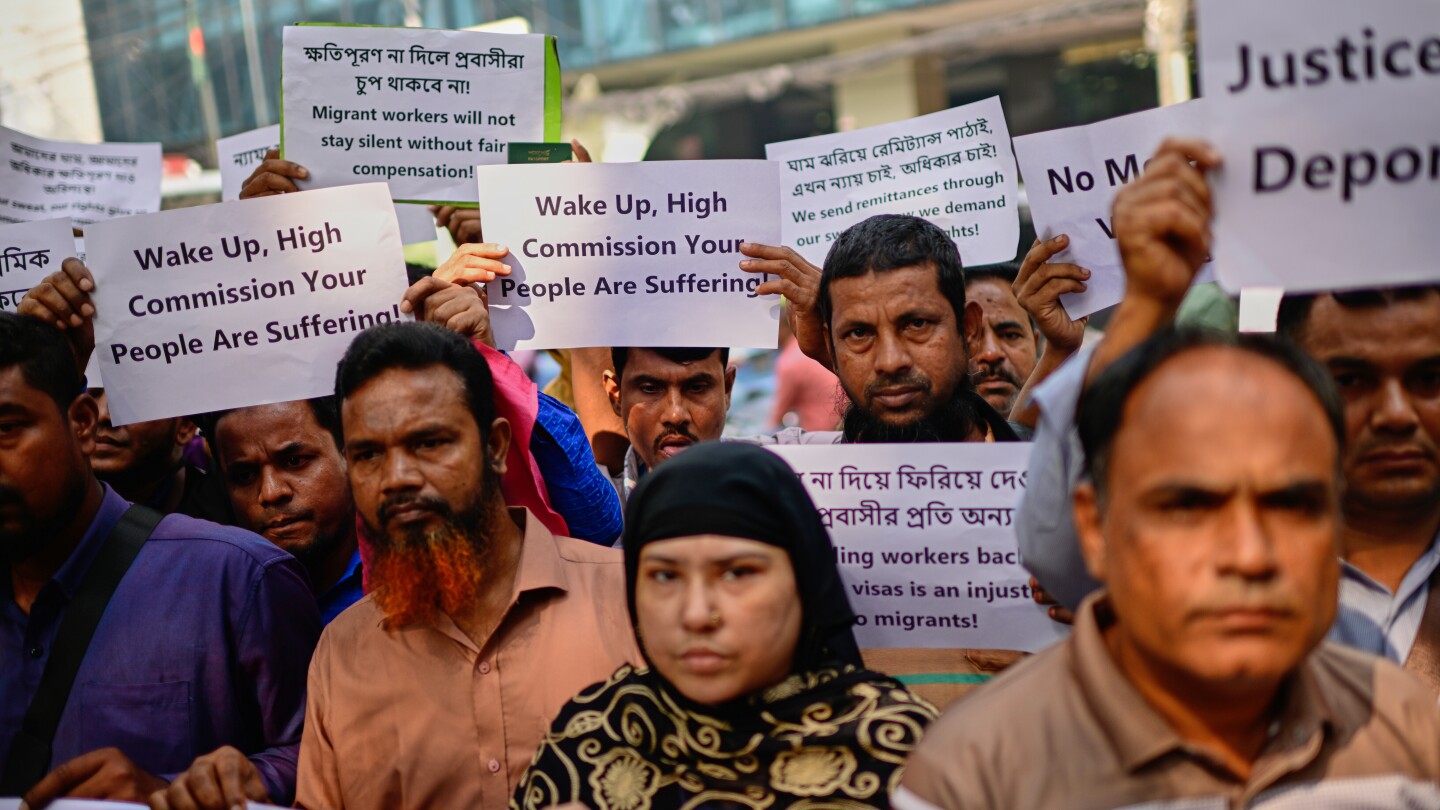
In a significant demonstration of discontent, approximately 100 Bangladeshi workers employed by Malaysian companies staged a protest in Dhaka, Bangladesh, on Monday. Organized by the Migrant Welfare Network, a group advocating for migrant workers’ rights in both Malaysia and Bangladesh, the rally took place outside the Ministry of Expatriates’ Welfare and Overseas Employment. The workers demanded unpaid wages, fair compensation, and an end to alleged mistreatment by their Malaysian employers.
The protest highlighted the plight of 431 Bangladeshi workers who claim to have been exploited by two Malaysian companies, Mediceram and Kawaguchi Manufacturing. Mediceram, a manufacturer of medical, industrial, and domestic gloves, and Kawaguchi, a supplier of plastic components to major Japanese firms like Sony and Panasonic, are accused of withholding wages and subjecting workers to poor conditions. The Migrant Welfare Network has filed formal complaints against both companies, urging Bangladeshi and Malaysian authorities, as well as international buyers, to intervene.
Malaysia, one of Southeast Asia’s wealthiest nations, heavily relies on migrant labor from countries like Bangladesh, Myanmar, and Nepal for labor-intensive jobs in manufacturing, plantations, and construction. However, these workers often face systemic abuse, low wages, and harsh working conditions, which local workers typically avoid. The issue has strained diplomatic relations between Bangladesh and Malaysia, with workers’ rights groups calling for stricter oversight of recruitment agencies and middlemen who dominate the industry.
Former employees shared harrowing accounts of their experiences. Omar Faruk, who worked at Kawaguchi, revealed that the company paid partial salaries before withholding wages entirely, leading to financial distress. Similarly, Harun Or Rasid Liton, a former Mediceram employee, accused the company of ignoring a Malaysian Labor Court order to pay compensation. The workers’ struggles underscore the urgent need for systemic reforms to protect migrant workers’ rights and ensure fair treatment.