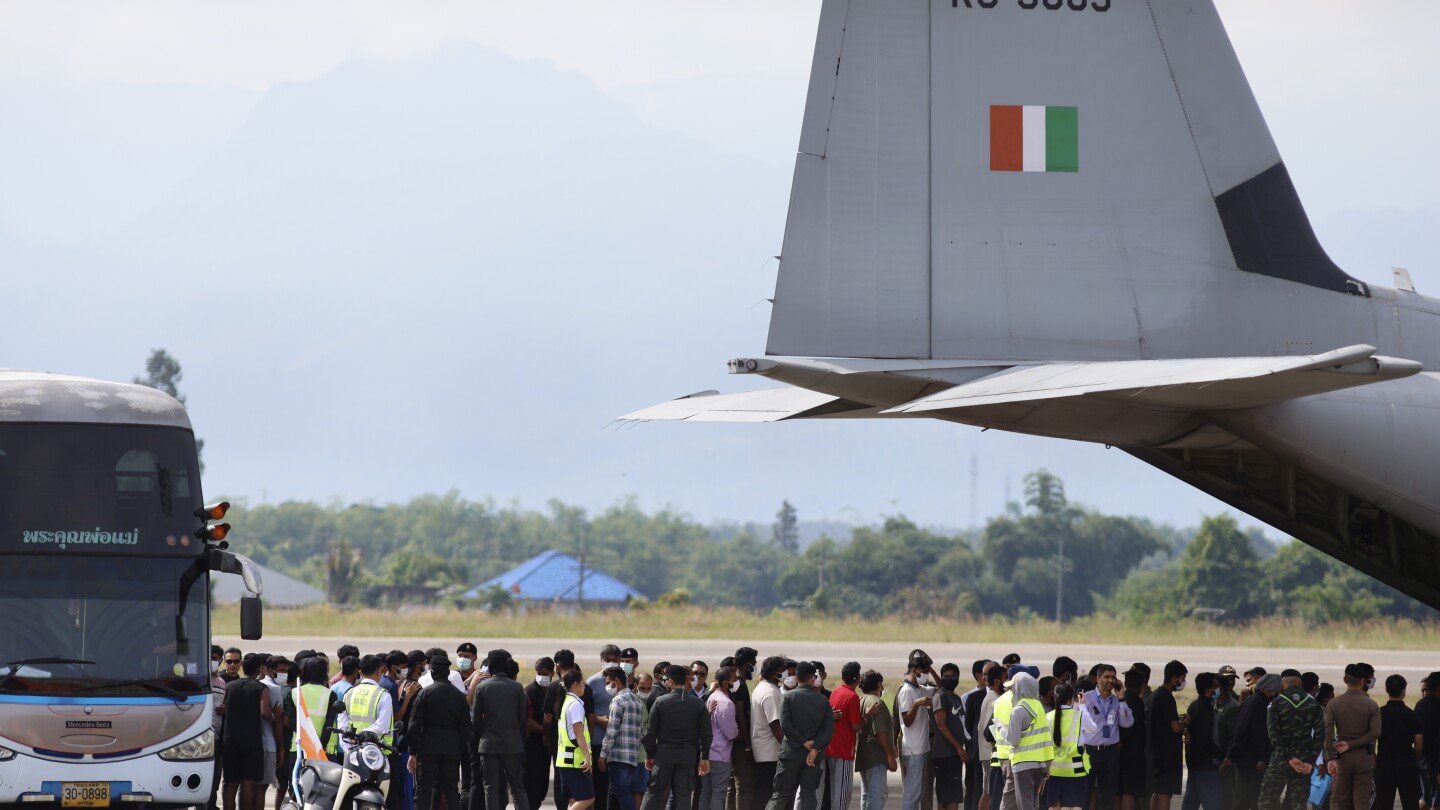
In the shadows of Southeast Asia, a sinister industry thrives, exploiting both victims and laborers. Scam operations, often initiated through innocuous text messages, have become a global menace, siphoning billions of dollars from unsuspecting individuals. These schemes are powered by a network of forced laborers, many of whom are lured with false promises of lucrative jobs, only to find themselves trapped in sprawling compounds across the region. The scale of this crisis is staggering, with estimates suggesting that hundreds of thousands of people are coerced into working in these fraudulent operations. The issue is further complicated by the involvement of local elites and transnational criminal syndicates, making it a formidable challenge for law enforcement agencies. Despite recent crackdowns, such as the shutdown of Myanmar’s infamous KK Park, the problem persists, with new scam centers emerging across Southeast Asia and beyond. The United Nations has highlighted the global reach of these scams, which now target victims as far afield as Africa and Latin America. Activists argue that while rescuing victims is crucial, dismantling the criminal networks behind these operations is essential to eradicating the scourge. The fight against this global fraud epidemic requires coordinated international efforts and a sustained commitment to justice.
Scam centers in southeast Asia are on the rise despite crackdowns to root out the illegal industry