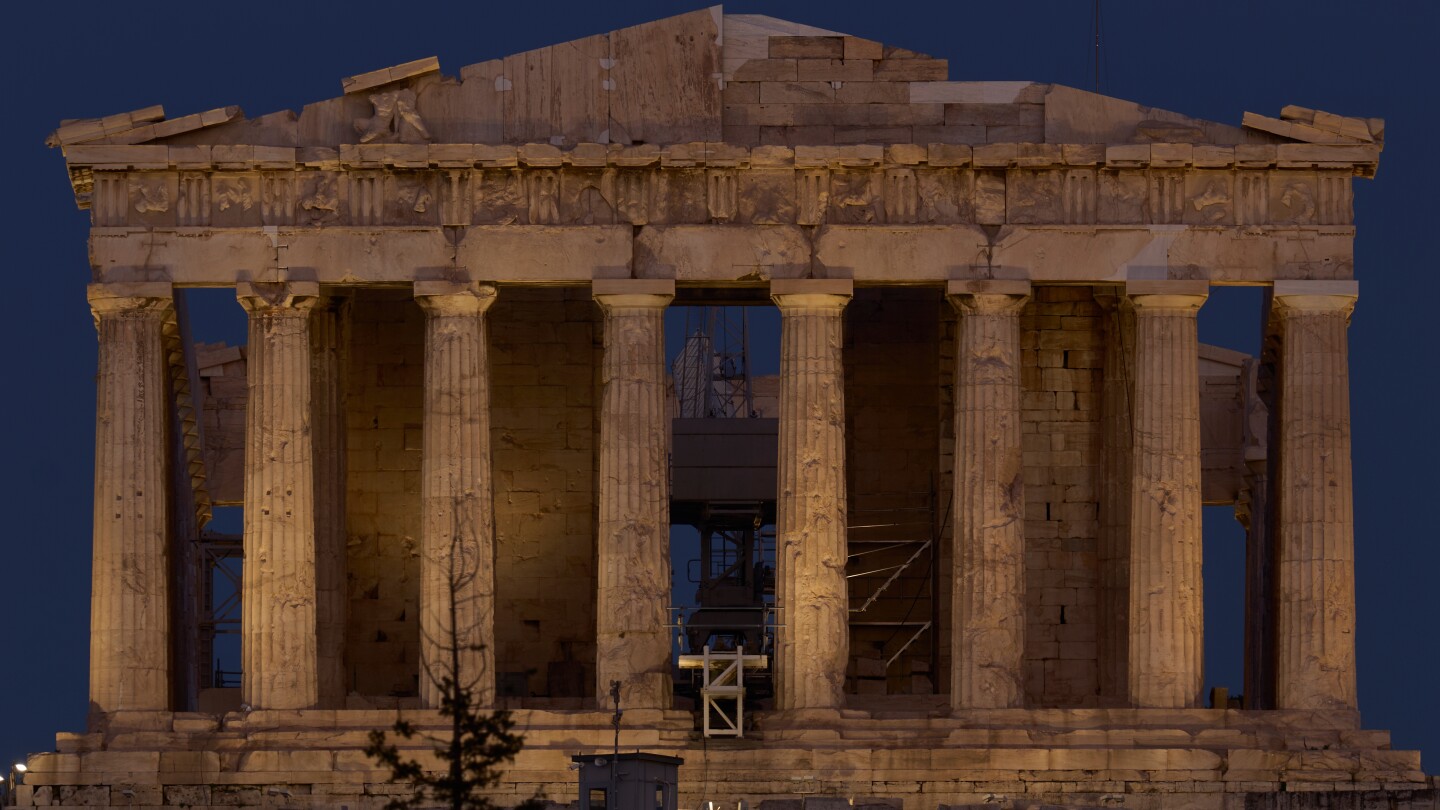
For the first time in years, the iconic Parthenon stood free of scaffolding, offering residents and visitors in Athens an unobstructed view of the ancient marble temple atop the Acropolis. This rare sight, lasting roughly four weeks, was a testament to the ongoing restoration efforts that have spanned decades. Culture Minister Lina Mendoni described the scene as “breathtaking,” likening the gleaming temple to its appearance nearly 2,500 years ago. However, the scaffolding returned in late September, albeit in a lighter and less intrusive form, to continue fine-tuning work on the western façade. The Parthenon has been under restoration since 1975, a process that has already taken more than three times longer than its original construction. The project involves 161 highly specialized professionals, including engineers, archaeologists, and marble craftsmen, who meticulously work to stabilize and preserve the temple. The restoration includes replacing rusted iron clamps with titanium fasteners and reassembling over 1,500 marble blocks like pieces of a colossal puzzle. The Parthenon, built between 447 and 432 BC, remains a symbol of Greece’s Golden Age, showcasing the unmatched skill of its ancient builders. With 4.5 million visitors in 2024, the Acropolis is Greece’s most-visited site, and the current restoration phase is expected to conclude in 2026, marking a significant milestone in preserving this architectural marvel.
The Parthenon in Athens briefly shed its scaffolding. Here’s a look at its restoration