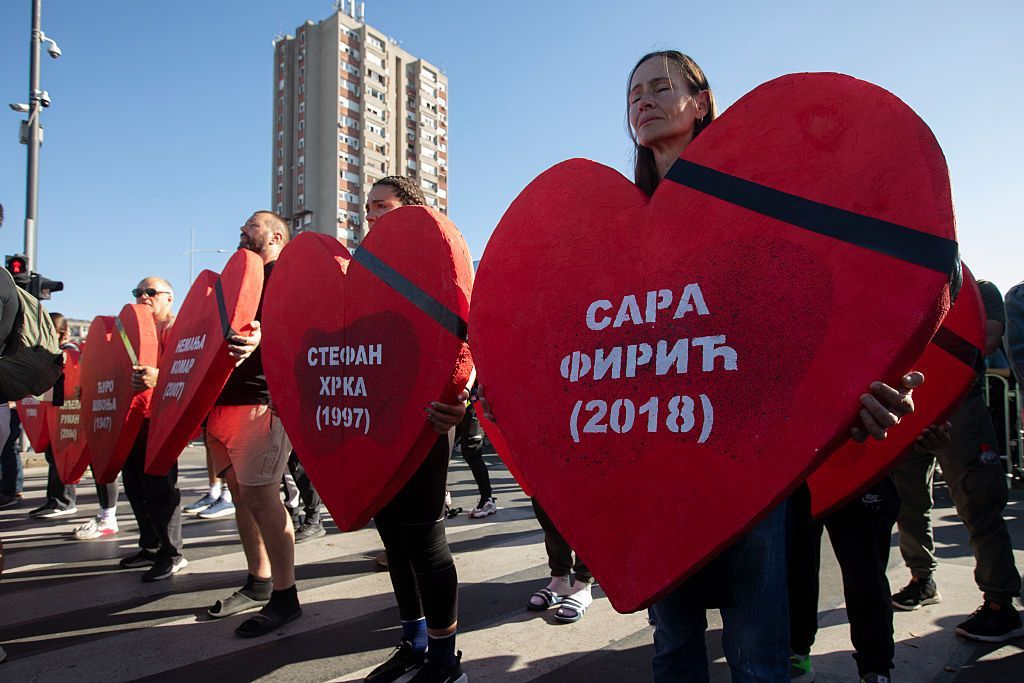
A solemn gathering marked the one-year anniversary of the Novi Sad railway station roof collapse in Serbia, where 16 lives were tragically lost. The disaster occurred on an unseasonably warm autumn day, as victims stood or sat beneath a recently renovated concrete canopy that gave way. Among the deceased were children as young as six and an elderly individual aged 77. The incident has since sparked widespread outrage and persistent anti-corruption protests across the country. On the anniversary, thousands gathered for a quiet commemoration, observing 16 minutes of silence—one for each victim—before laying flowers at the station. The site, though cleared of rubble, still bears scars of the catastrophe, with twisted metal and broken glass serving as grim reminders. The Novi Sad station, once a symbol of Serbia’s progress under President Aleksandar Vučić’s Progressive Party, has become emblematic of systemic failures. The government’s flagship infrastructure project, intended to modernize the high-speed railway connecting Belgrade to Budapest, turned deadly, fueling public fury. Protesters, led by university students, have demanded accountability and fresh elections, proposing a technocratic government to combat cronyism and corruption. In September, 13 individuals, including former Transport Minister Goran Vesić, were charged in connection with the collapse. The European Parliament has called for transparent legal proceedings and an investigation into potential corruption or negligence. Despite government denials, the student-led movement has gained momentum, earning respect even from opposition leaders. President Vučić, known for his combative stance, recently apologized for his harsh rhetoric towards protesters, but the students remain resolute, accusing him of bearing responsibility for the tragedy. While the day was one of remembrance, the underlying anger and demand for justice persist.