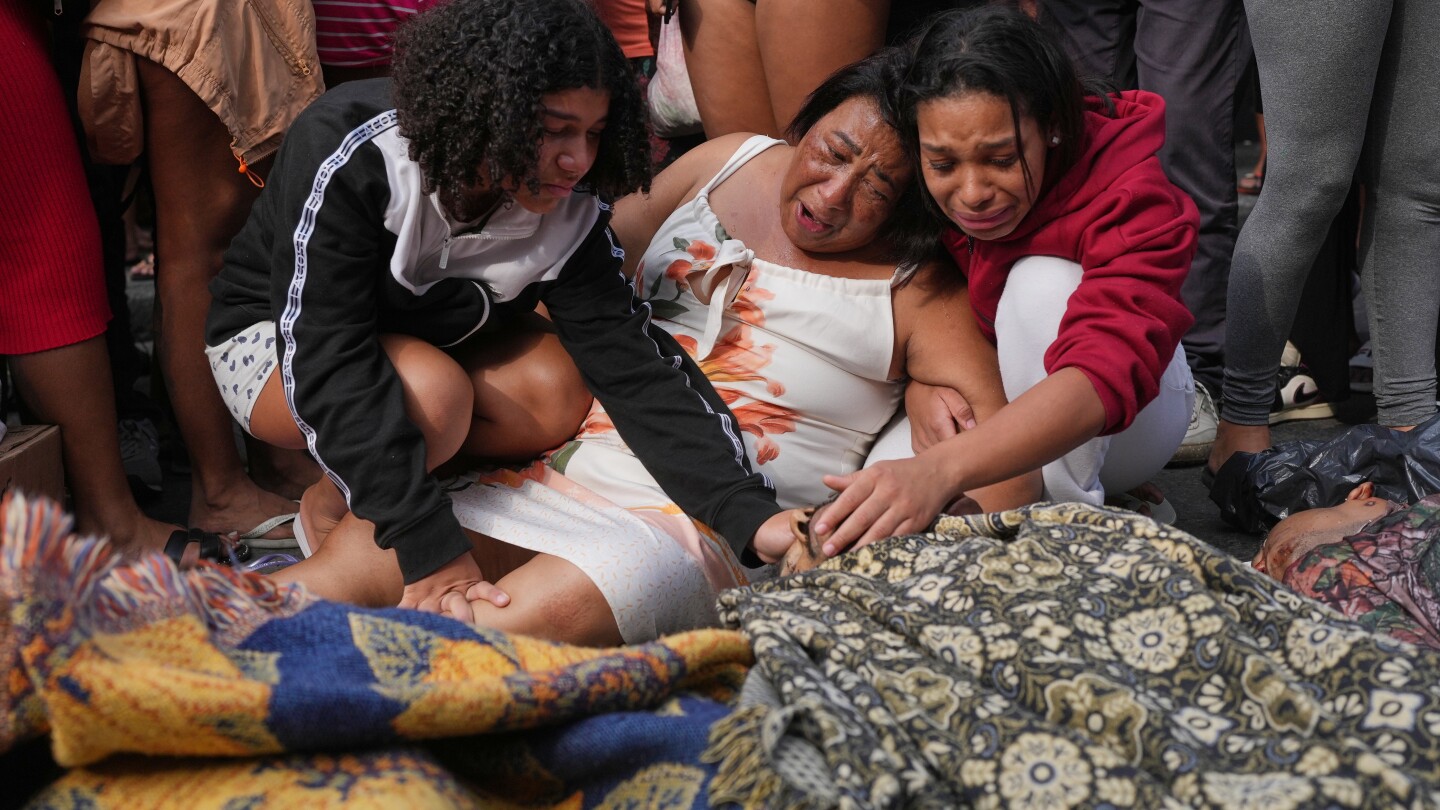
In the aftermath of a devastating police raid in Rio de Janeiro, families began burying their loved ones on Thursday, as the community grappled with the aftermath of what many are calling excessive and brutal law enforcement actions. The operation, which took place on Tuesday in the Vila Cruzeiro favela, resulted in the deaths of at least 132 people, including four police officers, according to Rio de Janeiro’s public defenders’ office. Residents of the low-income neighborhood expressed shock, grief, and anger, accusing the police of torture, extrajudicial killings, and excessive force. The raid, described by some as resembling a war zone, targeted the notorious Red Command gang in the Complexo de Alemao and Complexo da Penha favelas. Despite the return of some semblance of normalcy, with shops and restaurants reopening, the emotional toll on the community remains profound. Monique Santiliano, a local nail salon owner, voiced her distress, stating, ‘This wasn’t an operation, these were assassinations. They didn’t come to arrest, they came to kill.’ Conservative Rio state Governor Claudio Castro defended the operation, labeling it a success in the fight against ‘narco-terrorism,’ a term reminiscent of the Trump administration’s campaign against drug smuggling in Latin America. However, Human Rights Minister Macaé Evaristo criticized the raid, emphasizing that the fight against organized crime should target masterminds and financiers, not expose vulnerable populations to terror. The operation, which involved 2,500 police and soldiers, drew condemnation from human rights groups, the U.N., and Brazilian authorities, including the Supreme Court, which ordered Governor Castro to provide detailed information about the raid. While some right-wing politicians and voters supported the operation, others questioned its effectiveness, arguing that many of those killed were low-ranking gang members easily replaceable. The disparity between the number of police and suspect deaths raised further concerns, with conservative lawmaker Otoni de Paula suggesting the operation was an ambush with the sole objective of execution. Residents also decried the state of the bodies, with reports of decapitation, puncture wounds, and tied-up victims. Ana Tobossi, a local activist, warned against normalizing such brutality, stating, ‘If the country continues to applaud, it will happen elsewhere.’ The operation’s stated objectives were to capture gang leaders and limit the territorial expansion of the Red Command, which has increased its control over favelas and expanded its presence across Brazil, including in the Amazon rainforest. As families began burying their dead, the emotional toll on the community was evident. Grasiele, the sister of 22-year-old Cauan Fernandes do Carmo Soares, who was killed in the raid, expressed her family’s devastation, stating, ‘My family is destroyed.’ The incident has left the community in a state of fragility, with many questioning the long-term impact of such violent law enforcement actions.
Rio favelas left reeling after lethal gang raid as families bury the dead