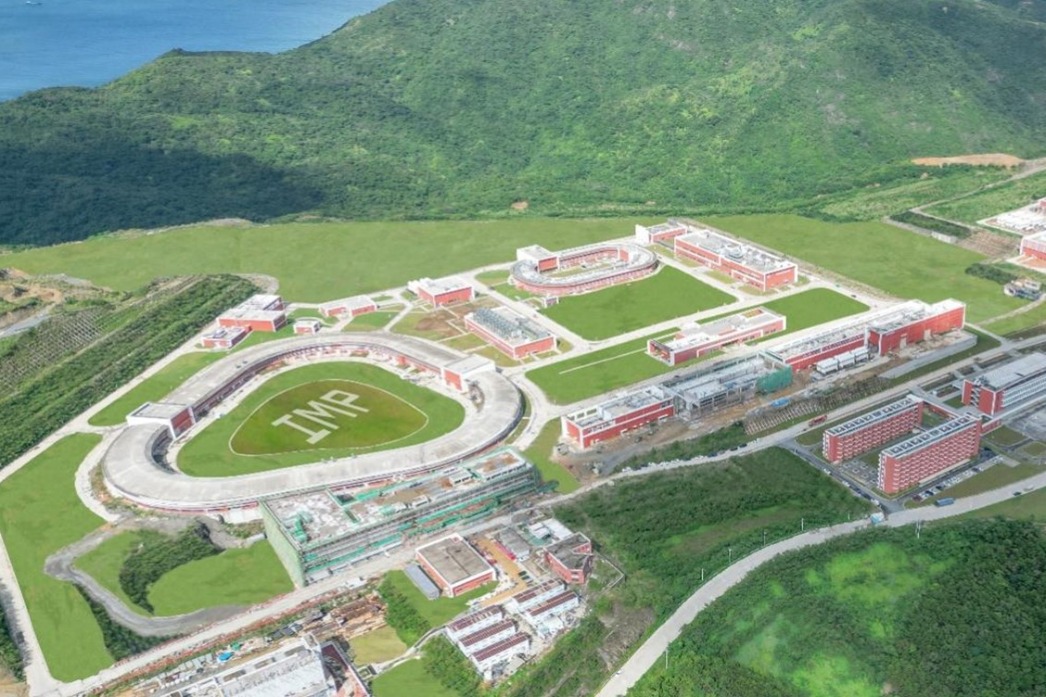
In a groundbreaking achievement for scientific research, the High Intensity Heavy-Ion Accelerator Facility (HIAF), the world’s largest full ion accelerator, has successfully completed its beam commissioning phase. The milestone was announced by the Institute of Modern Physics (IMP) under the Chinese Academy of Sciences on Tuesday in Huizhou, Guangdong province. The HIAF, a flagship national science and technology project, began construction in December 2018 and features over 6,000 large-scale equipment units, nearly 5 million component parts, and a pipeline network exceeding 1 million meters in length. The project utilized digital twin technology, significantly reducing installation time from the typical two to three years to just eight months. The HIAF is set to conduct beam performance tests and is expected to initiate its first scientific experiment by the end of 2025. Once fully operational, it will provide the world’s highest pulse intensity heavy ion beams and the most precise multi-functional nuclear mass spectrometer. This facility will serve as a global hub for cutting-edge research in atomic nuclei exploration, nuclear astrophysics, nuclear energy development, and multidisciplinary applications. Additionally, the HIAF will offer a shared platform for facilities, services, data, and talent, fostering international collaboration among top scientists and research teams.