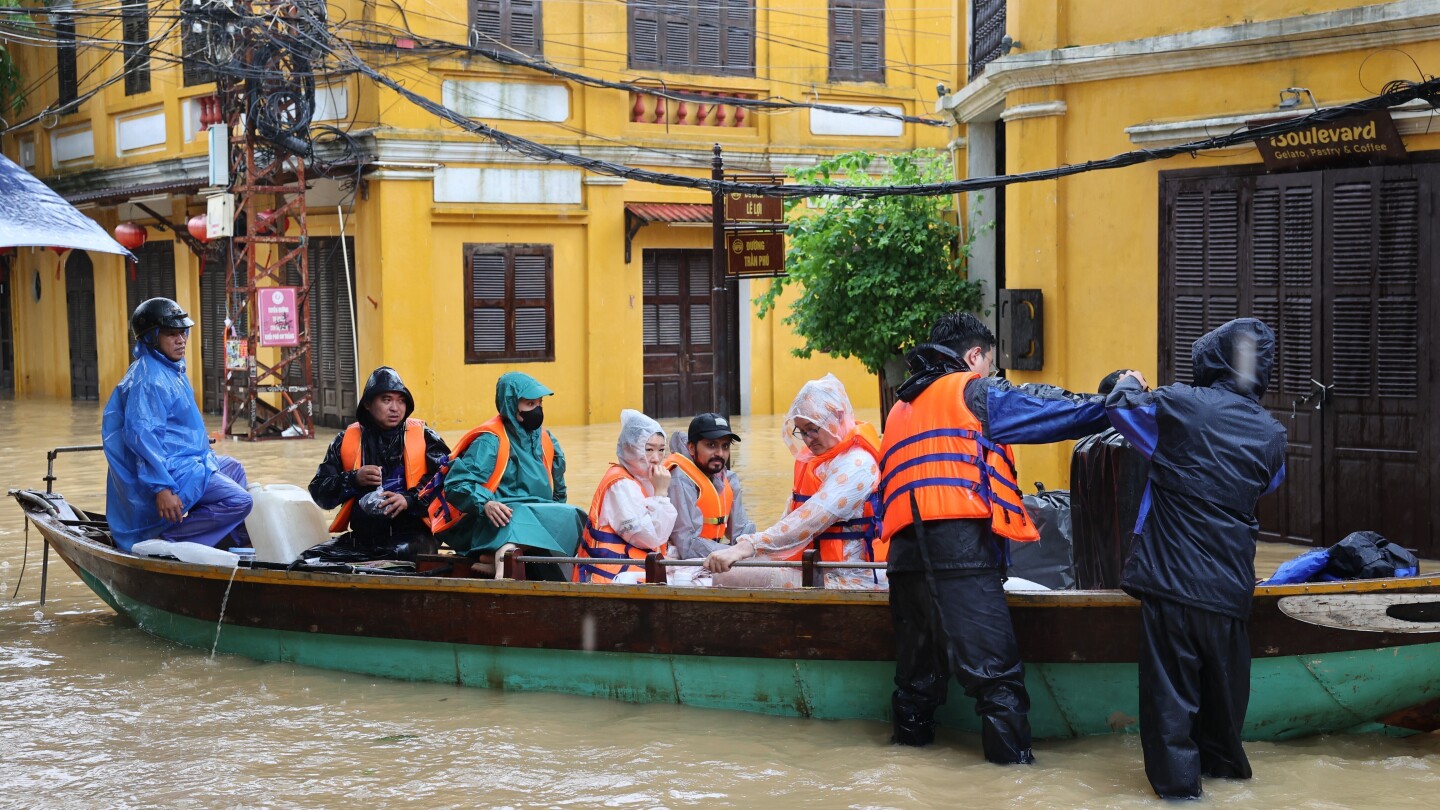
Central Vietnam has been struck by catastrophic floods following unprecedented rainfall, resulting in at least 10 fatalities and five individuals reported missing. The deluge has wreaked havoc on cities, agricultural lands, and transportation networks, leaving a trail of destruction in its wake. Danang, a coastal city regarded as a pivotal growth hub for Vietnam, bore the brunt of the disaster, with six deaths, four missing persons, and 19 injuries reported. Homes, crops, and thousands of livestock were swept away, amplifying concerns over the region’s recovery. In Hue, the historic former imperial capital, one person drowned, and a 5-year-old girl remains missing after being swept into floodwaters. The city remains largely submerged, with rivers overflowing after rainfall reached a staggering 1,085 millimeters (42 inches) in 24 hours—the highest ever recorded in Vietnam. Quang Ngai province also suffered significant losses, with three deaths and over 120 landslides blocking major highways. Some routes remain impassable, leaving 50 people stranded in 37 vehicles for three days. The disaster has isolated numerous rural neighborhoods, with breached river embankments and landslides cutting off access. Vietnam’s meteorological agency attributed the extreme weather to a collision of cool northern air with warm, moisture-laden sea winds, triggering relentless storms. Forecasters warn that the pattern will persist through Thursday night, heightening the risk of further floods and landslides. In response, police and military forces have been mobilized, and authorities in Quang Ngai are experimenting with drone deliveries to reach isolated residents. While central Vietnam is no stranger to heavy rains and tropical storms, experts emphasize that the scale and intensity of this week’s floods underscore the escalating risks associated with climate change. As one of the world’s most flood-prone nations, nearly half of Vietnam’s population resides in high-risk areas, highlighting the urgent need for adaptive measures.