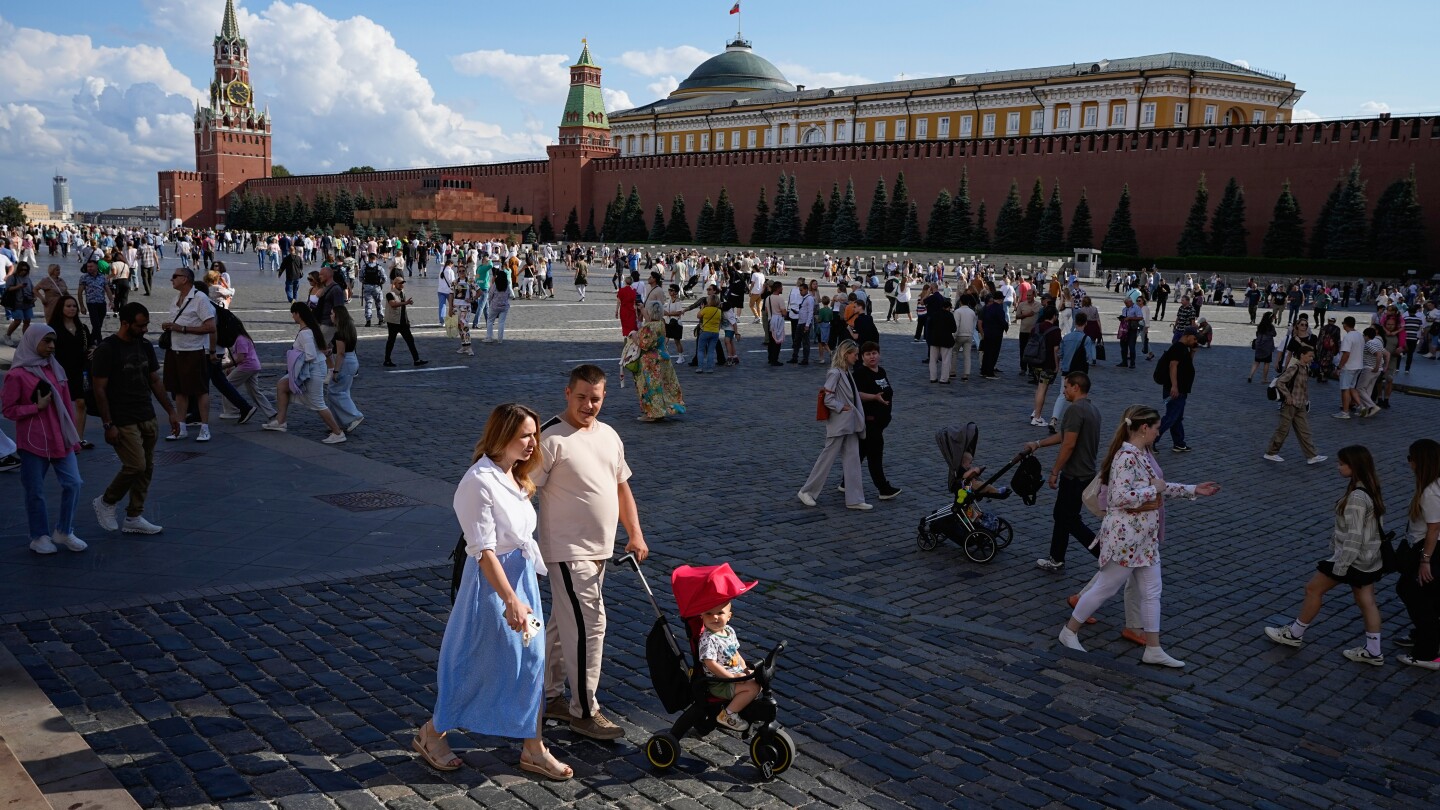
For over two decades, Russia has grappled with a deepening demographic crisis characterized by a shrinking and aging population. Since President Vladimir Putin assumed power in 2000, the country has faced persistent challenges in reversing this trend. In 1999, Russia recorded its lowest number of births, a figure that has continued to haunt the nation despite temporary improvements. By 2015, births peaked at 1.94 million, but economic instability, the ongoing war in Ukraine, and an exodus of young men have since reversed these gains. In 2023, Russia recorded only 1.22 million births, barely surpassing the 1999 low. The population has also aged significantly, with 30% now over 55, compared to 21.1% in 1990. Putin has implemented various measures to encourage larger families, including financial incentives, free school meals, and Soviet-style ‘hero-mother’ medals for women with 10 or more children. However, critics argue that these efforts, coupled with restrictive laws on abortion and LGBTQ+ activism, are unlikely to solve the crisis. The war in Ukraine has further exacerbated the problem, with hundreds of thousands of young men either killed or fleeing the country. Immigration, a potential solution, remains unpopular due to rising anti-migrant sentiment. As Russia’s fertility rate stagnates at 1.4, well below the replacement rate of 2.1, the demographic crisis continues to pose a significant threat to the nation’s future.
Russia faces a shrinking and aging population and tries restrictive laws to combat it