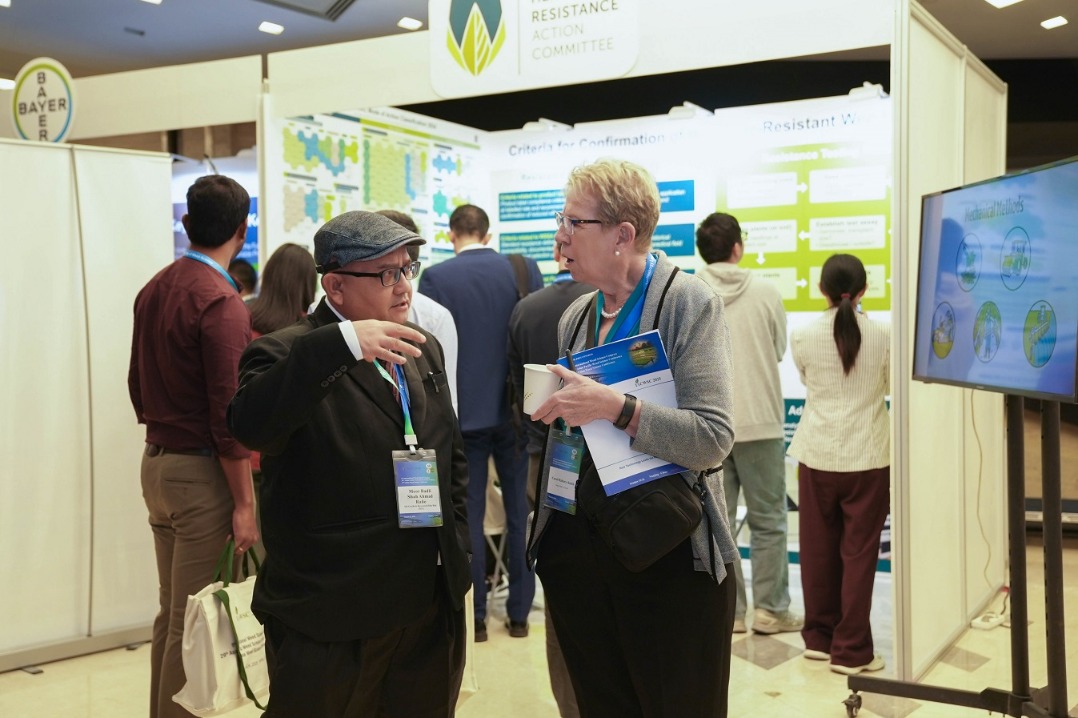
The Joint Weed Science Society Congress convened in Nanjing, Jiangsu province, this week, bringing together over 600 experts and scholars from 42 countries and regions. The event, co-hosted by the Institute of Plant Protection of the Chinese Academy of Agricultural Sciences and Nanjing Agricultural University, featured the 9th International Weed Science Congress, the 29th Asian Pacific Weed Science Conference, and the 17th China Weed Science Conference. The congress aimed to share research progress and explore future developments in global weed science. Weeds pose a significant threat to agricultural production and ecological security, with the Food and Agriculture Organization of the United Nations estimating that weeds cause 10 to 15 percent of global crop yield losses annually. In China, the grain-planting area reached 119 million hectares in 2024, with weed occurrence covering nearly 100 million hectares, leading to annual economic losses exceeding 100 billion yuan ($13.8 billion). Experts highlighted the challenges of weed proliferation, widespread herbicide resistance, and frequent chemical damage incidents, emphasizing the need for technological innovation to ensure global food and ecological security. The conference, themed ‘New Technology Leads the Way of Weed Science,’ showcased advances in weed biology, molecular mechanisms, intelligent identification, resistance management, and green control technologies. Delegates visited demonstration sites showcasing China’s latest research and applications in weed management and discussed the impact of climate change on weed disasters and integrated control strategies, proposing targeted recommendations.