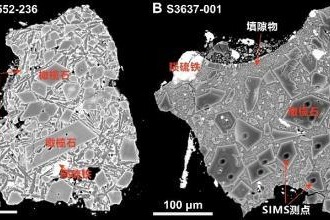
A groundbreaking study conducted by Chinese scientists on a 2-gram lunar soil sample from the Chang’e 6 mission has uncovered rare CI chondrite impact residues, shedding light on the mass transfer processes within the inner solar system and offering fresh perspectives on the distribution and evolution of water on the moon. The research, spearheaded by a team from the Guangzhou Institute of Geochemistry under the Chinese Academy of Sciences, was published in the prestigious journal Proceedings of the National Academy of Sciences on October 21, 2025. CI chondrites, also known as Ivuna-type carbonaceous chondrites, are exceptionally rare meteorites with a primitive chemical composition akin to the sun’s nonvolatile elements. These meteorites, rich in water and volatiles, primarily formed in the outer solar system and migrated into the asteroid belt during the early stages of planetary formation. The discovery of CI chondrite residues in the lunar soil suggests that such materials can travel to the Earth-moon system. Furthermore, the research team posits that the water with positive oxygen isotope characteristics previously detected in lunar samples likely originated from impacts by these meteorites. This revelation opens new avenues for future studies on the sources and evolution of water on the lunar surface.