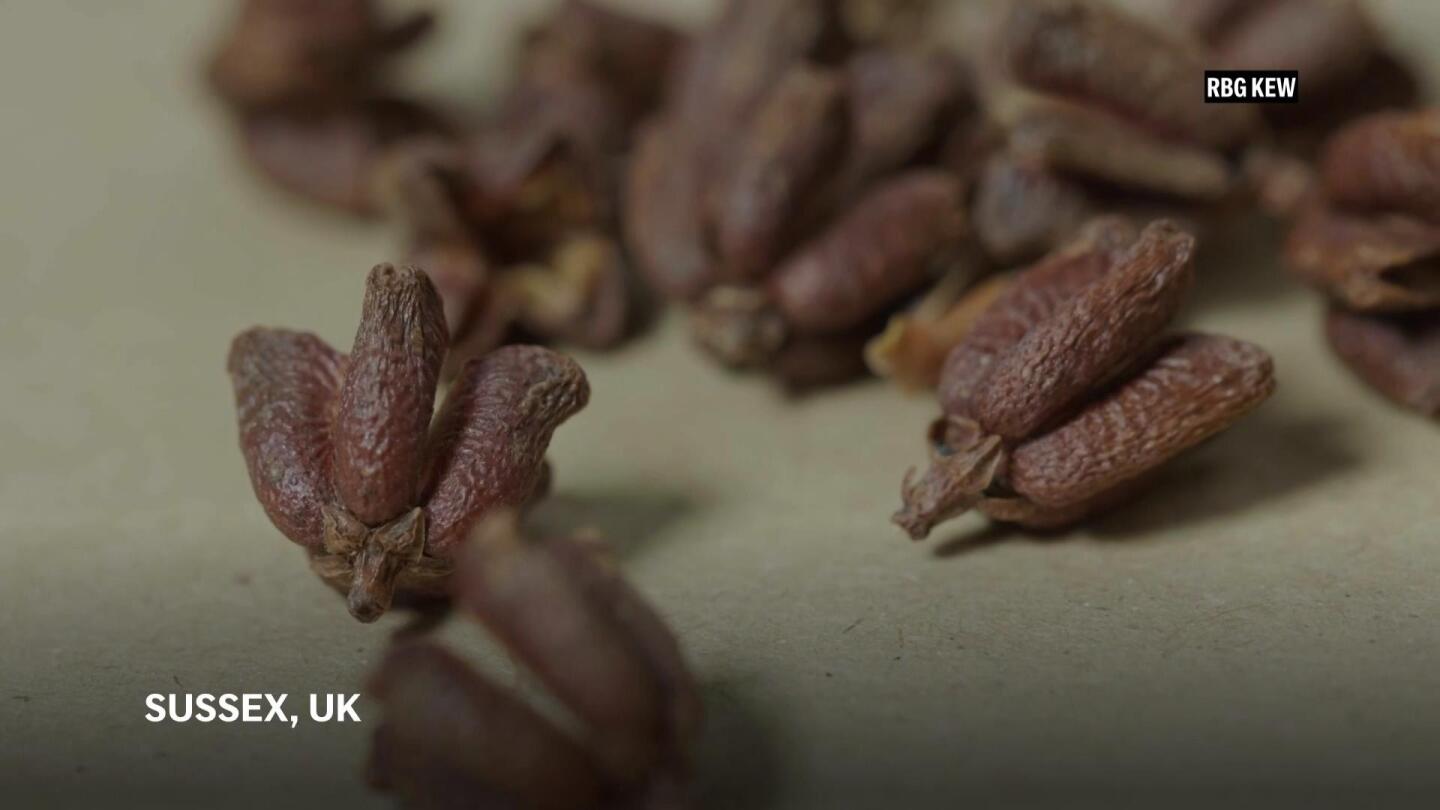
Nestled deep beneath the Sussex countryside in southern England lies the Millennium Seed Bank, a state-of-the-art facility designed to withstand disasters and preserve the world’s plant diversity. Operated by the Royal Botanic Gardens Kew, this underground vault houses over 2.5 billion seeds from approximately 40,000 wild plant species. Stored in sealed glass jars and foil packets at a chilling minus 20 degrees Celsius, these seeds are safeguarded against extinction and climate change. Opened in 2000 by King Charles III, then the Prince of Wales, the facility recently celebrated its 25th anniversary, marking a quarter-century of global conservation efforts. The seed bank’s mission extends beyond preservation; it aims to restore ecosystems worldwide, combat biodiversity loss, and support agricultural resilience in the face of a growing global population. The process begins with field collectors gathering seeds from diverse regions, including Madagascar, Thailand, and Arctic Sweden. These seeds undergo meticulous drying, cleaning, and germination testing to ensure viability before being stored. Kew’s researchers are also pioneering cryopreservation techniques for tropical plants that cannot survive freezing. The Millennium Seed Bank has become a global hub, partnering with 279 organizations in over 100 countries and training more than 3,000 scientists. With nearly half of all flowering plants at risk of extinction, the seed bank serves as a vital insurance policy for global biodiversity, offering hope for a sustainable future.
A seed bank in England marks 25 years of preserving the world’s plant diversity