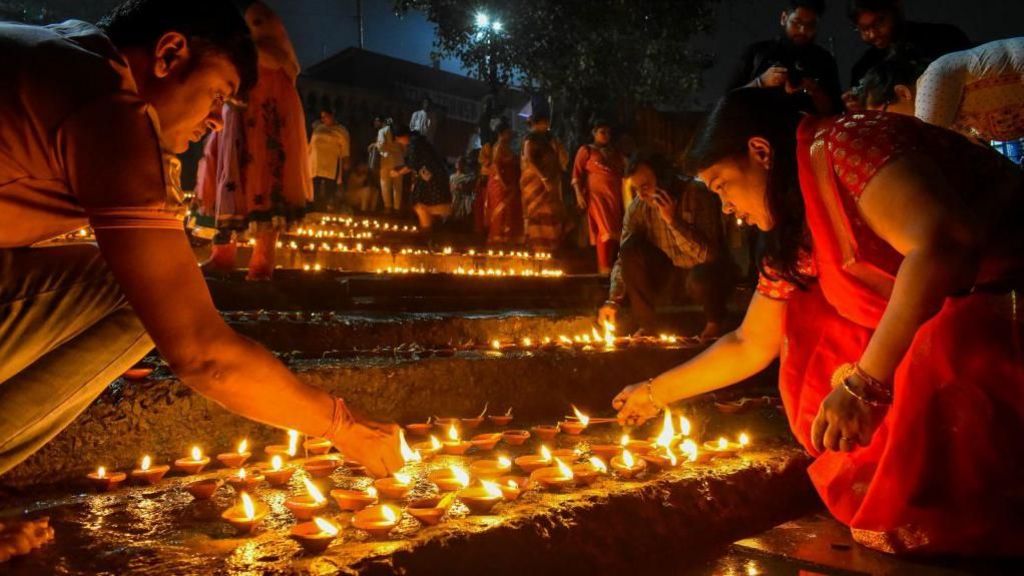
Millions across India are immersed in the vibrant festivities of Diwali, the festival of lights, a cornerstone of Hindu tradition. Homes and streets glow with the warm light of earthen lamps, known as diyas, while fireworks light up the night sky. However, the joyous celebrations come with a significant environmental cost, particularly in northern India, where air pollution spikes during the winter months. This year, the Supreme Court has allowed the sale and use of ‘green crackers’ in Delhi, lifting a ban in place since 2020. These eco-friendly alternatives claim to reduce pollution by 20–30%, though their effectiveness remains debated. Despite restrictions in several states, the widespread use of traditional firecrackers continues to exacerbate air quality issues post-Diwali. Beyond the environmental concerns, Diwali is a time of cultural richness. Families prepare elaborate feasts featuring traditional sweets, curries, and savoury dishes, while homes are adorned with colourful rangoli designs and paper lanterns. The festival also fosters community spirit, transcending religious boundaries as people of all faiths join in the celebrations. Markets bustle with shoppers, providing a significant boost to the economy. Diwali remains a testament to India’s cultural unity and resilience, even as the nation grapples with the dual challenges of preserving tradition and protecting the environment.