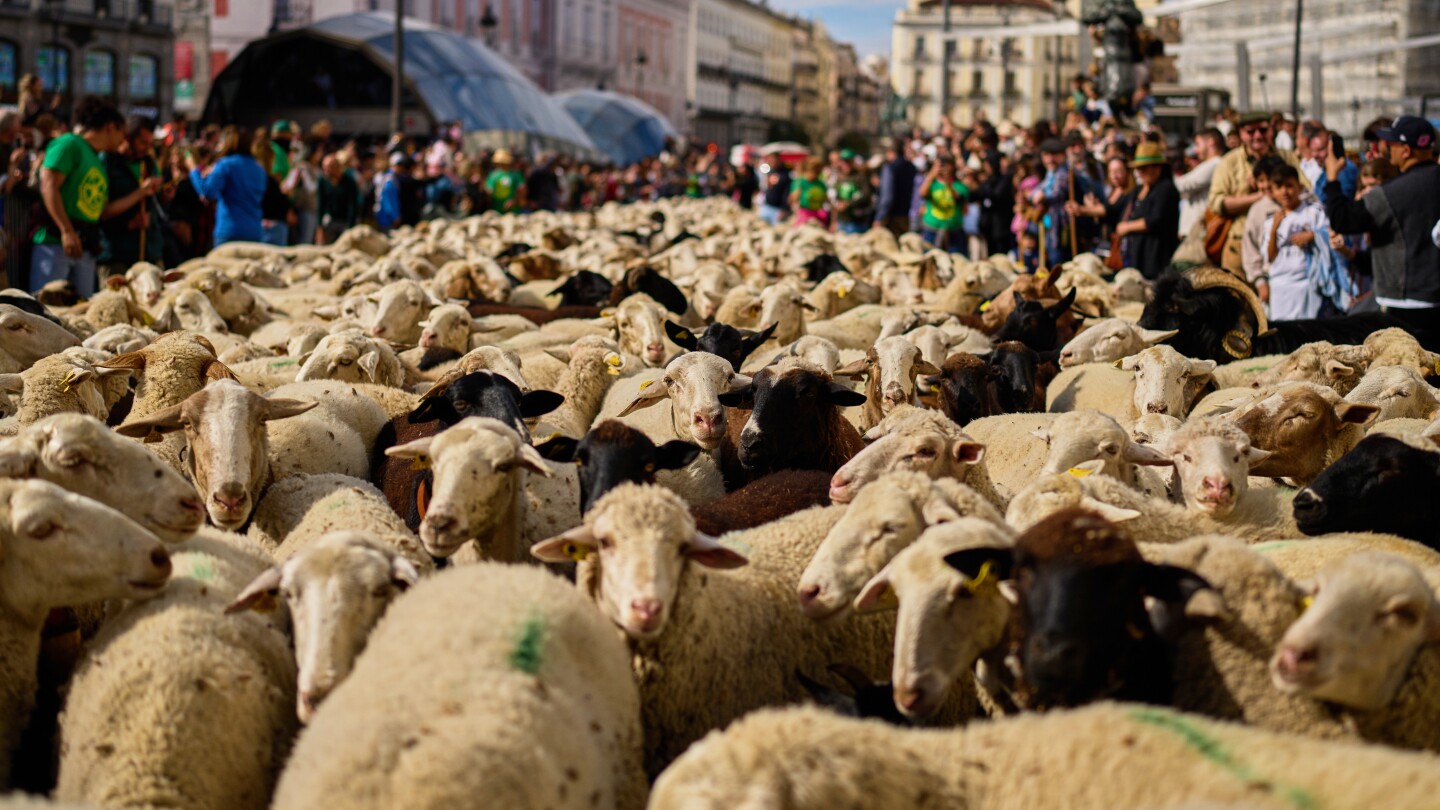
Madrid’s bustling streets took on a pastoral charm this Sunday as a flock of sheep and goats paraded through the Spanish capital, marking the annual Transhumance Festival. This unique event, which honors the region’s rural heritage, drew thousands of spectators who marveled at the sight of 1,100 Merino sheep and 200 goats trotting past iconic landmarks, accompanied by the sounds of bells, bleats, and traditional horn music. The festival recreates the ancient practice of transhumance—moving livestock between seasonal grazing grounds—while highlighting its environmental benefits, such as reducing wildfire risks by clearing flammable undergrowth. Juan García Vicente, a long-time participant and environmentalist, emphasized the festival’s relevance amid Spain’s recent devastating wildfire season, calling for greater efforts to combat climate change and preserve rural traditions. The event also includes a symbolic payment of 50 maravedis, a medieval coin, to Madrid’s city hall, a tradition dating back to a 1418 agreement between the city and shepherds. Since its inception in 1994, the festival has become a cherished cultural event, celebrated not only in Madrid but also in towns across Italy, France, and California. Despite its modern decline due to industrialized farming, transhumance remains a vital practice for a small group of farmers who value its ecological and cultural significance. For attendees like American tourist Jennifer Granda, the festival offered a fascinating glimpse into Spain’s agricultural heritage, while locals like Ana Vásquez appreciated its nostalgic charm and connection to tradition.