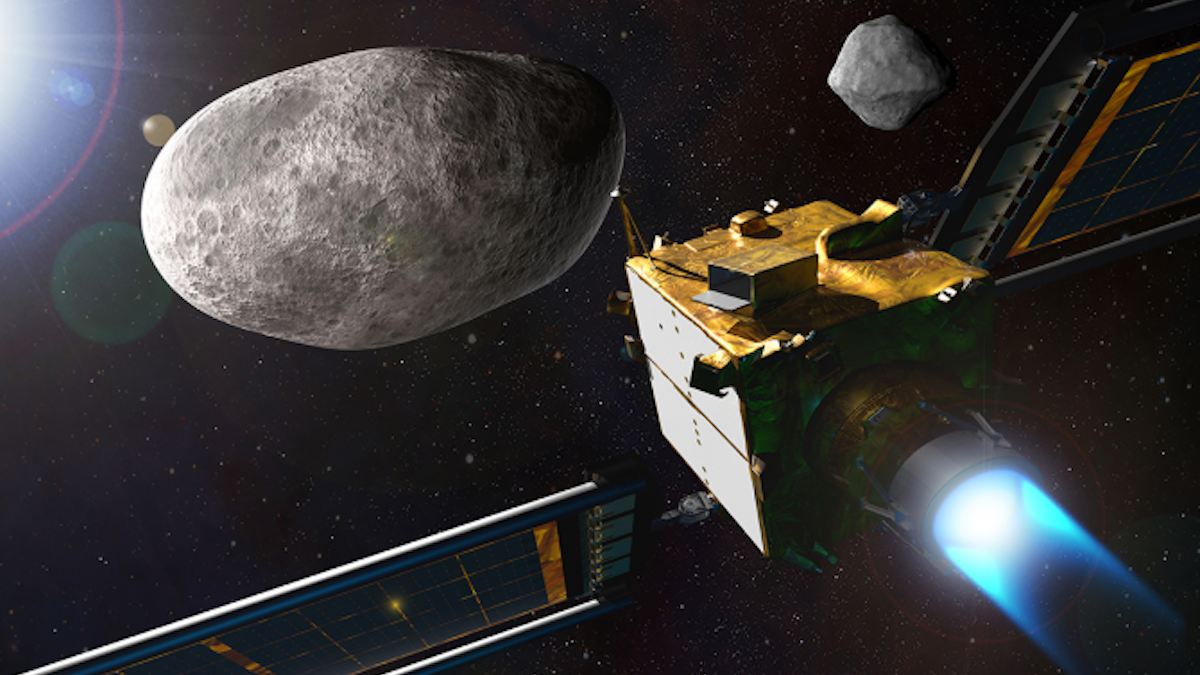
China has announced a groundbreaking mission to deliberately impact a near-Earth asteroid by 2030, marking a significant leap in its planetary defense and asteroid resource utilization capabilities. This initiative, revealed by Wu Weiren, chief designer of China’s lunar exploration program, underscores the nation’s growing ambitions in space exploration and its intent to lead in planetary defense technologies. The mission involves deploying two spacecraft: one as a kinetic impactor and another as an observer to monitor the collision and its effects. This dual approach aims to validate asteroid deflection techniques and assess their feasibility for planetary defense. The announcement comes three years after NASA’s successful Double Asteroid Redirection Test (DART) in 2022, which demonstrated the potential of kinetic impactors to alter asteroid trajectories. China’s plan, however, goes beyond defense, signaling a strategic vision for deep-space resource extraction and economic exploitation. The mission’s dual-use nature has sparked discussions about its potential military applications, particularly in anti-satellite operations. Despite these concerns, China has invited over 40 countries and organizations to collaborate on joint monitoring and research efforts, emphasizing international cooperation. The mission’s complexity lies in its precision and unpredictability, as scientists grapple with the unknown internal composition of asteroids. China’s long-term strategy includes achieving kinetic impact milestones by 2030, propulsion-based deflection tests by 2035, and mastering full-scale asteroid orbit technology by 2045. This ambitious timeline aligns with the anticipated maturity of asteroid resource utilization, positioning China as a key player in the emerging trillion-dollar space economy.