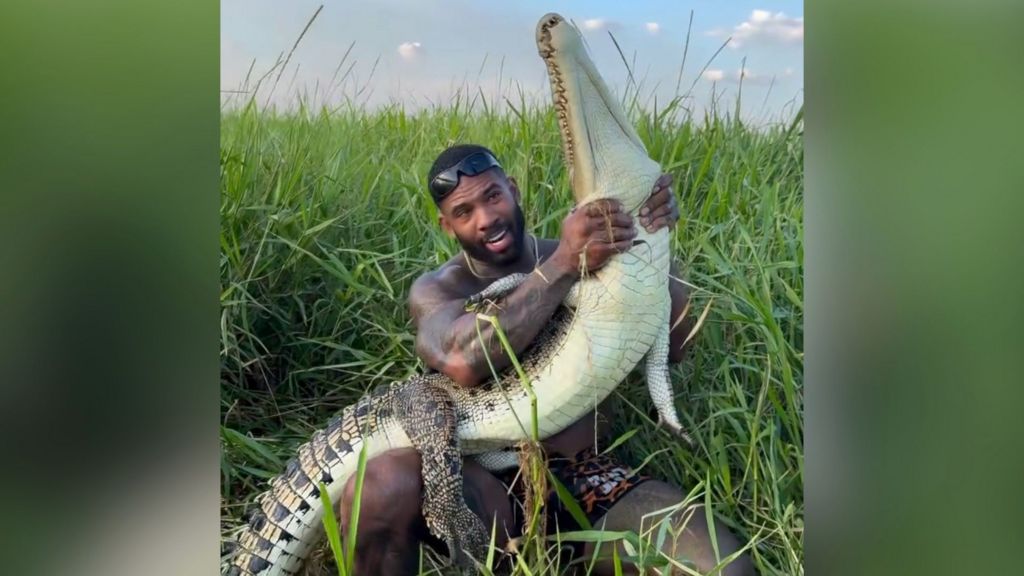
Australian authorities are investigating US influencer Mike Holston, known as ‘The Real Tarzann,’ after he posted controversial videos of himself capturing wild crocodiles in Queensland. The footage, which has sparked widespread condemnation, shows Holston wrestling a freshwater crocodile and manhandling a juvenile saltwater crocodile, one of the world’s most aggressive reptiles. While Holston claims the videos were made for ‘educational purposes,’ wildlife experts and government officials have labeled his actions as ‘extremely dangerous and illegal.’
In one video, Holston is seen jumping into shallow water to chase a freshwater crocodile, which draws blood before he secures it. In another, he captures a seemingly limp saltwater crocodile in marshland. Both animals were later released, but experts have raised concerns about the stress and potential harm caused to the reptiles. Queensland officials have warned that such actions can result in fines of up to A$37,500, with on-the-spot penalties of A$8,345 for interfering with saltwater crocodiles.
The state government has also introduced new legislation to crack down on dangerous wildlife interactions, including penalties for unintentionally feeding crocodiles. Holston’s videos, while popular online, have drawn criticism from figures like Bob Irwin, father of the late naturalist Steve Irwin, who called for stricter penalties and condemned the influencer’s behavior. Irwin emphasized that handling crocodiles requires specialized skills to avoid causing stress or harm, and criticized social media for glorifying harmful wildlife interactions.
Holston has defended his actions, stating that the animals were released unharmed and that he does not encourage others to replicate his videos. This incident follows another controversy earlier this year involving a US influencer who was widely condemned for taking a baby wombat from the roadside. Prime Minister Anthony Albanese weighed in on that case, suggesting the influencer try the same with more dangerous animals. The ongoing backlash highlights growing concerns about the impact of social media on wildlife and the need for stricter enforcement of wildlife protection laws.