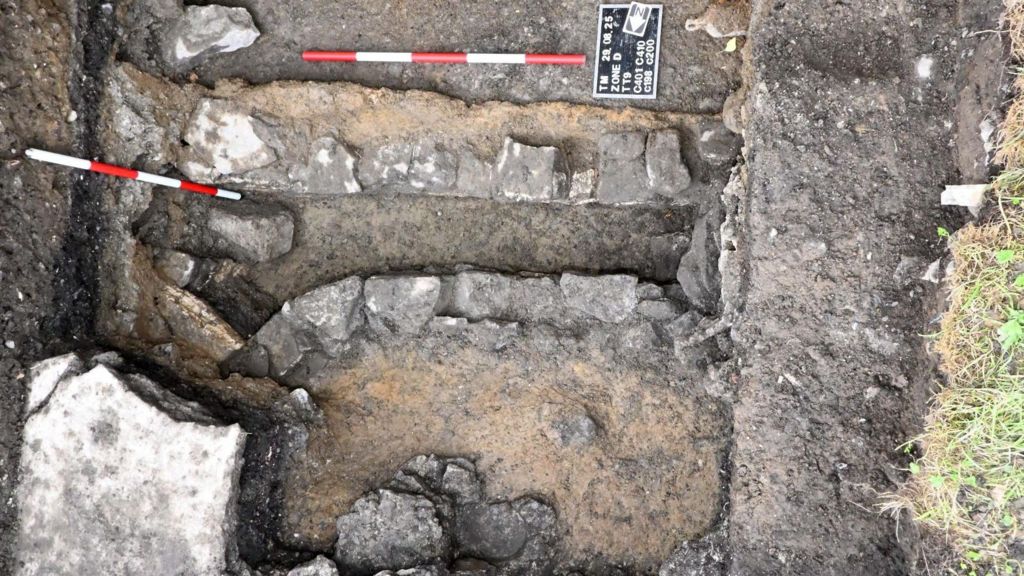
Archaeologists working at the site of the former St Mary’s mother-and-baby institution in Tuam, County Galway, have unearthed significant findings that offer a glimpse into the institution’s troubled history. The excavation, led by the Office of the Director of Authorised Intervention, Tuam (ODAIT), has revealed five sets of skeletal human remains believed to predate the institution’s operation. These remains were discovered near a 19th-century boundary wall during meticulous hand excavations. Additionally, the team has recovered a variety of personal and medicinal items from the ‘institutional era,’ including shoes, spectacles, and baby glass bottles. Notably, a window frame, a pathway, two drains, and an underground vaulted structure comprising at least three chambers were also uncovered. This structure, however, is distinct from the one where human remains were found in 2017. ODAIT, in collaboration with the National Museum of Ireland, continues its efforts to identify and honor the remains of children and babies believed to be buried in a mass grave at the site. The institution, which operated from 1925 to 1961 under the management of the Bon Secours Sisters and Galway County Council, gained international attention in 2014 when local historian Catherine Corless uncovered evidence of 796 death certificates for children and babies who died there, with no corresponding burial records. The ongoing excavation aims to bring closure to the families affected by this tragic chapter in Ireland’s history.