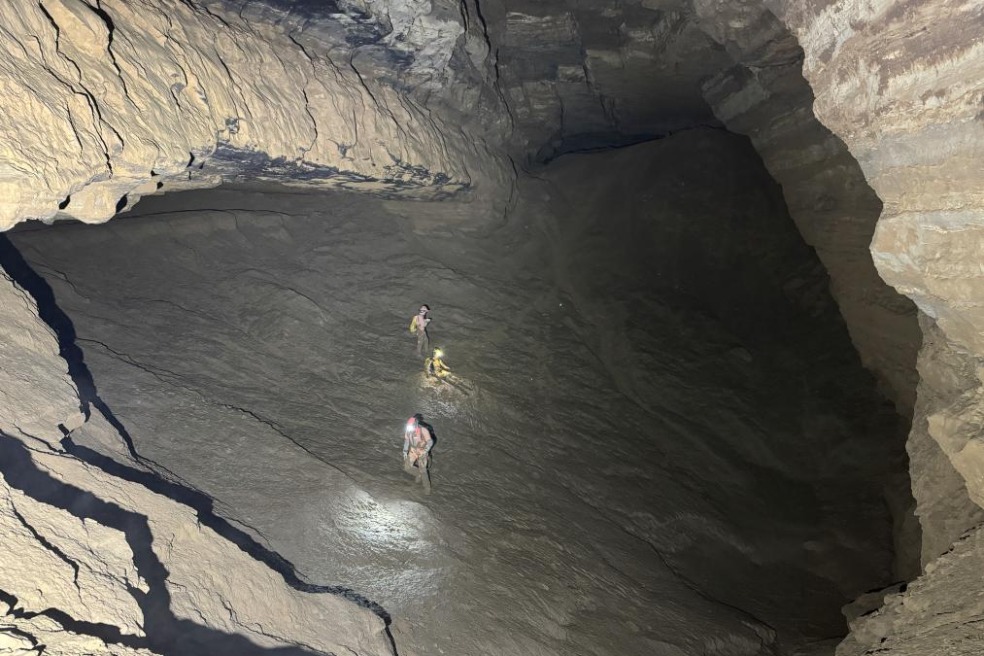
In a groundbreaking discovery, 52 giant panda fossils have been unearthed in the Shuanghe Cave network, located in Suiyang county, Guizhou province, Southwest China. This remarkable find, announced during a press conference on the results of the 24th International Cave Science Expedition, establishes Shuanghe Cave as the site with the largest concentration of giant panda fossils globally. The fossils, including six newly uncovered specimens, provide critical insights into the species’ evolutionary journey over the past 100,000 years. According to Wang Deyuan, an associate research fellow at the Guizhou Academy of Sciences’ Institute of Mountain Resources, the fossils represent a relatively continuous chronological sequence, with teeth analysis indicating that most of the pandas were subadult or new adult individuals. The discovery also includes numerous limb bones and skulls, enabling researchers to study changes in the species’ body weight over time. Findings suggest that giant pandas reached their peak body weight during the Middle Pleistocene, after which it gradually decreased to present-day levels. Shuanghe Cave, spanning 439.7 kilometers, is not only the longest cave in Asia but also the third-longest in the world. Since the late 1980s, it has been the focus of 24 international joint scientific expeditions, cementing its status as a hub for paleontological and geological research.