The United States has conducted a series of military strikes in the Caribbean Sea, targeting vessels allegedly involved in drug trafficking. President Donald Trump announced the first of these strikes in September, claiming that a boat operated by the Tren de Aragua cartel, departing from Venezuela and carrying drugs bound for the US, had been destroyed. Subsequent strikes have been accompanied by grainy footage, though US officials have not provided concrete evidence of drug trafficking or detailed information about the vessels targeted. These actions have sparked regional condemnation and raised significant legal and ethical questions. Colombian President Gustavo Petro disputed one strike, asserting that the targeted boat was Colombian with Colombian citizens onboard, a claim denied by the White House. Legal experts have questioned the legality of the strikes under international maritime law, particularly the United Nations Convention on the Law of the Sea, which the US has not signed but claims to follow. Professor Luke Moffett of Queen’s University Belfast noted that while force can be used to stop a boat, it should generally be non-lethal and must be reasonable and necessary in self-defense. Critics argue that labeling individuals as narco-terrorists does not make them lawful military targets, and the US is not engaged in an armed conflict with Venezuela or the Tren de Aragua cartel. A leaked memo to Congress reportedly stated that the Trump administration considers the US to be in a ‘non-international armed conflict’ with drug cartels. Despite support from some Republicans, including Senator Lindsey Graham, who praised the strikes as a sign of strong leadership, concerns have been raised about compliance with US law, particularly the War Powers Resolution, which requires consultation with Congress before military action. Venezuela’s President Nicolás Maduro has denied involvement in drug trafficking and condemned the strikes, which come amid reports of increased US naval presence in the region. The USS Lake Erie, USS Gravely, USS Jason Dunham, and USS Fort Lauderdale have been identified in the Caribbean, supporting anti-narcotics operations. Trump has also offered a $50 million reward for information leading to Maduro’s arrest, further escalating tensions between the two nations.
标签: South America
南美洲
-
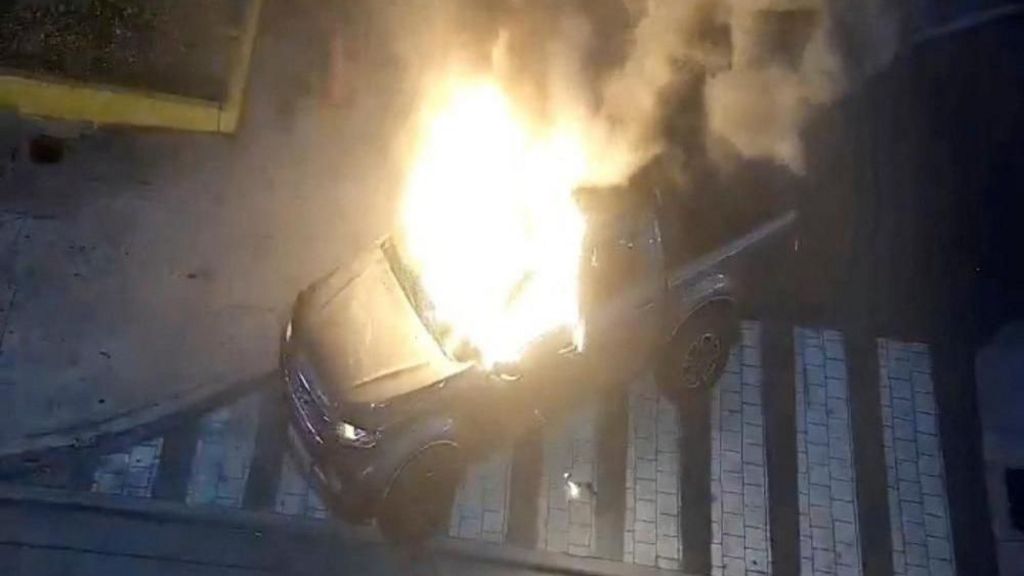
One dead after vehicle explodes outside Ecuador shopping mall
A deadly explosion rocked the bustling city of Guayaquil, Ecuador, on Tuesday evening, claiming at least one life and injuring several others. The incident occurred when a pick-up truck packed with explosives detonated outside Mall del Sol, a prominent shopping center in the northern part of the port city. Witnesses reported seeing the vehicle engulfed in flames before it exploded, scattering debris and causing widespread panic. Among the victims was a taxi driver parked nearby, who tragically lost his life. Ecuador’s Interior Minister, John Reimberg, confirmed that police discovered multiple explosive devices within the remains of the truck. Authorities also conducted a controlled detonation of a second vehicle found to contain explosives in the vicinity. Reimberg attributed the attack to criminal gangs, stating on social media platform X that the devices were ‘professionally manufactured by criminal groups aiming to sow chaos.’ The blast follows a recent incident where police defused a gas cylinder rigged with explosives outside Litoral prison, a facility notorious for housing powerful drug-trafficking gangs. Guayaquil Mayor Aquiles Álvarez linked the explosion to previous attempted attacks, suggesting that the perpetrators aimed to pressure authorities into releasing jailed gang members. President Daniel Noboa’s government has declared Ecuador in a state of ‘internal armed conflict’ and designated several gangs as terrorist organizations. The incident underscores the escalating violence fueled by drug trafficking, which has contributed to Ecuador’s soaring crime rates.
-
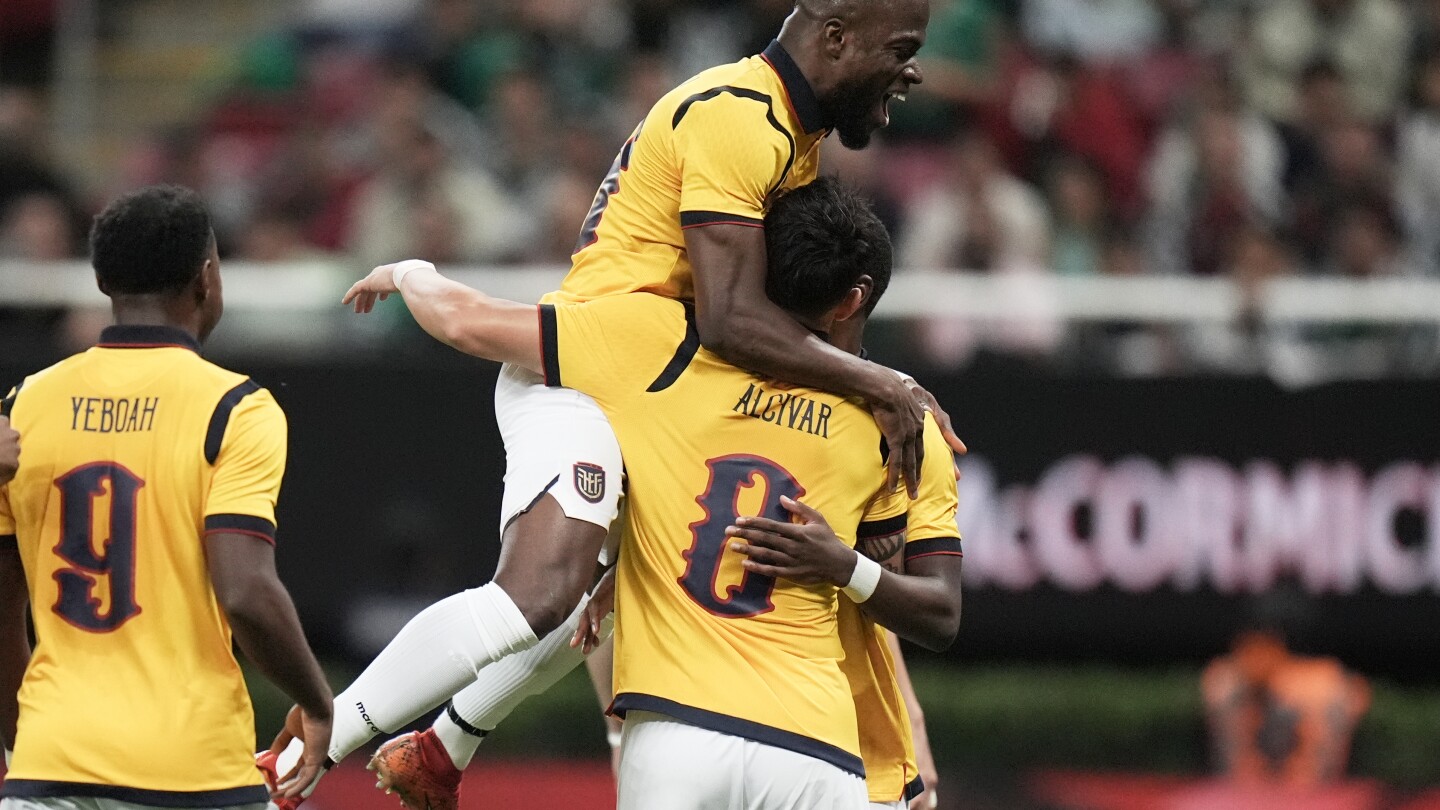
Ecuador and Mexico draw 1-1 in a World Cup warmup
In a tightly contested warmup match for the 2026 FIFA World Cup, Ecuador managed to secure a 1-1 draw against Mexico on Tuesday in Guadalajara. The game saw early action as Germán Berterame put Mexico ahead in the third minute with a swift strike. However, Ecuador responded with determination, and Jordy Alcívar leveled the score in the 20th minute through a well-executed penalty kick. This result extended Mexico’s winless streak to four matches, following a disappointing 4-0 loss to Colombia last Saturday. Mexico’s last victory dates back to July 6, when they defeated an alternate United States squad in the Gold Cup final. The team will now look to break this streak in November when they face Uruguay. Meanwhile, Ecuador, which finished second in South America’s World Cup qualifiers behind Argentina, continues to build momentum after a 1-1 draw against the United States last Friday. Both teams are using these matches to fine-tune their strategies ahead of the 2026 World Cup, where Mexico will co-host with Canada and the United States.
-
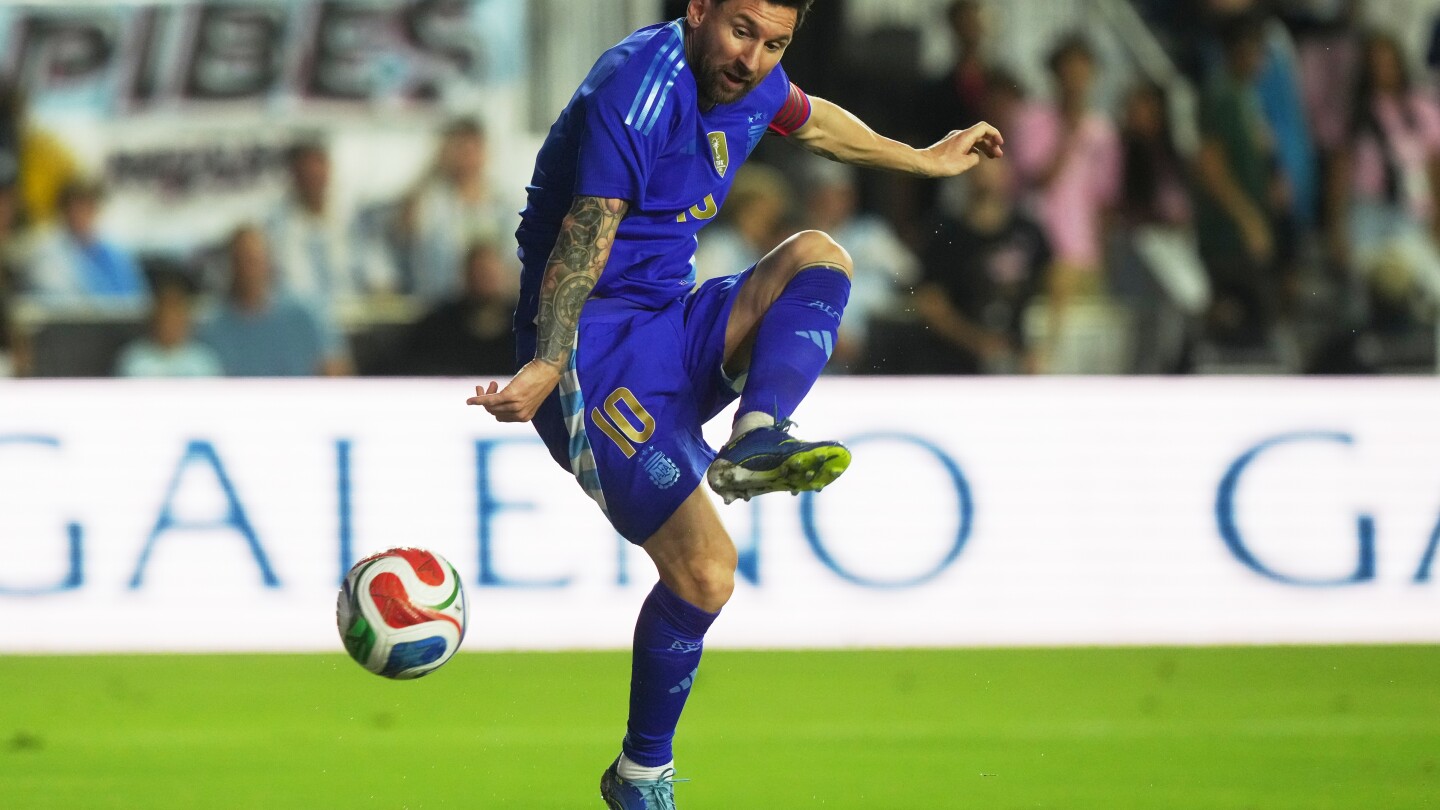
Messi gets two assists, Argentina beats Puerto Rico 6-0 in relocated soccer friendly
In a commanding display of skill and teamwork, Lionel Messi led Argentina to a resounding 6-0 victory over Puerto Rico in an international friendly match held in Fort Lauderdale, Florida. The game, originally slated for Chicago, was relocated due to low ticket sales and concerns over an ongoing immigration crackdown in the area. Messi, playing on familiar turf as a member of Inter Miami, showcased his brilliance with two assists and a pivotal role in setting up another goal. His first-half lob set up Gonzalo Montiel’s opener, while a clever back pass in the 83rd minute facilitated Lautaro Martínez’s second goal of the night. Alexis Mac Allister contributed with a brace, and an own goal further cemented Argentina’s dominance. Despite the lopsided matchup between FIFA’s third-ranked team and 155th-ranked Puerto Rico, the latter’s goalkeeper, Sebastian Cutler, made notable saves against Messi. The match, part of Argentina’s World Cup preparations, drew a modest crowd initially but filled up as the game progressed. The relocation controversy and the stark contrast in team rankings added layers of intrigue to the event.
-
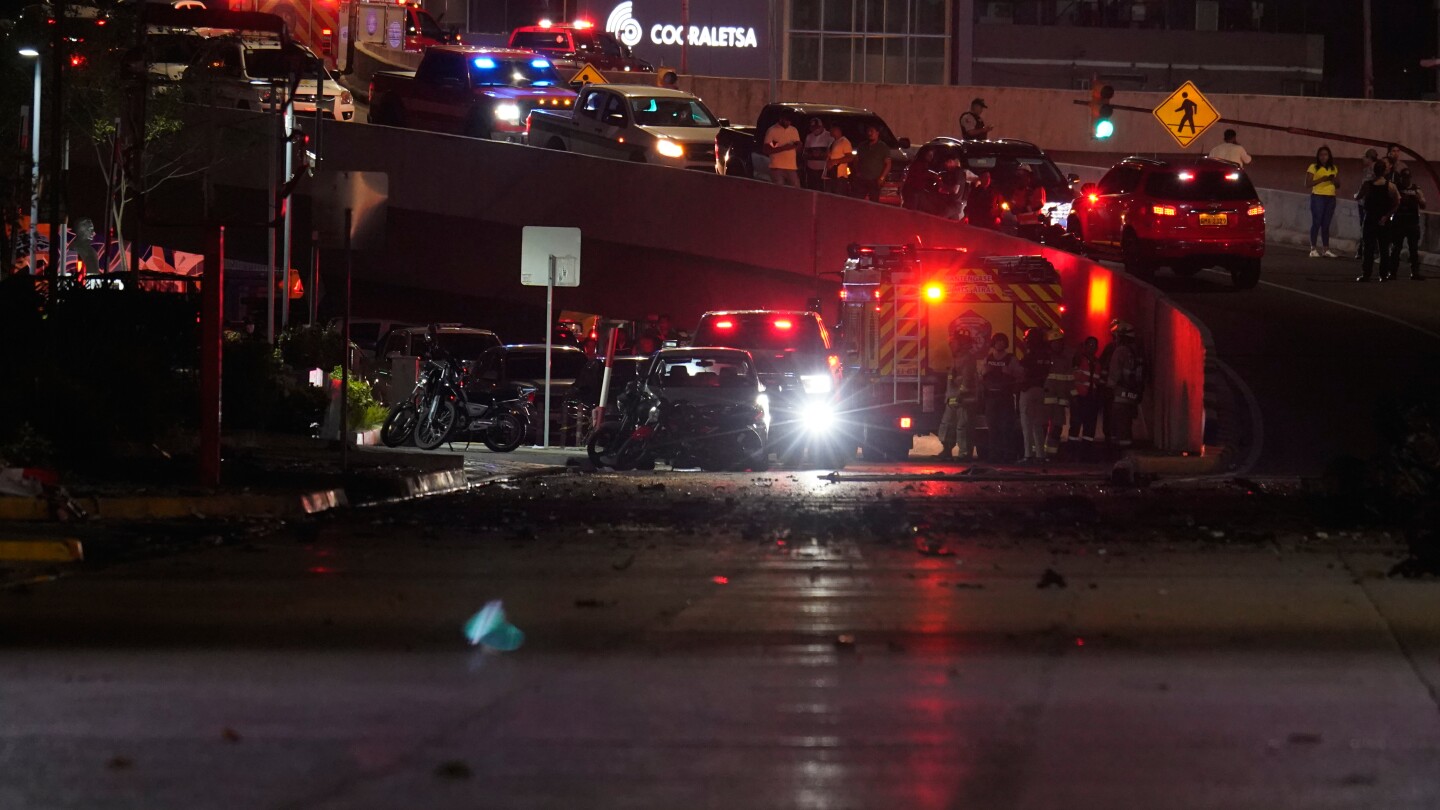
Pickup truck explodes on busy street in Ecuador
A devastating explosion occurred on a bustling shopping street in Guayaquil, Ecuador, on Tuesday evening, leaving one person dead and two others injured. Authorities have labeled the incident as an intentional attack. The victim, identified as a nearby cab driver, succumbed to the blast, according to Maj. Jorge Montanero of the Guayaquil fire department, who spoke to local television station Ecuavisa. Emergency responders evacuated surrounding buildings as a precaution, while police conducted thorough inspections of vehicles in the area. Montanero hinted at the possibility of a car bomb, stating, “A normal car doesn’t blow up like that.”
Guayaquil’s police chief, Francisco Zumárraga, confirmed the discovery of a “new threat” and announced plans for a controlled detonation. He vowed to apprehend those responsible for the attack. The Attorney General’s Office has launched an investigation, interviewing witnesses and reviewing surveillance footage to piece together the events.
This incident adds to a troubling pattern of vehicle explosions in Ecuador, which saw a surge in violence following the assassination of a presidential candidate in 2023. Earlier this year, a bomb attributed to a criminal network exploded outside Ecuador’s largest prison, killing a prison guard. While other explosions in Quito last year caused minor damage, Tuesday’s attack has raised alarms.
Governor Humberto Plaza of Guayas province, where Guayaquil is the capital, condemned the explosion as “terrorism plain and simple” and pledged to bring the perpetrators to justice. “We’re going to grab them, and they’re going to pay,” he declared. The explosion shattered windows in nearby restaurants and stores, leaving the community in shock and underscoring the growing security challenges in the region.
-
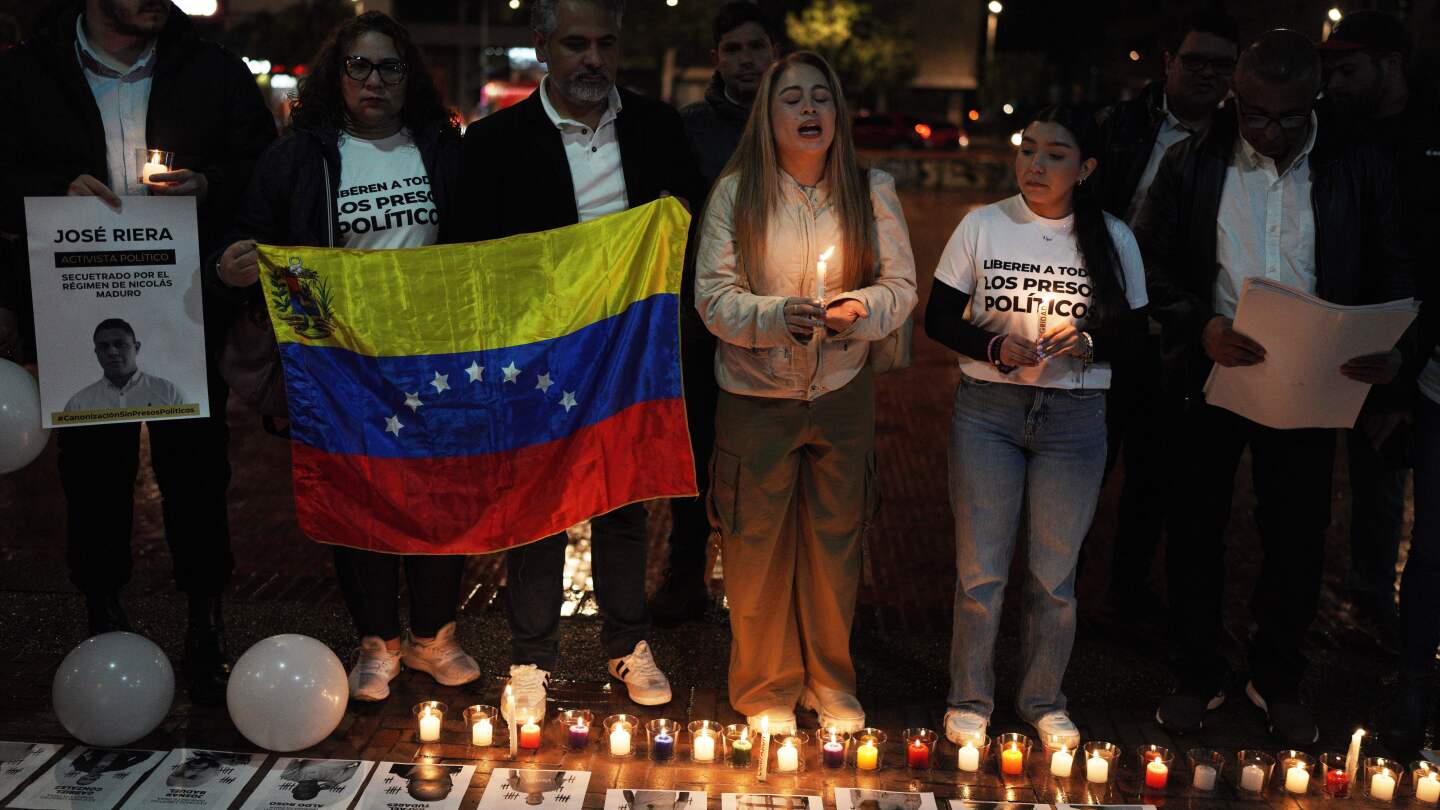
Hit-style shooting of Venezuelan activists in Colombia fuels fear of wider persecution by Maduro
The recent targeted shooting of two Venezuelan activists in Bogotá, Colombia, has ignited widespread concern among Venezuela’s diaspora, raising alarms that President Nicolás Maduro’s crackdown on dissent is extending beyond Venezuela’s borders. On Monday afternoon, human rights activist Yendri Velásquez and political consultant Luis Peche Arteaga were ambushed by unidentified assailants in a car as they exited a building in northern Bogotá. The attackers fired approximately 15 shots, with Peche Arteaga sustaining six gunshot wounds. Both victims underwent surgery and are now in stable condition, according to Laura Dib, Velásquez’s colleague and Venezuela Program Director for the Washington Office on Latin America.
The incident has sent shockwaves through Venezuela’s human rights community, with Dib describing it as a stark reminder of the dangers of transnational repression. While Colombian authorities are investigating the attack, civil society leaders suspect the shooting was politically motivated, given the victims’ profiles as prominent critics of the Maduro regime. Velásquez and Peche Arteaga were among the thousands who fled Venezuela last year following widespread accusations of election fraud and the government’s detention of over 2,000 activists and opposition figures.
Velásquez, who had previously been arbitrarily detained by Venezuelan authorities and had his passport canceled, sought refuge in Colombia, joining nearly 8 million Venezuelans who have fled the country’s economic and political crisis. However, the attack has heightened fears among exiles that they are no longer safe even abroad. Arles Pereda, president of the Colony of Venezuelans in Colombia, warned that such violence was anticipated due to the government’s history of targeting civil society groups. He emphasized the need for enhanced security measures, including hiring bodyguards and identifying third countries for emergency relocation.
The shooting coincides with escalating tensions in the region. Venezuelan opposition leader María Corina Machado, who recently received the Nobel Peace Prize, condemned the attack as a grave aggression and called for protection for Venezuelan exiles. Meanwhile, Maduro’s government has drawn criticism for its abrupt closure of the Venezuelan embassy in Oslo and its ongoing disputes with the U.S. over drug trafficking allegations. The Trump administration’s recent reduction of international aid and protections for Venezuelans has further complicated efforts to support exiles.
As Andean nations grapple with the largest migratory crisis in Latin American history, hostility toward Venezuelan migrants has grown, exacerbating their vulnerability. Despite seeking assistance from Colombia’s Ombudsman’s Office, Velásquez had not been granted international protection at the time of the attack. Dib lamented the missed opportunities to safeguard activists, calling the incident a wake-up call for the international community to address the escalating threats faced by Venezuelan dissidents.
-
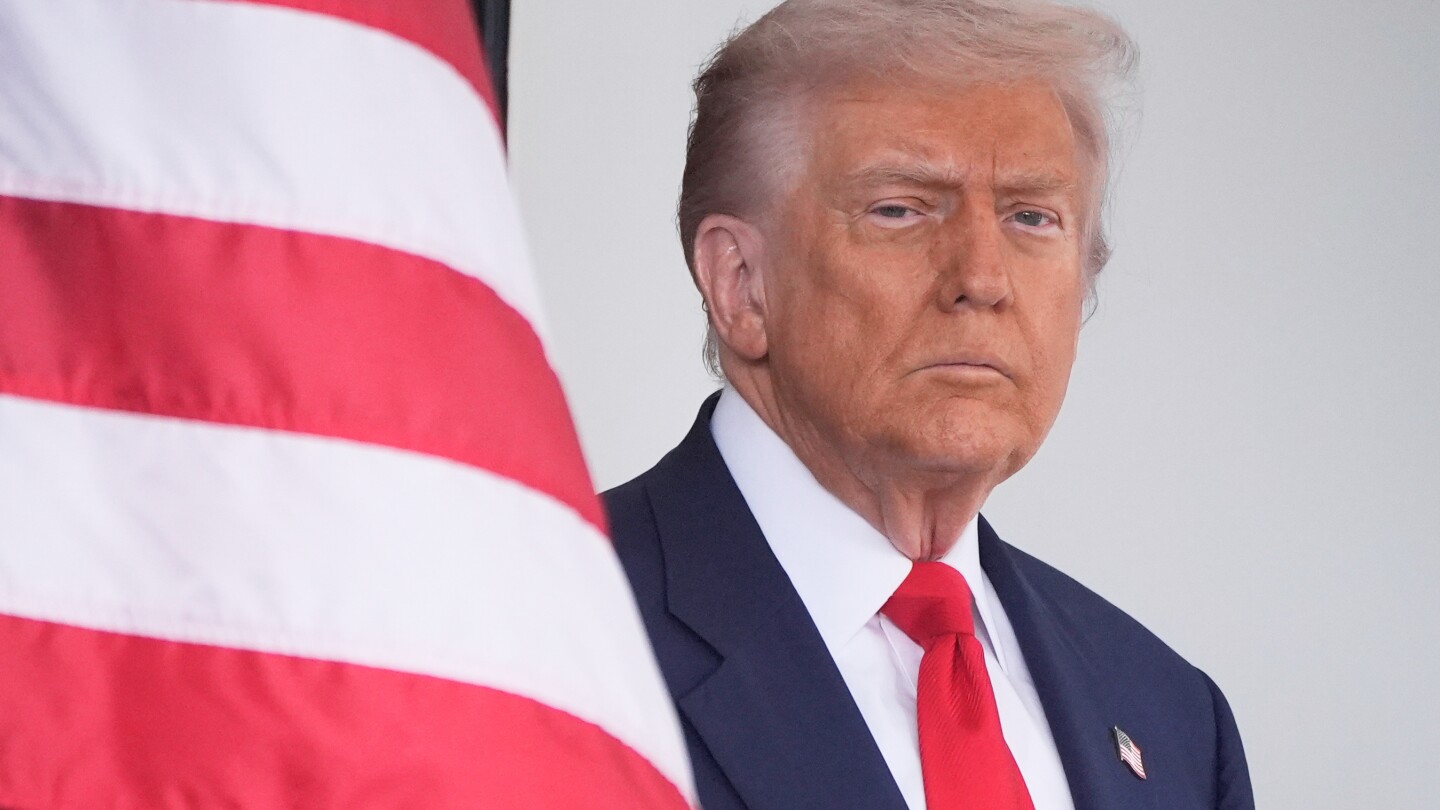
US strikes another boat accused of carrying drugs in waters off Venezuela, killing 6, Trump says
The Trump administration has carried out its fifth deadly strike in the Caribbean, targeting a small boat allegedly involved in drug trafficking off the coast of Venezuela. President Donald Trump announced the operation on social media, stating that six individuals aboard the vessel were killed, and no U.S. forces were harmed. The strike was ordered by Defense Secretary Pete Hegseth and executed in international waters, with intelligence confirming the boat’s association with narcoterrorist networks and its presence on a known drug trafficking route. This marks the latest in a series of aggressive actions by the administration, which has classified alleged drug traffickers as unlawful combatants subject to military force. However, the strikes have sparked growing bipartisan frustration on Capitol Hill. Republicans are demanding more details on the legal justifications, while Democrats argue that the operations violate both U.S. and international law. The Senate recently voted on a war powers resolution to restrict such strikes without congressional authorization, but it failed to pass. Meanwhile, the Trump administration has yet to provide concrete evidence to lawmakers proving the targeted boats were indeed carrying narcotics. Venezuelan Defense Minister Vladimir Padrino has accused the U.S. of using false drug-trafficking claims to justify its actions, warning of a potential escalation and describing the U.S. approach as ‘anti-political, anti-human, warmongering, rude, and vulgar.’
-
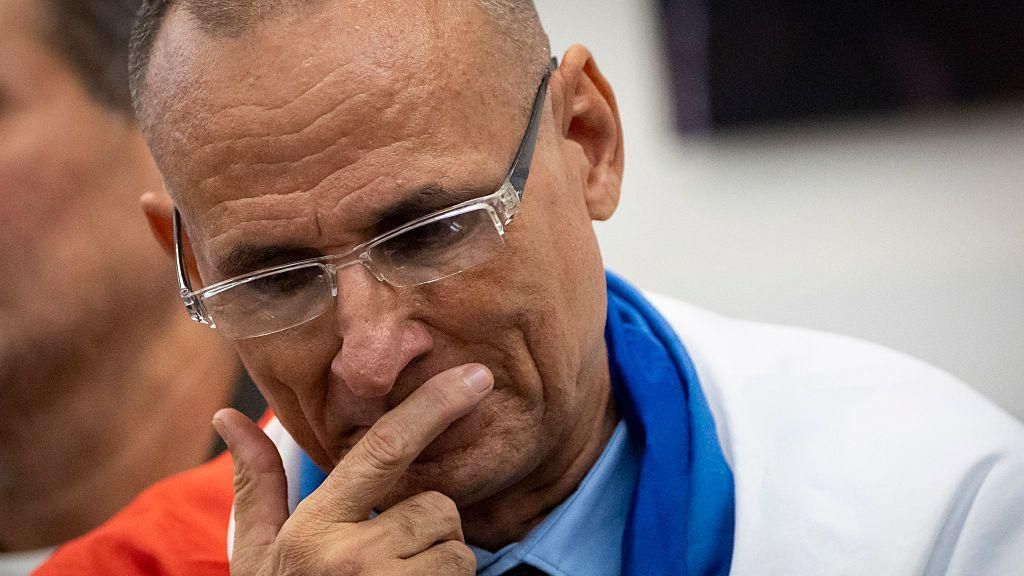
Cuban dissident begins US exile after release from jail
José Daniel Ferrer, a prominent Cuban dissident and vocal critic of the Communist government, has arrived in Miami following his release from a Cuban prison. Upon landing in the United States, Ferrer immediately called for the freedom of hundreds of political prisoners still detained in Cuba. The 55-year-old activist revealed earlier this month that he made the ‘difficult decision’ to go into exile after learning that his wife could face imprisonment and their son might be sent to a juvenile detention facility. The Cuban foreign ministry stated that Ferrer and his family left the country following a ‘formal request’ from the U.S. government, emphasizing that Ferrer had given his ‘explicit acceptance.’ Ferrer, the coordinator of the Patriotic Union of Cuba, a coalition of dissident organizations, has been a relentless advocate for democracy in a country where political opposition is banned. His activism has led to multiple imprisonments, including a brief release in January 2023 as part of a Vatican-negotiated deal that saw Cuba removed from the U.S. list of state sponsors of terrorism. However, Ferrer was re-arrested three months later for allegedly violating his parole terms. He has accused Cuban authorities of subjecting him to humiliation and torture, describing his treatment as ‘cruelty without bounds.’ Fellow dissidents have labeled his departure as a ‘forced exile.’ U.S. Secretary of State Marco Rubio praised Ferrer’s leadership and advocacy, stating that his efforts posed a significant threat to the Cuban regime. Rubio also urged the international community to hold Cuba accountable for its human rights abuses and demand the release of over 700 political prisoners.
-
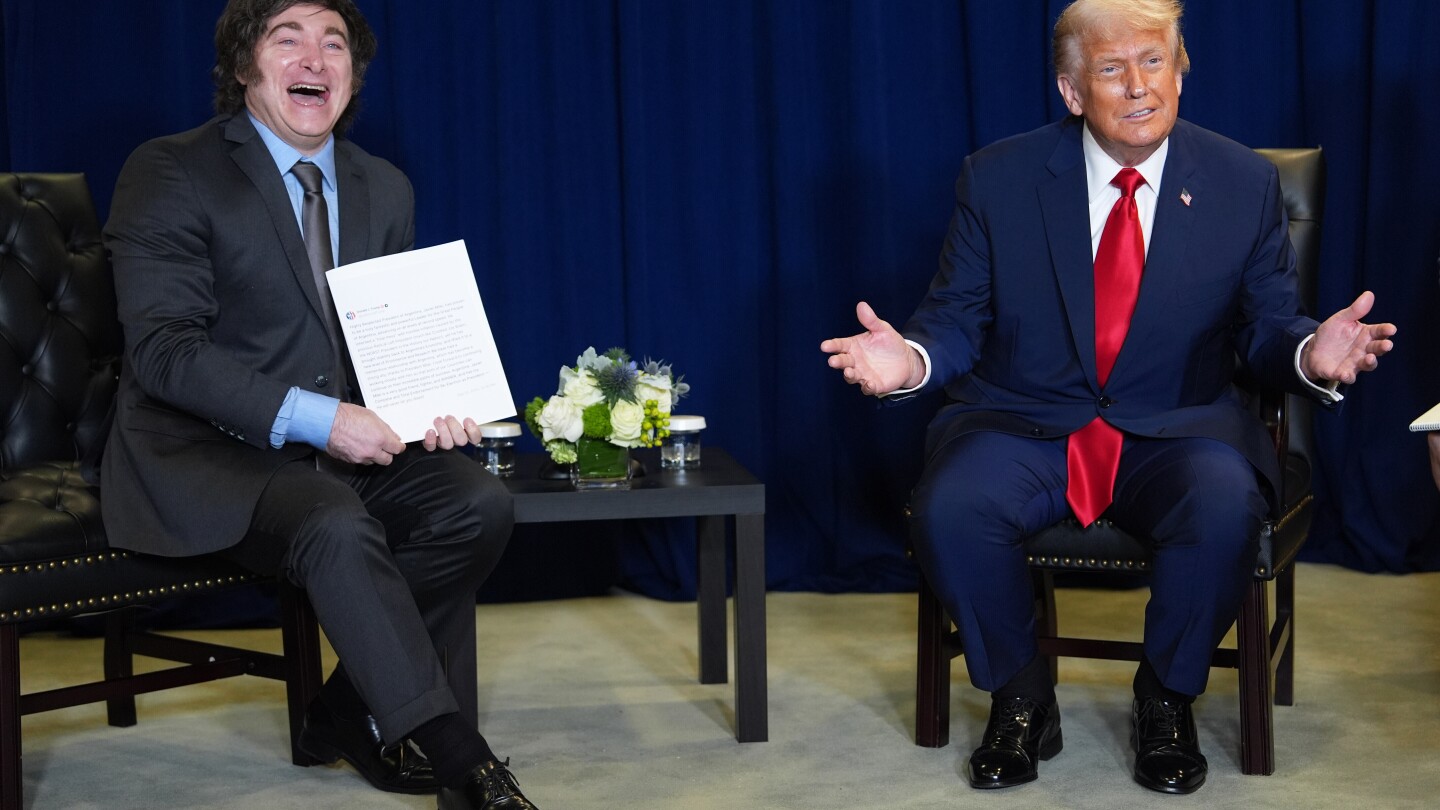
Trump to welcome Argentina’s President Milei as US extends $20 billion lifeline
Argentina’s libertarian President Javier Milei is set to meet with U.S. President Donald Trump at the White House on Tuesday, marking a pivotal moment in their burgeoning alliance. Milei, known for his dramatic cuts to state spending and vocal opposition to leftist ideologies, has cultivated a strong rapport with Trump, positioning Argentina as one of the Trump administration’s closest allies. This relationship has already yielded significant benefits, including a $20 billion bailout to stabilize Argentina’s faltering economy. Milei’s effusive praise for Trump, particularly his role in brokering a Gaza ceasefire, underscores the depth of their political camaraderie. ‘Your commitment to life, freedom, and peace has restored hope to the world,’ Milei wrote on social media, hailing Trump as a ‘dear friend’ and a leadership exemplar. The meeting comes at a critical juncture for Argentina, which is grappling with a currency crisis, rising unemployment, and dwindling foreign reserves. Milei’s objectives include negotiating tariff exemptions for Argentine exports and securing the implementation of a $20 billion currency swap to bolster the peso ahead of crucial midterm elections. Despite concerns over Argentina’s ability to repay its debts, Milei remains optimistic, touting U.S. support as a lifeline against ’21st-century socialism’ and envisioning an economic resurgence. Critics, however, question the sustainability of this aid, warning that it may only provide temporary relief without addressing Argentina’s systemic issues.
-
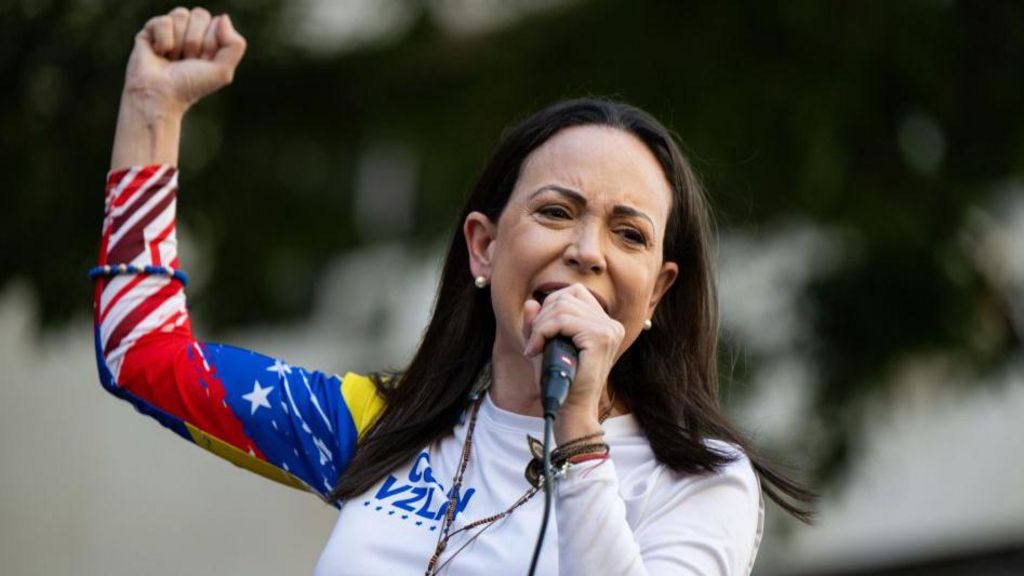
Venezuela shuts embassy in Norway following opposition leader’s Nobel award
Venezuela has announced the closure of its embassy in Oslo, just days after opposition leader María Corina Machado was awarded the Nobel Peace Prize. The Venezuelan government, in a statement, attributed the closure to a restructuring of its foreign service, avoiding any direct mention of Machado’s accolade. Norway’s foreign ministry confirmed the embassy’s shutdown but did not provide a specific reason, labeling the decision as ‘regrettable.’ The Nobel Committee honored Machado for her ‘tireless work promoting democratic rights for the people of Venezuela,’ a move that drew sharp criticism from Venezuelan President Nicolás Maduro, who referred to her as a ‘demonic witch.’ Machado, a long-time critic of Maduro’s regime, has been living in hiding for much of the past year. In her response to the award, Machado described it as ‘an injection of energy, hope, and strength’ for her political movement, emphasizing that it reassures Venezuelans they are not alone in their struggle. The embassy closures in Oslo and Australia, coupled with the opening of new diplomatic outposts in Zimbabwe and Burkina Faso, signal Venezuela’s strategic realignment amid escalating tensions with the United States. The U.S. military’s recent strikes on boats allegedly carrying narcotics from Venezuela have further strained relations, drawing international condemnation. This incident echoes past diplomatic fallout over the Nobel Peace Prize, notably with China in 2010, when the award to dissident Liu Xiaobo led to a six-year suspension of ties with Norway.