In a significant diplomatic escalation, Peru’s Congress has officially declared Mexican President Claudia Sheinbaum as ‘persona non grata,’ effectively barring her from entering the country. This decision follows Peru’s recent severance of diplomatic ties with Mexico, triggered by Mexico’s decision to grant asylum to former Peruvian Prime Minister Betssy Chávez. Chávez faces charges related to her alleged involvement in a 2022 coup attempt led by ousted President Pedro Castillo, who sought to dissolve Peru’s Congress. She has since taken refuge in the Mexican embassy in Lima. Mexico has defended its actions, asserting that the asylum offer complies with international law and rejecting Peru’s characterization of the move as ‘unfriendly.’ The Peruvian Congress passed the declaration with a 63-33 vote, further straining relations between the two Latin American nations. During the proceedings, Peruvian legislators also accused Sheinbaum of having ties to drug trafficking, though no evidence was provided to substantiate these claims. Chávez, who was imprisoned in June 2023 and later released on bail in September, denies all charges, while prosecutors are seeking a 25-year sentence. Peruvian Foreign Minister Hugo de Zela criticized Mexico for allegedly portraying coup leaders as victims and accused Mexico of repeatedly interfering in Peru’s internal affairs. This incident marks the latest in a series of diplomatic clashes between the two countries, including the 2022 expulsion of Mexico’s ambassador after asylum was granted to Castillo’s family. Last September, Peru’s Foreign Relations Committee had already proposed declaring Sheinbaum ‘persona non grata’ for her perceived support of Castillo.
标签: South America
南美洲
-

Brazil stumps up billions of dollars for its ambitious rainforest fund at UN climate summit
In a landmark move to combat deforestation and climate change, Brazil unveiled its ambitious Tropical Forests Forever Facility on Thursday during the United Nations annual climate summit in Belem. The initiative, spearheaded by President Luiz Inácio Lula da Silva, aims to incentivize countries to preserve their tropical forests by offering financial rewards. The fund has already secured $5.5 billion in pledges, with Norway leading the charge with a $3 billion commitment.
-

Peruvian Congress votes to declare Mexico’s president persona non grata after asylum offer
In a dramatic escalation of diplomatic tensions, Peru’s Congress declared Mexican President Claudia Sheinbaum persona non grata on Thursday. This decision followed Mexico’s move to grant asylum to former Peruvian Prime Minister Betssy Chávez, which Peruvian officials condemned as interference in their internal affairs. The legislative vote, which passed with 63 in favor, 34 against, and two abstentions, highlighted deep divisions over Sheinbaum’s perceived support for former Peruvian President Pedro Castillo. Castillo, who was ousted in December 2022 after attempting to dissolve Congress, remains detained on charges of rebellion and conspiracy. Peru’s interim President José Jerí severed diplomatic ties with Mexico earlier this week, citing Sheinbaum’s asylum decision as a provocation. Chávez, who faces up to 25 years in prison for her alleged role in Castillo’s actions, remains in the Mexican diplomatic residence in Lima, as Peru has yet to grant her safe passage. Mexico defended its decision, stating it complied with international law and rejecting Peru’s response as excessive. Meanwhile, Peru’s Congress is considering measures to bar Chávez from holding public office, further intensifying the rift between the two nations.
-

Senate to vote on legislation to limit Trump administration from attacking Venezuela
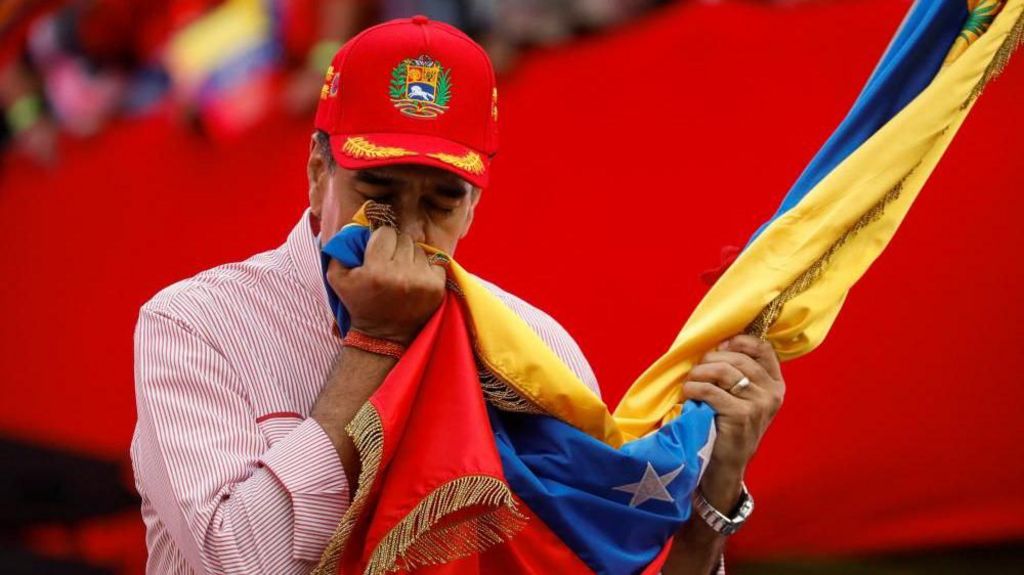
The U.S. Senate convened on Thursday to deliberate on a pivotal piece of legislation aimed at restricting President Donald Trump’s capacity to initiate military action against Venezuela. This move comes amidst escalating tensions between the Trump administration and Venezuelan President Nicolás Maduro, with Democrats urging Congress to assert a more robust oversight role in the high-stakes geopolitical standoff. The proposed resolution, spearheaded by Senator Tim Kaine, a Virginia Democrat, seeks to mandate congressional approval before any military engagement on Venezuelan soil, reflecting growing bipartisan concerns over the administration’s aggressive posture in the region. Despite its slim chances of enactment—given Trump’s likely veto—the vote serves as a litmus test for Republican senators’ willingness to challenge the president’s military buildup in the Caribbean. Lawmakers, including key Republicans, have expressed unease over the administration’s lack of transparency regarding recent U.S. naval strikes targeting alleged drug-smuggling vessels. Critics argue that the deployment of advanced military assets, such as the USS Nimitz aircraft carrier, signals broader intentions beyond counter-narcotics operations, potentially hinting at regime change objectives. Senator Adam Schiff, a California Democrat, underscored the gravity of the situation, warning that unchecked military escalation could entangle the U.S. in an unwarranted conflict. The debate also highlighted broader frustrations within Congress over the Pentagon’s recent policy shifts, including reductions in U.S. troop deployments in Romania and the suspension of security aid to Ukraine. As the Trump administration intensifies its briefings to lawmakers, the Senate’s vote underscores the enduring tension between executive authority and congressional oversight in matters of war and peace.
-

Bolivia’s former interim president Jeanine Áñez freed from prison after Supreme Court ruling
LA PAZ, Bolivia — In a landmark decision, Bolivia’s Supreme Court of Justice annulled the 10-year prison sentence of former interim president Jeanine Áñez, leading to her release from Miraflores women’s prison on Thursday. Áñez, who had been incarcerated for over four years, expressed profound relief as she emerged, waving a Bolivian flag and greeted by jubilant supporters chanting, “Yes, we could.”
Áñez’s imprisonment stemmed from her controversial assumption of the presidency in 2019, following the resignation of then-president Evo Morales amid widespread protests and allegations of electoral fraud. The 2019 crisis, which resulted in 37 deaths, was marked by accusations that Morales had secured an unconstitutional fourth term, as denounced by the Organization of American States.
The Supreme Court’s ruling emphasized that Áñez’s actions were driven by a “state of constitutional necessity” aimed at preserving Bolivia’s institutional stability. This decision effectively closed the debate over whether her ascension constituted a coup, as claimed by Morales’ supporters.
The timing of the ruling is significant, coming just three days before the inauguration of President-elect Rodrigo Paz, whose historic victory on October 19 ended nearly two decades of political dominance by Morales’ leftist Movement Toward Socialism (MAS) party. Paz extended an invitation to Áñez to attend his inauguration, with her daughter indicating she might accept.
Áñez, who has faced multiple accusations but no pending cases in ordinary courts, has seen two other convictions annulled in August related to the deaths of 20 protesters during the 2019 crisis. Following the latest presidential elections, the court also reviewed the pretrial detention of Áñez and two other opposition leaders, releasing them from prison and placing them under house arrest.
“The monster had to go for it to be acknowledged that there was not a coup in this country, but rather an electoral fraud,” Áñez declared, reaffirming her commitment to serving Bolivia during its time of need.
-

Pulisic to miss US team’s November friendlies against Paraguay and Uruguay, Reyna back on roster
The U.S. men’s national soccer team has unveiled its 25-man roster for the upcoming friendlies against Paraguay and Uruguay, marking the penultimate matches before coach Mauricio Pochettino finalizes his squad for the pre-World Cup training camp. Notably, star midfielder Christian Pulisic will miss the games due to a hamstring injury sustained in an October 14 friendly against Australia, though AC Milan has indicated he could return for their Serie A match this weekend. Pulisic, the team’s top player, faced criticism earlier this year for skipping the CONCACAF Gold Cup to prioritize rest ahead of the European season and World Cup. Meanwhile, Gio Reyna, son of former U.S. captain Claudio Reyna, returns to the roster for the first time since March, despite limited playing time at Borussia Mönchengladbach due to a thigh injury. Other notable absences include midfielder Weston McKennie and goalkeeper Matt Turner, while Ricardo Pepi, Tyler Adams, and Auston Trusty make their return to the squad. The U.S., ranked 16th globally, will face No. 39 Paraguay on November 15 in Chester, Pennsylvania, and 15th-ranked Uruguay on November 18 in Tampa, Florida. The roster also features several MLS players whose teams were recently eliminated from the playoffs, including defender Alex Freeman and midfielder Diego Luna. With injuries sidelining key players like Cameron Carter-Vickers, Antonee Robinson, and Tim Weah, Pochettino’s selections reflect a mix of experience and emerging talent as the team prepares for its World Cup opener on June 12.
-

Miss Universe contestants stage walkout after organiser berates Miss Mexico
In a dramatic turn of events at the Miss Universe pre-pageant ceremony on Tuesday, contestants staged a collective walkout following what they described as disrespectful behavior by organizer Nawat Itsaragrisil. The incident unfolded after Itsaragrisil reportedly berated Miss Mexico, Fatima Bosch, during the event. Bosch later expressed her dismay, stating that the organizer’s conduct was ‘not respectful’ and failed to uphold the dignity expected of such a prestigious competition. The walkout, which saw multiple contestants leaving the venue in solidarity with Bosch, has sparked widespread discussion about professionalism and respect within the pageant industry. Organizers have yet to issue an official statement addressing the incident, but the episode has already cast a shadow over the upcoming Miss Universe finals. This incident highlights ongoing concerns about the treatment of participants in high-profile beauty pageants and raises questions about the standards of conduct expected from event organizers.
-

William announces Earthshot Prize 2025 winners in Rio
Prince William, the Prince of Wales, unveiled the five winners of the 2025 Earthshot Prize during a star-studded ceremony at Rio de Janeiro’s Museum of Tomorrow. The event, hosted by acclaimed Brazilian broadcaster Luciano Huck, celebrated groundbreaking environmental projects from across the globe. Prince William hailed the winners as “an inspiration that gives us courage,” emphasizing their work as “proof that progress is possible.” The Earthshot Prize, founded by Prince William in 2020, awards £1 million annually to each of five innovative projects aimed at addressing critical environmental challenges. This year’s winners included initiatives such as re.green, which is making Brazil’s Atlantic Forest financially viable, and the High Seas Treaty, a global effort to conserve marine life set to take effect in 2026. Other winners included Bogotá’s clean air policies, Lagos Fashion Week’s sustainable practices, and Friendship’s efforts to support vulnerable communities in Bangladesh. The ceremony featured performances by Kylie Minogue, Shawn Mendes, and Brazilian pop icon Anitta, while legendary figures like footballer Cafu, gymnast Rebeca Andrade, and former Formula 1 driver Sebastian Vettel presented the awards. Prince William reflected on the halfway point of the Earthshot Prize’s 10-year mission, stating, “We set out to tackle environmental issues head-on and make real, lasting changes that would protect life on Earth.” The event also highlighted the urgency of collective action, with Christiana Figueres, chair of the board of trustees, praising the winners for their ambition and determination. Earlier in his five-day visit to Brazil, Prince William addressed deforestation at the United for Wildlife conference and participated in mangrove conservation efforts on Paqueta Island. He is scheduled to speak at COP30 in the Amazon rainforest, further underscoring his commitment to environmental advocacy.
-

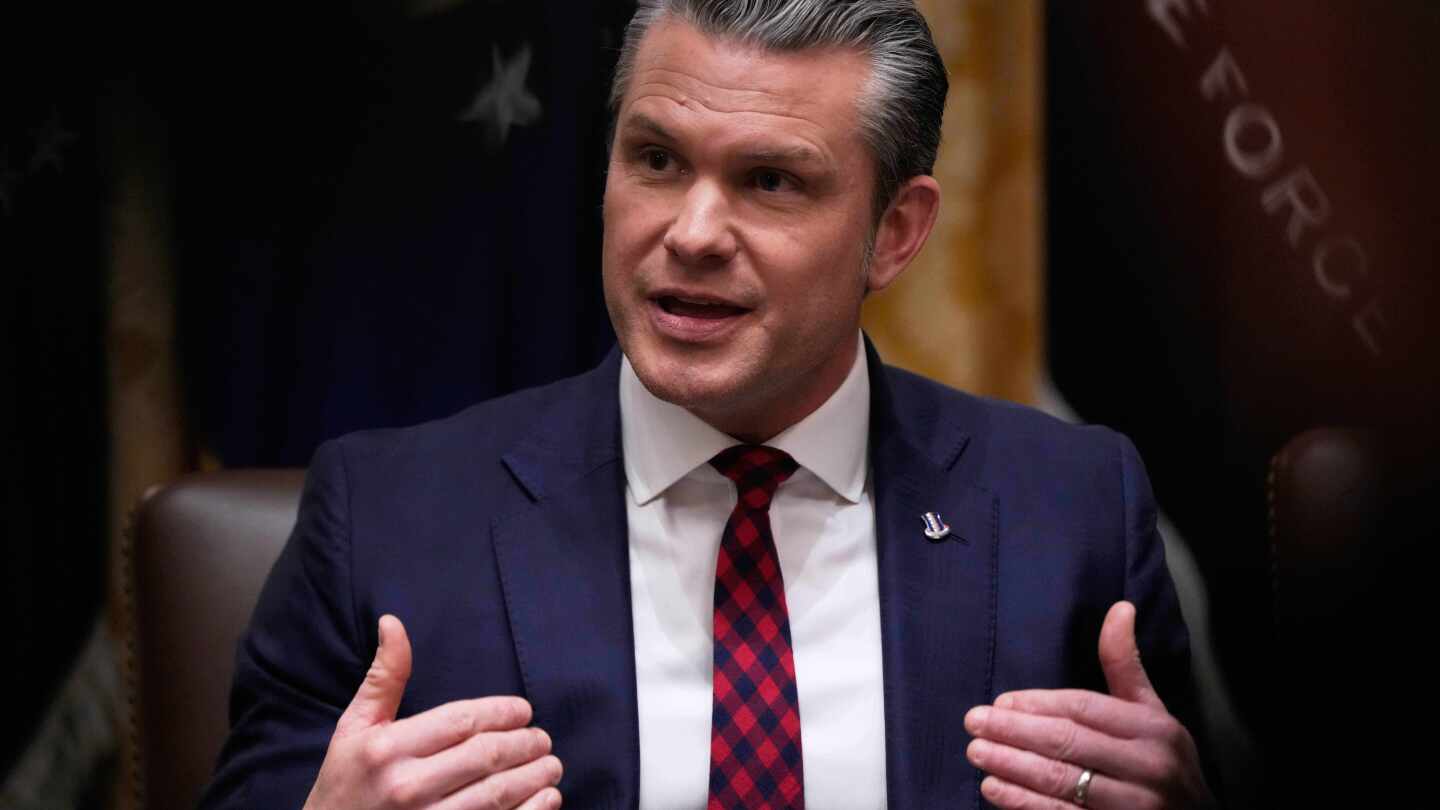
Hegseth and Rubio share classified details on boat strikes with congressional leaders
In a high-level briefing on Wednesday, top Trump administration officials provided congressional leaders with insights into the escalating military campaign targeting alleged drug-smuggling vessels in South American waters. Secretary of State Marco Rubio and Defense Secretary Pete Hegseth met with a bipartisan group of lawmakers in a secure Capitol facility, outlining the legal rationale and strategic framework behind the operation, which has resulted in at least 66 deaths across 16 strikes in the Caribbean Sea and eastern Pacific Ocean. While Republicans largely expressed confidence in President Donald Trump’s initiative, Democrats raised concerns over the lack of transparency and legal justification, arguing that the strikes may violate international and U.S. law. Senate Democratic leader Chuck Schumer called for a broader briefing, stating, ‘What we heard isn’t enough. We need a lot more answers.’ The briefing preceded a Senate vote on a resolution requiring congressional approval for any direct strikes on Venezuela. Critics argue that the administration has bypassed Congress by classifying drug cartel members as ‘unlawful combatants’ akin to terrorists, justifying lethal action without legislative oversight. Meanwhile, the U.S. military’s naval buildup in the region has fueled speculation of a potential invasion of Venezuela, aimed at ousting President Nicolás Maduro, who faces narcoterrorism charges in the U.S. Lawmakers reviewed a 40-page classified legal opinion from the Justice Department, but Democrats like Sen. Tim Kaine criticized it as flawed, particularly for its lack of specific rationale regarding Venezuela. The debate underscores growing tensions between Congress and the administration over war powers and the broader strategy in South America.
-

Interpol announces a new global fight against illegal deforestation
In a significant move to combat environmental crime, Interpol and its partners have launched a global initiative aimed at dismantling criminal networks involved in illegal logging, timber trafficking, and gold mining. These activities are major contributors to large-scale deforestation and generate billions in illicit profits annually. The announcement was made ahead of the upcoming U.N. COP30 climate summit in Brazil, with a focus on tropical forests in Brazil, Ecuador, Indonesia, Papua New Guinea, and Peru. Interpol Secretary General Valdecy Urquiza emphasized the need for determined law enforcement and international cooperation to stop these criminals. The initiative, part of the Law Enforcement Assistance Program to Reduce Tropical Deforestation (LEAP), was unveiled during the United for Wildlife Global Summit in Rio de Janeiro. It is a collaborative effort between Interpol and the U.N. Office on Drugs and Crime, funded by Norway’s International Climate and Forest Initiative. This latest phase of LEAP builds on previous successes, including a recent crackdown in the Amazon Basin where Brazilian police, supported by Interpol, destroyed over 270 illegal mining dredges on the Madeira River. UNODC Executive Director Ghada Waly highlighted the broader impact of illegal deforestation, stating that it undermines the rule of law and finances organized crime. The joint initiative aims to hold offenders accountable while supporting justice systems and local communities. Since its inception in 2018, LEAP has evolved from mapping timber-trafficking routes to coordinating cross-border investigations and seizing millions of dollars in illicit wood and minerals. The new phase will expand efforts to target illegal mining in the Amazon Basin, a leading cause of deforestation and mercury pollution, and enhance intelligence-sharing among enforcement agencies.