标签: South America

南美洲

  • Catholicism shrinks in Latin America while more are religiously unaffiliated, Pew surveys find

    Catholicism shrinks in Latin America while more are religiously unaffiliated, Pew surveys find

    A profound religious transformation is underway across Latin America as Catholicism experiences significant decline while religiously unaffiliated populations surge, according to a comprehensive Pew Research Center study released Wednesday. The report, based on extensive surveys conducted in early 2024 across six major Latin American nations—Argentina, Brazil, Chile, Colombia, Mexico, and Peru—reveals a dramatic shift in spiritual identity across the region that represents approximately 75% of Latin America’s total population.

    The research documents that Catholic affiliation has diminished by at least 9 percentage points in each country over the past decade, while religiously unaffiliated adults—identifying as atheist, agnostic, or ‘nothing in particular’—have increased by 7 percentage points or more. This trend has resulted in religiously unaffiliated populations now outnumbering Protestants in Argentina, Chile, Colombia, and Mexico—a remarkable development in a region historically dominated by Catholic tradition.

    Kirsten Lesage, Pew research associate and lead author of the report, emphasized the significance of these findings: ‘Our analysis found that the Catholic share of the population in these six nations has significantly declined since 2013-14, while a growing share of adults in the region are religiously unaffiliated.’

    Despite these shifting affiliations, the study reveals that Latin Americans maintain strong spiritual inclinations. Approximately 90% or more adults across all surveyed countries affirm belief in God, with about half or more in Brazil, Colombia, Mexico, and Peru considering religion ‘very important’ in their lives. Majorities in Brazil, Colombia, and Peru report praying at least daily.

    Experts attribute the Catholic Church’s diminishing influence to multiple factors, including clergy sex abuse scandals and opposition to the institution’s conservative positions on abortion and LGBTQ+ rights. Many Latin Americans now seek spiritual fulfillment beyond traditional religious structures, exploring alternatives such as yoga, tarot, astrology, and personalized belief systems.

    The survey, which polled 6,234 adults from January to April 2024 with a margin of error ranging from ±4.0 to 4.5 percentage points, indicates that Protestantism has remained relatively stable across the region during this period of transformation.

  • As fires in Chile burn, a mobile clinic fights to save furry survivors

    As fires in Chile burn, a mobile clinic fights to save furry survivors

    In the fire-ravaged town of Lirquén, Chile, a critical rescue operation is underway to save animals caught in one of the nation’s most devastating wildfire emergencies. National police canine units and volunteer teams have established mobile veterinary clinics to provide emergency care to pets and wildlife suffering from severe burns, dehydration, and smoke inhalation.

    The makeshift medical facility, operating from a small van, treats a continuous stream of cats, dogs, and other animals arriving with burned paws and whiskers, conjunctivitis from toxic fumes, and severe dehydration after days trapped under debris. According to Dr. Angiella Scalpello, veterinarian with the investigative police’s canine squad, their primary mission involves locating and treating animals discovered in rubble, ash, or those that escaped with owners but sustained injuries during the massive fires.

    Lirquén, a community of approximately 20,000 residents in south-central Chile, has endured catastrophic damage with 80% of the town consumed by flames. The Trinitarias fire, spanning over 140 square kilometers in the Bío Bío region, represents the most destructive among approximately 30 active wildfires nationwide. Official reports indicate the fires have resulted in at least 20 fatalities and nearly 300 human injuries.

    Veterinarian Juan Vivanco reported that rescue teams frequently discover cats sheltering in small spaces that miraculously survived both the initial inferno and subsequent days without care. However, the timeframe for successful rescues remains extremely limited. “We’ve also found several pets already deceased… it happens regularly,” Vivanco acknowledged.

    Treatment protocols include intravenous fluids, vital sign monitoring, and wound care, with the most critical cases transported to established veterinary hospitals. Volunteer Vanessa Morales described transporting severely burned animals, including a kitten with all four paws and tail burned, highlighting the emotional toll on rescue workers.

    Beyond medical treatment, the mobile clinic serves as a coordination point for residents seeking missing pets amid the chaos. Yasna Hidalgo searches for her grandmother’s two dogs left behind during an emergency evacuation, while Kevin Carrasco brought his poodle Chica for treatment of fire-related conjunctivitis despite the family’s successful escape from their completely destroyed home.

    This disaster echoes Chile’s previous wildfire tragedy two years prior that claimed over 130 lives, marking what authorities now consider one of the nation’s most serious emergencies in recent years.

  • Colombia slashes wages for its legislators as public spending balloons ahead of election

    Colombia slashes wages for its legislators as public spending balloons ahead of election

    In a sweeping austerity move, Colombian President Gustavo Petro has enacted a substantial 30% reduction in congressional salaries through presidential decree. The decision, announced Tuesday, directly targets what the government describes as “disproportionate” compensation for legislators in a nation grappling with economic constraints and preparing for pivotal elections.

    The decree eliminates the controversial ‘bonus for special services’—a supplemental payment introduced over a decade ago to cover lawmakers’ relocation expenses. This elimination will reduce monthly congressional earnings from approximately $13,000 to $9,400. The previous salary represented a staggering 32 times Colombia’s minimum wage, which stands at roughly $500 per month for most workers.

    This dramatic pay disparity has long been a subject of public scrutiny in the South American nation. Despite previous legislative attempts to curb congressional compensation, such measures have consistently failed amid resistance from lawmakers who argued the funds were necessary to finance future political campaigns.

    The salary reduction will take effect in July following legislative elections in March and presidential elections in May. The timing underscores the government’s push for fiscal restraint during an election cycle.

    Reactions from Congress have been sharply divided. Senator Angélica Lozano welcomed the move as “a minimal measure of equity” on social media platform X. Conversely, Senate President Lidio García accused Petro of attempting to “punish” legislators who rejected his social and economic reforms, including a tax bill that failed in December.

    The wage cut coincides with Petro’s broader economic emergency measures, which enable him to raise taxes without congressional approval. The government seeks to increase its budget by $4 billion this year to address multiple priorities: covering health insurance payments, maintaining fuel subsidies, and investing $700 million in military infrastructure to counter rebel drone attacks.

    Public spending has reached unprecedented levels under Petro, Colombia’s first left-wing president, exceeding even pandemic-era expenditures. The national government’s 2025 budget stands at approximately $134 billion, creating additional pressure for fiscal reforms.

  • US forces seize seventh sanctioned tanker linked to Venezuela in Trump’s effort to control its oil

    US forces seize seventh sanctioned tanker linked to Venezuela in Trump’s effort to control its oil

    U.S. military forces have executed another maritime interception operation, taking control of a Liberian-flagged oil tanker in the Caribbean Sea on Tuesday. The vessel, identified as Motor Vessel Sagitta, was apprehended without incident according to U.S. Southern Command, marking the seventh such seizure in the ongoing enforcement of sanctions against Venezuela’s oil exports.

    The operation forms part of the Trump administration’s comprehensive strategy to restrict Venezuela’s oil trade, with officials claiming the Sagitta had loaded petroleum from Venezuelan sources in defiance of established sanctions. Although registered under Liberian flag status with ownership and management ties to a Hong Kong-based company, the tanker had previously been sanctioned by the U.S. Treasury Department under executive orders related to Russia’s 2022 invasion of Ukraine.

    Unlike previous interdiction operations documented through dramatic aerial footage showing helicopter deployments and deck landings, this seizure was announced through social media channels with minimal operational details. The military command’s statement emphasized the enforcement of President Trump’s ‘established quarantine of sanctioned vessels in the Caribbean,’ though specific details regarding the participating forces were withheld.

    The vessel’s last transmitted location was recorded over two months ago while exiting the Baltic Sea in northern Europe, raising questions about its routing and cargo origins. The Pentagon declined to provide immediate additional details when queried about the operational specifics.

    President Trump addressed reporters at the White House just hours before the announcement, claiming the administration had already diverted approximately 50 million barrels of Venezuelan oil to open markets. ‘We’ve got millions of barrels of oil left,’ Trump stated. ‘We’re selling it on the open market. We’re bringing down oil prices incredibly.’

    The continued seizures demonstrate the administration’s persistent approach to applying maximum economic pressure on Venezuela’s oil sector, which represents the country’s primary revenue source.

  • Colombia says former FARC rebels have not kept promises to surrender cash and gold

    Colombia says former FARC rebels have not kept promises to surrender cash and gold

    Colombia’s Inspector General’s Office has issued a damning report revealing significant failures in the implementation of the historic 2016 peace agreement with the Revolutionary Armed Forces of Colombia (FARC). The former rebel group has substantially defaulted on its commitment to transfer assets intended to fund reparations for victims of Colombia’s decades-long conflict.

    The comprehensive assessment shows FARC has delivered merely 252 kilograms (556 pounds) of the promised 444 kilograms (979 pounds) of gold. The land transfer commitment appears even more deficient, with only one of 722 pledged rural properties handed over to authorities. Financial contributions similarly lag at just 17% of the agreed amount.

    This landmark peace deal, which ended over five decades of armed struggle, granted FARC combatants amnesty from prosecution, permitted their transformation into a political party, and allocated ten congressional seats for former members. In return, FARC leadership pledged to surrender their collective assets to finance reconciliation initiatives including rural infrastructure development, conflict memorials, and truth commission proceedings.

    Former FARC commander José Lisandro Lascarro, alias ‘Pastor Alape,’ defended the group’s efforts, citing security complications in former territories now contested by emerging armed factions. He explained that inaccessible cash reserves buried in remote regions and lack of formal property titles have hampered asset transfers, despite UN-supervised procedures.

    The peace implementation faces additional challenges as the Special Jurisdiction for Peace (JEP) tribunal experiences critical funding shortages. Currently, only 17% of the necessary budget exists to execute court-ordered reparations for victims of FARC kidnappings and military extrajudicial executions, potentially undermining the entire reconciliation framework.

  • Families of Venezuelan prisoners demand their release after weeks of waiting outside prisons

    Families of Venezuelan prisoners demand their release after weeks of waiting outside prisons

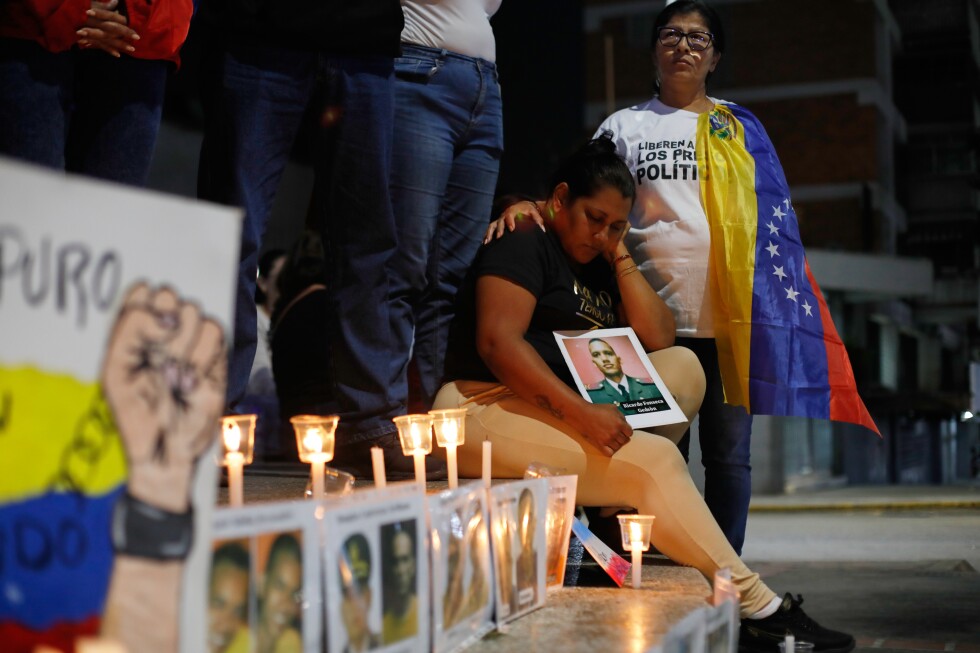
    CARACAS, Venezuela — Relatives of detained Venezuelan activists, journalists, and opposition figures have intensified their demands for the liberation of approximately 800 individuals still imprisoned under President Nicolás Maduro’s administration. The protests follow two weeks of vigil outside Caracas’ notorious Helicoide prison, where families gathered in anticipation of promised releases that have largely failed to materialize.

    The government’s pledge to free a “significant number” of detainees came after Maduro’s deposition during a U.S. military operation in early January. However, the actual number of released prisoners remains minimal, with only 145 verified cases documented by Venezuela’s leading prisoner rights organization, Foro Penal.

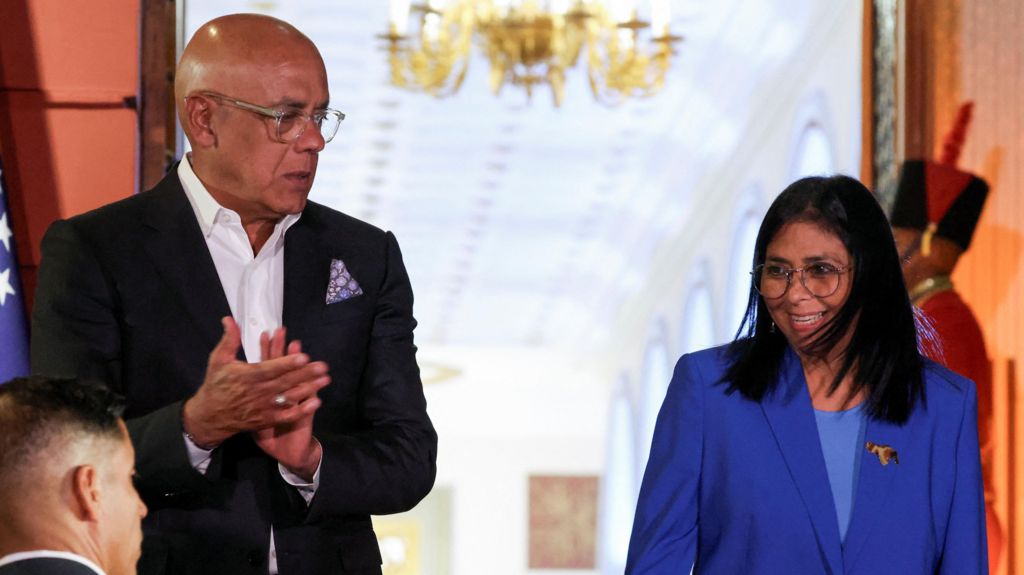
    Acting President Delcy Rodríguez characterized the situation as “a new political moment” for Venezuela and committed to continuing prisoner releases. Yet for families like that of Francis Quiñones, whose son has been detained for over five years without communication for six months, these assurances ring hollow amid ongoing psychological torment.

    Alfredo Romero, director of Foro Penal, revealed that even those who have been released face severe restrictions including media gag orders, mandatory check-ins with authorities, and travel bans. “These people are not free,” Romero stated. “They are subjected to constant, latent persecution.”

    The emotional toll on families remains profound as they maintain their vigil outside Helicoide prison, displaying posters of missing loved ones and holding candlelight vigils while awaiting genuine justice and family reunification.

  • Colombia sentences ex-paramilitary leader Mancuso to 40 years in jail

    Colombia sentences ex-paramilitary leader Mancuso to 40 years in jail

    In a landmark ruling, Colombia’s Special Jurisdiction for Peace has imposed a 40-year prison sentence on former paramilitary commander Salvatore Mancuso for his role in orchestrating horrific crimes during the nation’s prolonged internal conflict. The 61-year-old ex-leader of the United Self-Defence Forces of Colombia (AUC) was convicted for masterminding over 117 documented atrocities—including targeted murders, enforced disappearances, and gender-based violence—against the indigenous Wayuu community in La Guajira province between 2002 and 2006.

    Mancuso’s return to Colombia in 2024 followed the completion of a 15-year narcotics sentence in the United States, where he was extradited in 2008. US justice authorities had previously convicted him for smuggling massive cocaine shipments to finance his 30,000-strong paramilitary apparatus.

    The tribunal outlined that Mancuso’s sentence could be reduced to just eight years if he fully cooperates with transitional justice mechanisms and participates in reparations programs—a provision that has ignited fierce controversy among human rights advocates. Despite his brutal legacy, the Petro administration recently designated him a ‘peace promoter’ to mediate with active armed groups, following his offers to expose alleged collusion between AUC forces and Colombia’s political and business elites.

    This case emerges from Colombia’s decades-long armed struggle that claimed over 450,000 lives between 1985 and 2018. Indigenous communities like the Wayuu were frequently trapped between Marxist guerrillas—who forcibly recruited children—and paramilitary units like AUC that accused them of rebel sympathies and systematically terrorized them off their ancestral lands.

    Although AUC formally demobilized under a 2005 peace agreement, splinter groups continued operating, deepening involvement in drug trafficking that had originally funded their anti-insurgency campaigns. Mancuso’s sentencing represents a pivotal moment in Colombia’s ongoing reckoning with conflict-era atrocities and the complex trade-offs between justice and reconciliation.

  • Trump threats and Bukele model on crime back Latin American progressives into corner

    Trump threats and Bukele model on crime back Latin American progressives into corner

    A profound transformation is underway across Latin America as progressive governments abandon their traditional approaches to organized crime in response to mounting external pressure from the United States and domestic demands for immediate security results. The region’s political landscape has been fundamentally reshaped by El Salvador President Nayib Bukele’s controversial yet popular crackdown on gangs, which has dramatically reduced homicide rates while drawing international criticism for human rights violations.

    The Trump administration has significantly intensified pressure on Latin American nations, designating multiple criminal organizations as foreign terrorist groups, threatening military intervention in several countries, and openly championing Bukele’s punitive model as the preferred solution for regional security challenges. This aggressive stance from Washington has coincided with growing voter impatience with progressive governments that previously advocated for comprehensive solutions addressing root causes of violence through economic opportunities and institutional reforms.

    Guatemala’s President Bernardo Arévalo represents the latest leader to embrace emergency measures, declaring a 30-day state of emergency following the brutal killing of nine police officers by suspected gang members. This dramatic policy shift mirrors Bukele’s 2022 emergency declaration that remains in effect nearly four years later, resulting in over 90,000 arrests despite allegations of authoritarian practices.

    The regional trend extends beyond Guatemala, with Ecuador, Honduras, and Costa Rica implementing similar hardline strategies. Costa Rica recently broke ground on a maximum-security prison modeled after El Salvador’s notorious facilities, signaling the widespread adoption of Bukele’s blueprint. However, analysts note that replicating Bukele’s political success has proven challenging, as many leaders remain hesitant to implement measures as extreme as detaining 1% of their national populations.

    In Mexico, President Claudia Sheinbaum has dramatically escalated operations against cartels, abandoning her predecessor’s ‘hugs, not bullets’ policy that emphasized addressing socioeconomic drivers of violence. Similarly, Colombia’s leftist President Gustavo Petro has pivoted from his ‘total peace’ initiative to threatening joint military operations with Venezuela against guerrilla groups, reflecting the overwhelming pressure confronting progressive administrations throughout the hemisphere.

    Expert analysis suggests this strategic realignment stems from the convergence of Trump administration pressure, upcoming electoral challenges, and the appealing simplicity of Bukele’s approach compared to the slow implementation of holistic solutions. While projecting toughness has become politically advantageous, the fundamental challenge remains translating dramatic gestures into sustainable security improvements across the region.

  • Colombian warlord sentenced to 40 years in prison after serving time for drug trafficking in the US

    Colombian warlord sentenced to 40 years in prison after serving time for drug trafficking in the US

    In a landmark ruling from Bogotá, Colombia’s special transitional justice tribunal has imposed a 40-year prison sentence on former paramilitary commander Salvatore Mancuso for atrocities committed against Indigenous populations in La Guajira province. The court found the 61-year-old responsible for 117 separate crimes—including homicides, enforced disappearances, and mass displacements—perpetrated by his forces between 2002 and 2006 during Colombia’s prolonged internal conflict.

    The judicial panel noted that Mancuso’s sentence could potentially be reduced to eight years contingent upon his full cooperation with truth-telling initiatives and reparations programs benefiting victims of his former paramilitary organization. This sentencing represents a significant development in Colombia’s ongoing transitional justice process following the 2016 peace accord with FARC rebels.

    Mancuso, who holds dual Colombian-Italian citizenship, was recently repatriated from the United States where he had served extensive prison time on drug trafficking charges since his 2008 extradition. Despite multiple requests for transfer to Italy after completing his U.S. sentence, Colombian authorities maintained jurisdiction over his case.

    As a senior commander of the United Self-Defense Forces of Colombia (AUC), Mancuso helped establish right-wing paramilitary units initially created to counter Marxist guerrilla groups. While the AUC successfully displaced rebels from certain rural territories, they were subsequently accused of systematically targeting innocent civilians.

    The court’s decision emerges against the backdrop of Colombia’s complex peace architecture. President Gustavo Petro recently designated Mancuso as an official ‘peace facilitator’ to mediate ongoing negotiations with active armed groups, including the Gulf Clan—a successor organization to the AUC boasting approximately 10,000 fighters. This paradoxical position highlights the challenging balance between justice and reconciliation in post-conflict societies.

    Historical context reveals the staggering human cost of Colombia’s conflict, with truth commission data documenting at least 450,000 fatalities between 1985 and 2018 among combatants and civilians alike. The recent Qatar-brokered agreement between the government and Gulf Clan establishes protected zones where fighters can gather without prosecution during peace talks, signaling continued efforts to resolve decades of violence through diplomatic channels.

  • Chile fights wildfires that killed 19 and left 1,500 homeless

    Chile fights wildfires that killed 19 and left 1,500 homeless

    Chilean authorities are confronting a severe wildfire crisis as multiple blazes rage across the country’s central and southern regions, resulting in significant casualties and widespread displacement. The fires, which ignited on Sunday, have already claimed at least 19 lives and rendered approximately 1,500 residents homeless, according to official reports.

    The National Service for the Prevention of Disasters confirmed that five major wildfires remained active as of Monday, with unusually high temperatures from a persistent summer heat wave exacerbating firefighting efforts. In response to the escalating emergency, President Gabriel Boric has declared a state of catastrophe in the heavily affected Biobío and Ñuble regions.

    This emergency designation enables enhanced military coordination to combat the spreading flames. President Boric warned via his official X account on Monday that adverse weather conditions continue to pose serious challenges, including the potential for reignition in previously contained areas.

    While Chile regularly experiences seasonal wildfires during summer months due to characteristic high temperatures and arid conditions, the current outbreak ranks among the most devastating in recent years. This tragedy follows the catastrophic 2024 wildfire event that claimed 130 lives along Chile’s central coastline, which stood as the nation’s deadliest natural disaster since the 2010 earthquake.