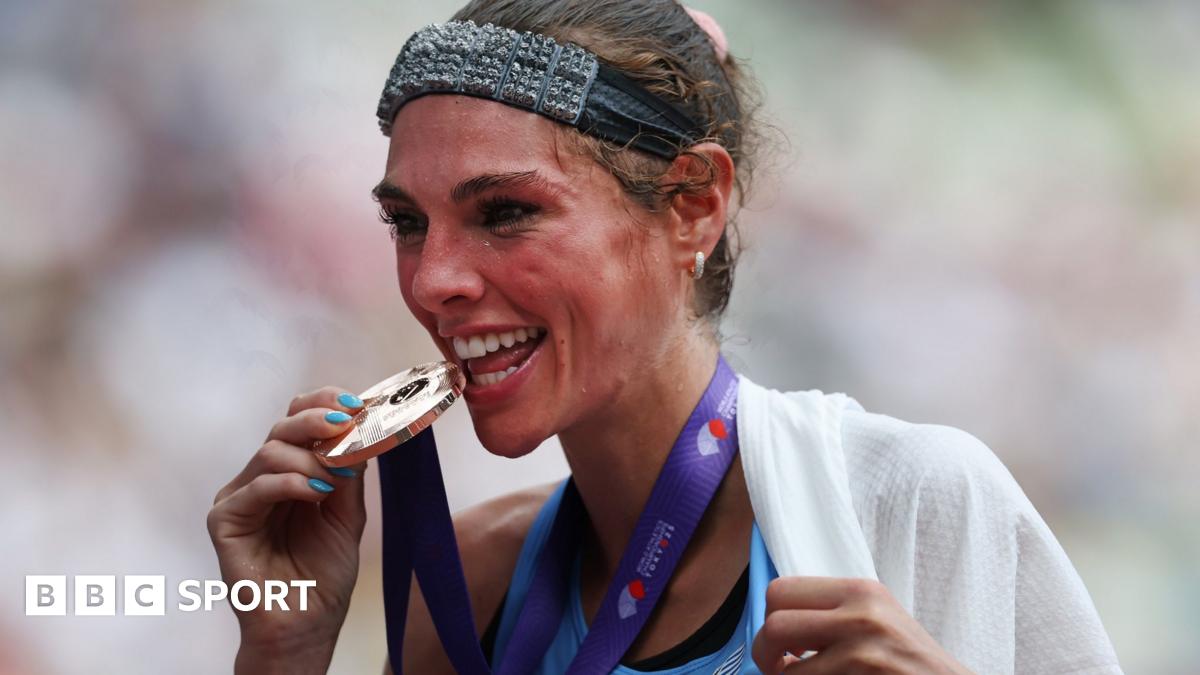
In a dramatic finish at the World Athletics Championships in Tokyo, Julia Paternain secured a surprising bronze medal in the women’s marathon, marking Uruguay’s first-ever medal in the event’s history. The 25-year-old athlete, whose family hails from Uruguay but moved to the UK when she was two, drew inspiration from her past victories in the English Schools 3,000m championships during the race. Ranked 288th globally and competing in only her second marathon, Paternain was not considered a contender for a podium finish. However, her determination and strategic pacing propelled her to a remarkable third place with a time of 2:27.23. Kenya’s Peres Jepchirchir, the 2021 Olympic champion, clinched gold in a thrilling sprint finish, narrowly beating Ethiopia’s Tigst Assefa by two seconds. Paternain, unaware of her exact position during the race, expressed shock and disbelief at her achievement. She credited her success to her focus and resilience, recalling her earlier triumphs in school competitions. This historic moment not only highlights Paternain’s personal journey but also underscores Uruguay’s growing presence in international athletics.
标签: South America
南美洲
-

Colombian court rules Meta was wrong to bar porn star’s Instagram account
Colombia’s Constitutional Court has ruled that Meta, the parent company of Instagram, violated the freedom of expression of adult content actress Esperanza Gómez by deleting her Instagram account without clear justification. The court found that Meta’s action lacked transparency and was inconsistent in applying its policies on nudity and sexual content, as other similar accounts remained active. Gómez, a prominent figure in Colombia’s adult entertainment industry with over five million followers, argued that the account closure hindered her professional activities and was influenced by her work outside the platform. The court emphasized that social media posts are protected under Colombia’s constitution and should only be restricted proportionately. It ordered Meta to revise Instagram’s terms of use and privacy policy to ensure users are informed about moderation decision challenges and to clarify rules on implicit sexual content. The court also highlighted that if offline activities are used for content moderation, they must be explicitly stated. While the court did not specify sanctions or redress for Gómez, this ruling follows similar legal actions in South America, such as Brazil’s Supreme Court holding social media platforms directly accountable for illegal content. Meta has not yet responded to the ruling.
-

Mystery of British woman who disappeared from a luxury Caribbean yacht
The disappearance of British woman Sarm Heslop from a luxury yacht in the US Virgin Islands in March 2021 remains shrouded in mystery, with newly released CCTV footage offering the last recorded sighting of her. The footage, exclusively obtained by the BBC, shows Heslop and her then-boyfriend, Ryan Bane, boarding a dinghy after an evening at a bar on St. John island. Six hours later, Heslop was reported missing, and despite extensive search efforts, her body has never been found. Bane, who has never been formally questioned by police, claims she likely fell overboard or drowned while he was sleeping. However, inconsistencies in his timeline and his failure to alert nearby boats or the coastguard promptly have raised suspicions. A BBC Three documentary, ‘Missing in Paradise: Searching for Sarm,’ delves into the case, highlighting the lack of closure for Heslop’s family and friends, who believe the investigation should be reclassified as a no-body murder case. Bane, who has invoked his constitutional rights to avoid questioning and forensic searches of his yacht, remains the only person of interest in the case. Heslop’s family continues to seek answers, determined to uncover the truth behind her disappearance.
-
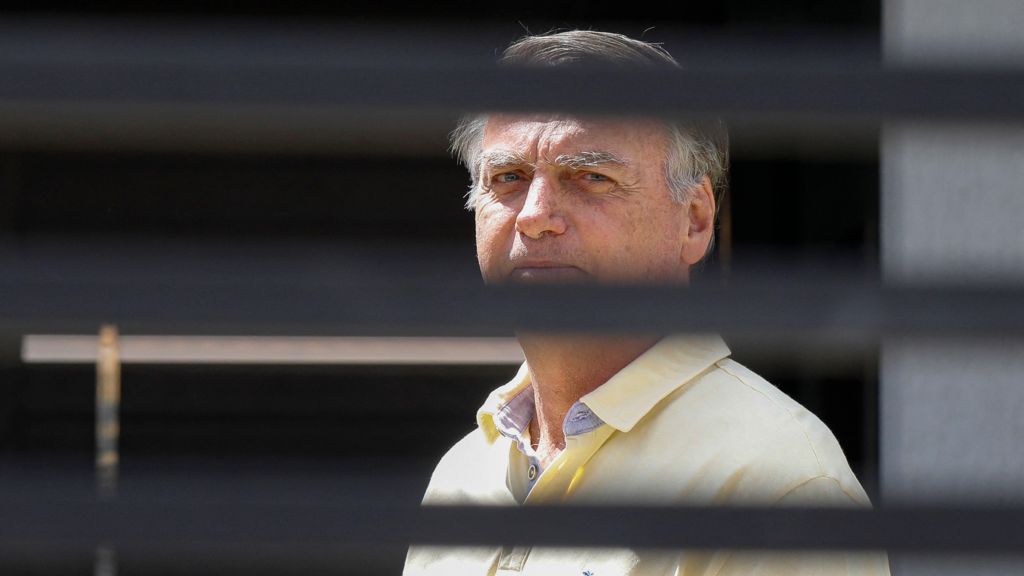
From political outsider to a president like no other: Bolsonaro’s rise and fall
In a landmark ruling, Brazil’s Supreme Court has convicted former President Jair Bolsonaro of orchestrating a coup attempt, sentencing him to over 27 years in prison. The verdict marks a dramatic fall from grace for Bolsonaro, whose political career was once propelled by his outsider image and a shocking assassination attempt during his 2018 campaign. Despite his conviction, Bolsonaro remains a polarizing figure, with allies pushing for amnesty and his influence still looming over Brazil’s political landscape. Bolsonaro’s rise to power in 2018 was fueled by widespread disillusionment with Brazil’s political establishment, exacerbated by years of economic turmoil, corruption scandals, and the imprisonment of former President Luiz Inácio Lula da Silva. Bolsonaro capitalized on this discontent, rallying a coalition of conservative evangelicals, far-right militants, and frustrated middle-class voters. His presidency, marked by pro-business policies, environmental deregulation, and controversial handling of the COVID-19 pandemic, drew both domestic and international criticism. Bolsonaro’s relationship with Brazil’s Supreme Court was particularly contentious, culminating in his refusal to accept the 2022 election results, which saw Lula narrowly defeat him. In the aftermath, Bolsonaro’s supporters stormed government buildings in Brasília, echoing the U.S. Capitol attack. Investigations revealed plans to overturn the election and even assassinate Lula and Supreme Court Justice Alexandre de Moraes. Bolsonaro, now barred from public office until 2060, faces an uncertain future as his allies seek amnesty and potential pardons. The case underscores Brazil’s fragile democracy and the enduring divisions within its society.
-
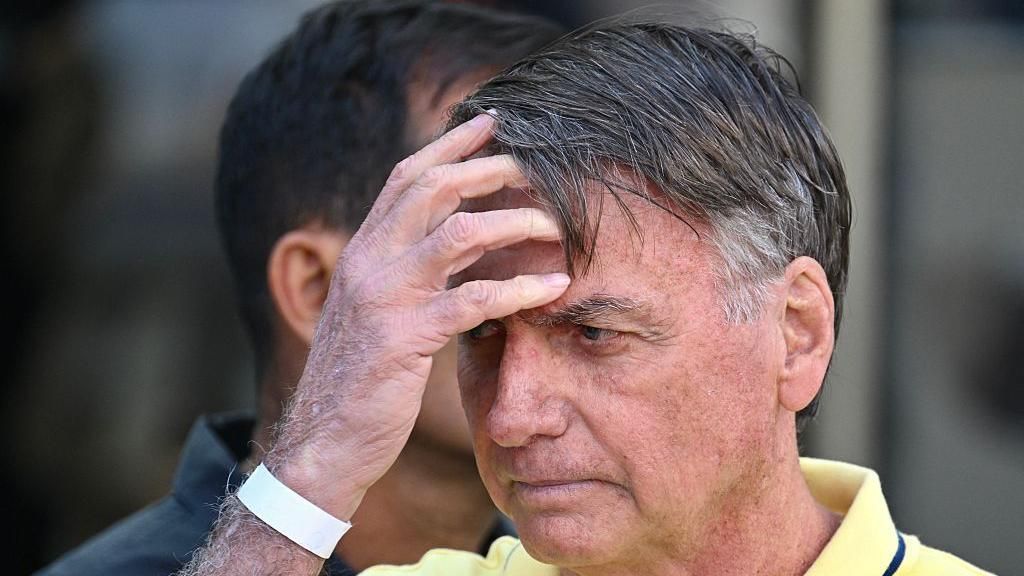
Bolsonaro sentenced to 27 years in prison for plotting Brazil coup
In a landmark ruling that has sent shockwaves through Brazil and beyond, former President Jair Bolsonaro has been sentenced to 27 years and three months in prison for orchestrating a military coup to retain power after his 2022 election defeat. The verdict, delivered by a panel of five Supreme Court justices, marks a pivotal moment in Brazil’s democratic history. Four justices found Bolsonaro guilty of leading a conspiracy to undermine the electoral process, while one dissented, calling the charges unfounded. Bolsonaro’s legal team has denounced the sentence as “absurdly excessive” and vowed to appeal, though legal experts suggest the odds are slim. The court also barred Bolsonaro from holding public office until 2060, effectively ending his political career. Bolsonaro, who was placed under house arrest prior to the trial, did not attend the proceedings but has repeatedly dismissed the case as a politically motivated “witch hunt.” His claims have found resonance with former U.S. President Donald Trump, who likened the trial to his own legal battles, calling the verdict “very surprising.” U.S. Secretary of State Marco Rubio criticized the ruling as unjust, prompting a swift rebuke from Brazil’s foreign ministry, which defended the independence of its judiciary. The trial revealed chilling details of Bolsonaro’s alleged plot, including attempts to assassinate his political rival, Luiz Inácio Lula da Silva, and a Supreme Court justice. While the coup attempt ultimately failed, it culminated in the storming of government buildings by Bolsonaro’s supporters in January 2023, a stark reminder of the fragility of Brazil’s democracy. Justice Alexandre de Moraes, who presided over the trial, warned that Brazil had narrowly avoided a return to authoritarianism, drawing parallels to the country’s 20-year military dictatorship. The case has reignited debates about the resilience of democratic institutions in the face of rising authoritarianism, with Justice Cármen Lúcia likening the coup plot to a “virus” that threatens societal stability. As Bolsonaro faces the prospect of spending the rest of his life in prison, the ruling underscores the enduring struggle to safeguard democracy in Brazil and beyond.
-
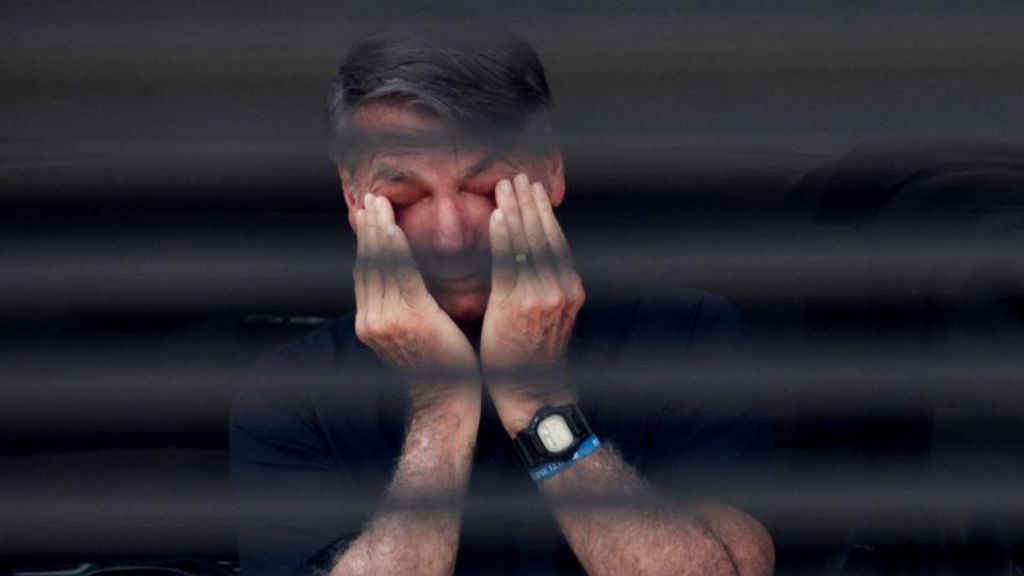
Bolsonaro sentenced to 27 years in jail – what you need to know
Former Brazilian President Jair Bolsonaro has been sentenced to 27 years and three months in prison after being found guilty of orchestrating a coup attempt to overturn his 2022 election loss to Luiz Inácio Lula da Silva. The verdict, delivered by Brazil’s Supreme Court, concluded that Bolsonaro led a conspiracy involving plans to assassinate Lula and his vice-presidential running mate, Geraldo Alckmin, as well as to arrest and execute Supreme Court Justice Alexandre de Moraes, who oversaw the trial. The plot failed due to lack of support from military leaders, allowing Lula to be inaugurated on January 1, 2023. However, a week later, Bolsonaro’s supporters stormed government buildings in Brasília, leading to over 1,500 arrests. The court found that Bolsonaro incited the rioters, hoping the military would intervene and restore him to power. Bolsonaro, who denies all charges, claims the trial is a politically motivated ‘witch hunt’ aimed at preventing his 2026 presidential run. He is currently under house arrest, pending appeals, and barred from public office until 2030. The case has drawn international attention, with former U.S. President Donald Trump comparing Bolsonaro’s legal battles to his own and criticizing the verdict. Seven of Bolsonaro’s allies were also convicted for their roles in the conspiracy. Bolsonaro’s presidency, marked by controversy over his handling of COVID-19 and environmental policies, continues to polarize Brazil.
-
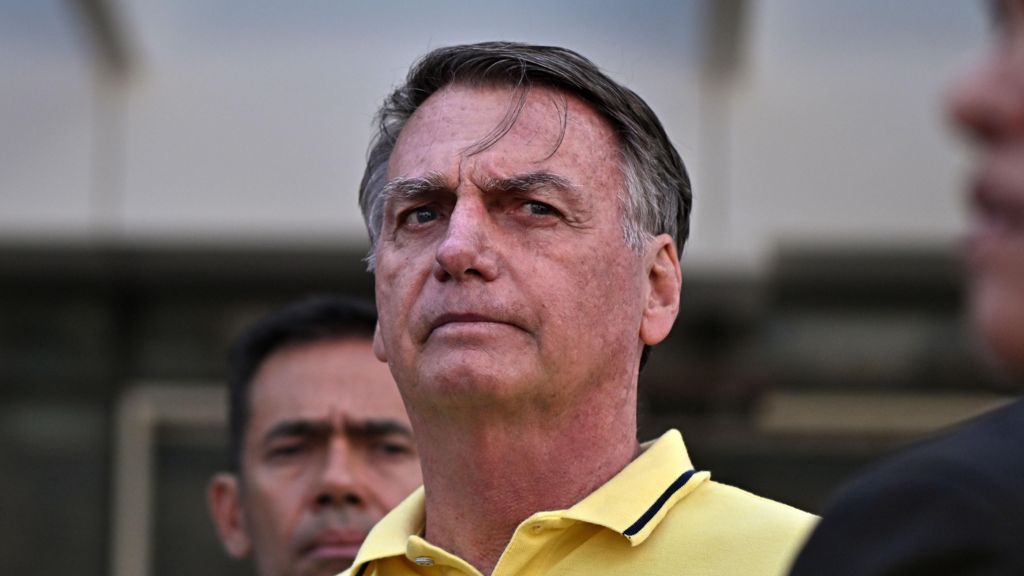
Bolsonaro’s coup trial gripped Brazil – and his conviction will divide the country
In a landmark ruling that has sent shockwaves across Brazil, former President Jair Bolsonaro has been found guilty of orchestrating a coup attempt and leading an armed criminal group following his defeat in the last election. The verdict, delivered by four out of five Supreme Court justices, sentences Bolsonaro to 27 years in prison. This decision marks a pivotal moment in Brazil’s political history, as it addresses the violent aftermath of the 2022 election, which saw Bolsonaro’s supporters storm government buildings in a manner reminiscent of the U.S. Capitol riots on January 6, 2021. The trial, which captivated the nation through live broadcasts, revealed chilling details, including a plan drafted by Bolsonaro’s allies to assassinate President-elect Luiz Inacio ‘Lula’ da Silva and Supreme Court Judge Alexandre de Moraes. Despite Bolsonaro’s absence from the courtroom, citing health issues, his lawyer vehemently denied his involvement in the plot and the riots. The ruling has further polarized the country, with Bolsonaro’s supporters decrying it as political persecution and his critics hailing it as a necessary step to safeguard democracy. As Bolsonaro contemplates an appeal and potential house arrest, the future of his punishment remains uncertain, with his party in Congress pushing for amnesty legislation.