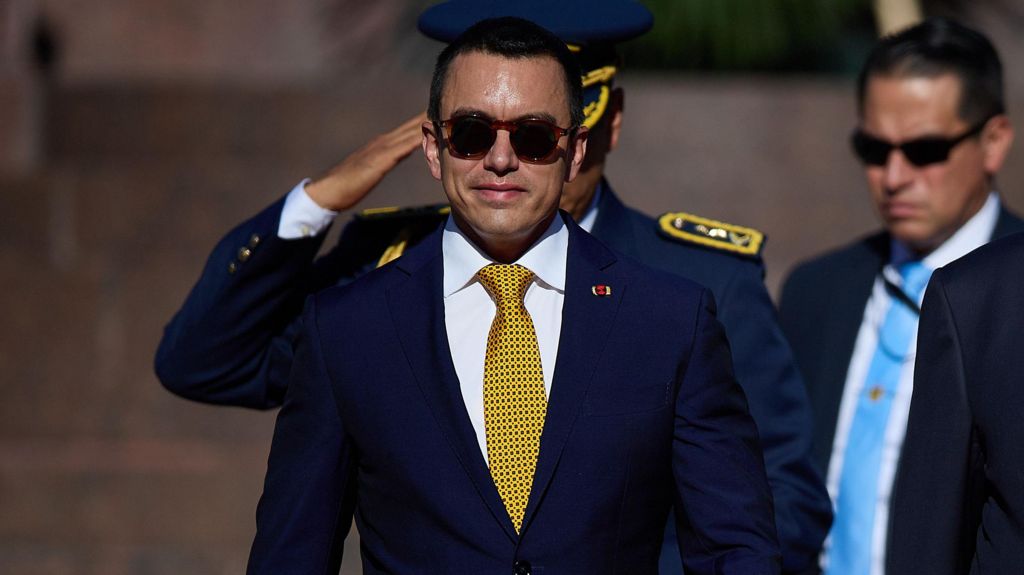
A humanitarian convoy led by Ecuadorian President Daniel Noboa was violently ambushed on Sunday night, resulting in 17 soldiers being taken hostage, according to government spokeswoman Carolina Jaramillo. The convoy, which included UN and European diplomats, was attacked by approximately 350 individuals armed with Molotov cocktails in Cotacachi, Imbabura province. The incident occurred during a national strike organized by Conaie, Ecuador’s largest Indigenous rights organization, in protest against the government’s decision to cut fuel subsidies. President Noboa, who was accompanied by the Italian ambassador and Vatican diplomats, condemned the attack, stating, ‘They resist Ecuador’s progress and chose violence. Ecuador cannot go backward.’ He shared images of the damaged vehicles on social media, emphasizing the severity of the assault. The Ecuadorian armed forces accused the attackers of being ‘terrorist groups’ and reported that 12 soldiers were injured in the clash. Meanwhile, Conaie claimed that one of its members, Efrain Fuerez, was shot three times and died in hospital, describing his death as a ‘state crime’ ordered by President Noboa. The organization denied any involvement in terrorism, asserting that ‘the true terror is imposed by the government with its repression.’ The UN Human Rights Council’s regional representative, Jan Jarab, called for an ‘urgent dialogue’ and a thorough investigation into the violence. Ecuador’s prosecutors’ office has announced it will probe the alleged death of Fuerez. In response to the escalating unrest, a state of emergency has been declared in eight provinces, with a nighttime curfew imposed in five. President Noboa has accused the Venezuelan cartel Tren de Aragua of orchestrating the demonstrations and warned that protesters breaking the law could face 30-year prison sentences for terrorism. This incident marks a significant escalation in the ongoing protests, which have already led to violent clashes across the country.
标签: South America
南美洲
-
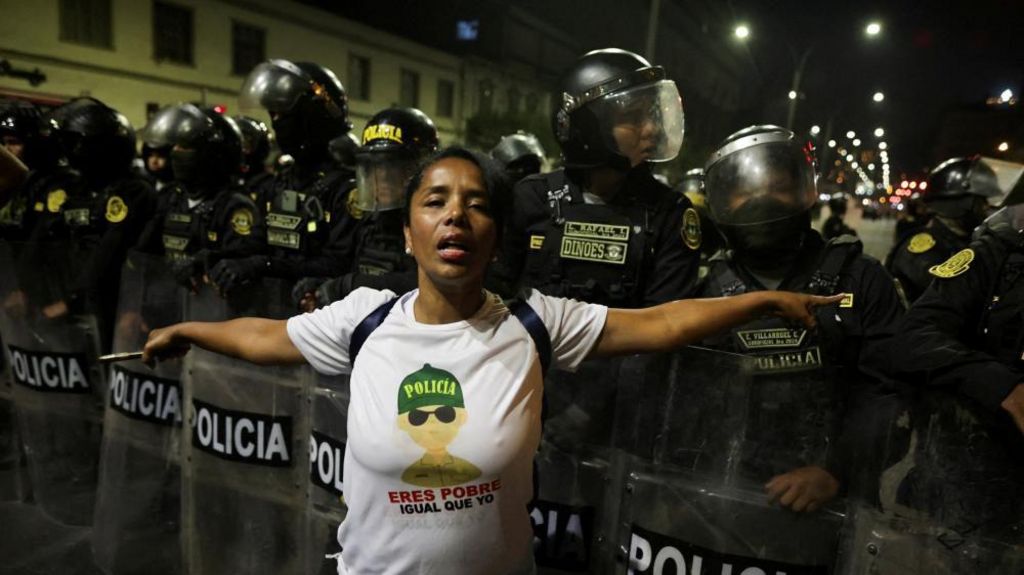
Young Peruvians clash with police in anti-government protests
In a dramatic escalation of tensions, police and anti-government protesters clashed in Lima, Peru, over the weekend. The protests, organized under the banner of the ‘Gen Z march,’ saw thousands of young demonstrators, joined by bus and taxi drivers, march towards the Congress building to voice their outrage over rampant corruption, rising insecurity, and recent pension reforms. According to a human rights group, at least 18 protesters were injured, while a police officer suffered burns during the confrontations. Protesters, some of whom hurled stones and other projectiles, were met with tear gas and rubber bullets from law enforcement. The demonstrations, which began on September 20, were initially sparked by a controversial pension reform requiring young people to contribute to private pension funds. However, the protests have since broadened to include demands for President Dina Boluarte’s resignation, whose approval ratings have plummeted to single digits. Many Peruvians accuse her government of failing to address extortion by criminal gangs, including the Venezuela-based Tren de Aragua, which allegedly forces transport workers to pay ‘protection money.’ Protesters also criticized Congress for its perceived detachment from public interests, with one young woman telling local media, ‘We need a total change; we’re sick of this situation.’ Human rights groups condemned the police response, with one lawyer stating, ‘There was no justification for firing large amounts of tear gas, much less for attacking people.’ As the protests continue, the chants of ‘united for the Peru we deserve’ echo through Lima’s streets, underscoring the deep-seated discontent among Peruvians.
-
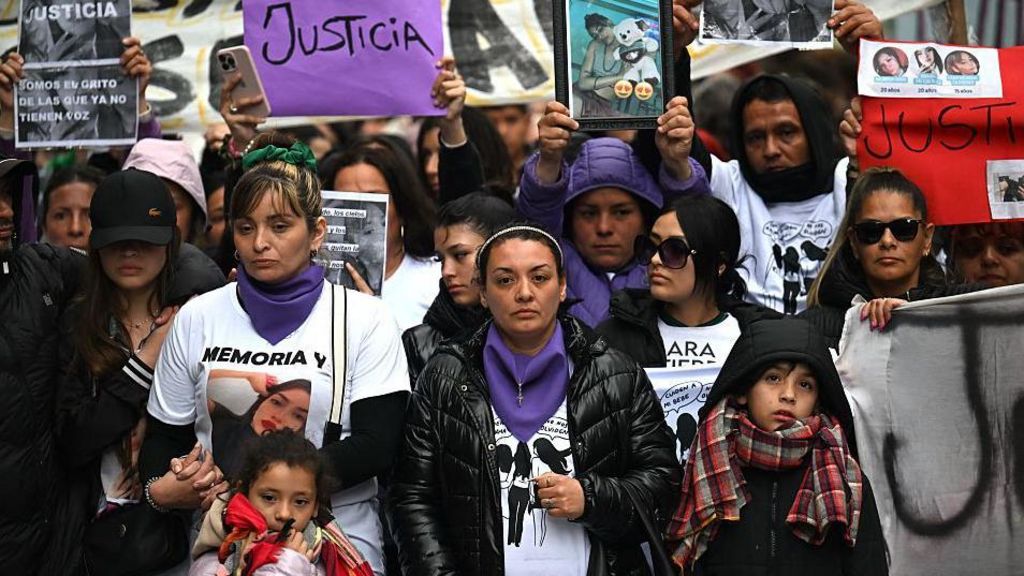
Brutal killings of young women leave Argentina in shock and anger
Thousands of demonstrators flooded the streets of Buenos Aires in a powerful anti-femicide protest, demanding justice for the horrific murders of a 15-year-old girl and two young women. The victims, identified as Lara Gutierrez, Morena Verdi, and Brenda del Castillo, were brutally tortured and killed in a crime that has sent shockwaves across Argentina. The gruesome act was allegedly livestreamed on social media by a drug-trafficking gang, purportedly as a warning to others. Authorities have arrested five suspects, including three men and two women, but the alleged ringleader, a 20-year-old Peruvian man, remains at large. The victims were reportedly lured into a van on September 19 under the pretense of attending a party, only to be subjected to a calculated act of violence for violating gang codes. A chilling video, discovered after one of the detainees disclosed its existence, features a gang leader stating, ‘This is what happens to those who steal drugs from me.’ The bodies of the victims were found buried in a suburban Buenos Aires yard five days after their disappearance. The protest, organized by human rights groups under the slogan ‘There are no good or bad victims, only femicide,’ saw emotional pleas from the victims’ families. Brenda’s father, Leonel del Castillo, emphasized the urgent need for greater protection for women, while her grandfather, Antonio del Castillo, condemned the perpetrators as ‘bloodthirsty.’ Argentina, where a woman is killed by a man every 36 hours, continues to grapple with the pervasive issue of gender-based violence.
-
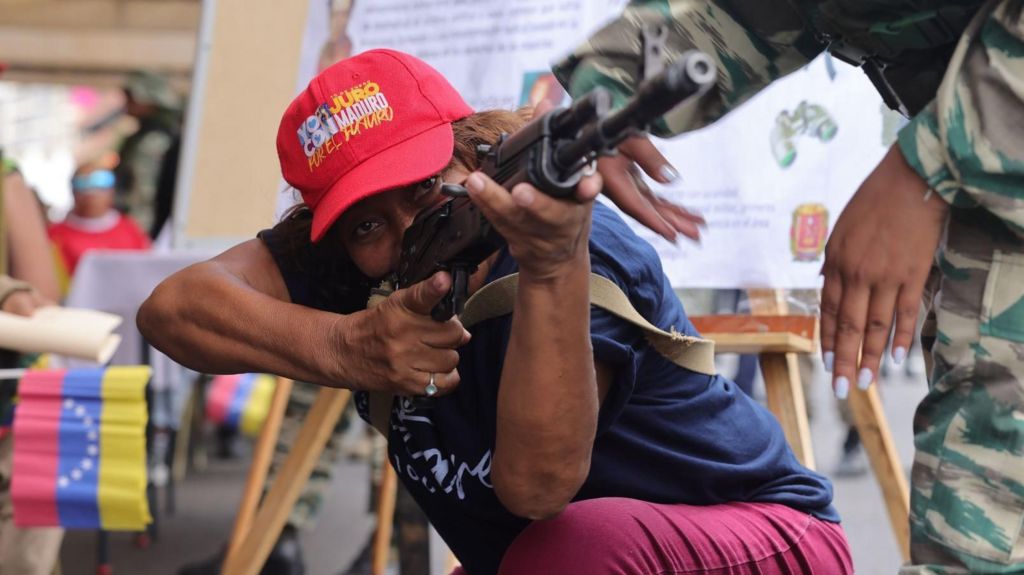
The US navy killed 17 in deadly strikes. Now Venezuela is giving civilians guns
In the face of escalating tensions with the United States, Venezuela’s National Bolivarian Militia, a civilian force established by the late President Hugo Chávez in 2009, is mobilizing to defend the nation. Edith Perales, a 68-year-old militia member, is among thousands preparing for a potential US attack, following the deployment of US Navy ships in the South Caribbean under the guise of counter-narcotics operations. The militia, largely composed of senior citizens and inexperienced volunteers, has been called to active duty by President Nicolás Maduro, who has framed the US actions as a ‘non-declared war.’
The US has recently destroyed at least three boats allegedly carrying drugs from Venezuela, resulting in 17 fatalities. This has further strained the already tense relationship between the two nations, exacerbated by Donald Trump’s return to office and his administration’s accusations of Maduro’s ties to drug cartels. The US has also doubled the reward for information leading to Maduro’s capture to $50 million, while labeling the Venezuelan criminal gang Tren de Aragua as a terrorist group.
Maduro, in response, has ordered the National Bolivarian Armed Forces (FANB) to train local militias, including those in Caracas’ 23 de Enero neighborhood, a traditional stronghold of Chavismo. Despite the militia’s lack of experience, its members, like Francisco Ojeda and Glady Rodríguez, express unwavering enthusiasm to defend their homeland. However, political analyst Benigno Alarcón suggests that Maduro’s strategy is less about combat readiness and more about creating a ‘human shield’ to deter US military action.
While Maduro claims over 8.2 million civilians are enlisted in the militia, this figure remains disputed. For Perales, who has served for decades, the militia represents a duty to protect his community. Despite his age and health, he remains prepared to defend Venezuela’s sovereignty, embodying the spirit of Chávez’s vision for a self-reliant nation.
-
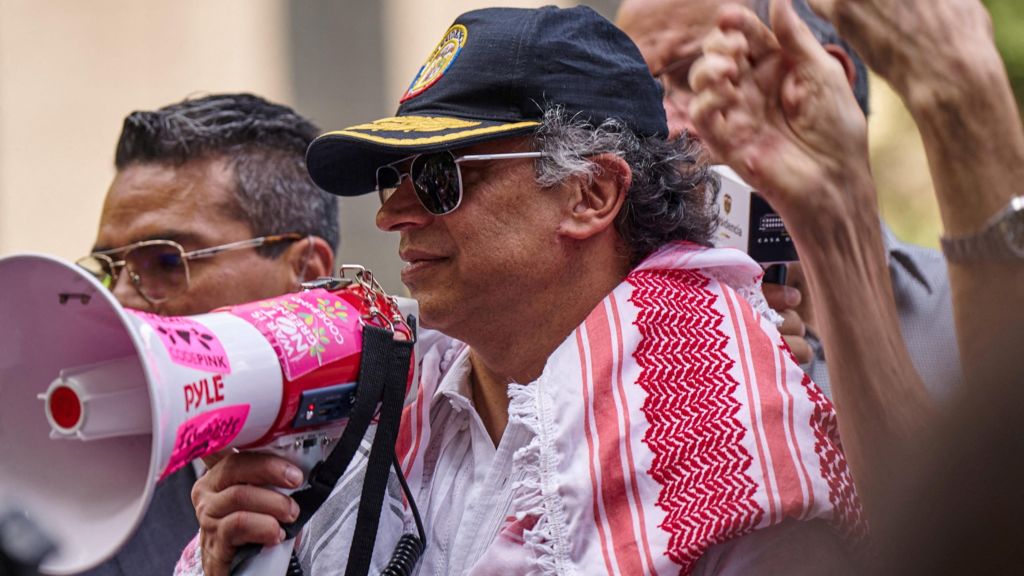
US revokes Colombian president’s visa during UN visit
The United States State Department announced on Friday its decision to revoke the visa of Colombian President Gustavo Petro, citing his ‘incendiary actions’ during a pro-Palestinian demonstration outside the United Nations headquarters in New York. Petro, a leftist leader, had earlier criticized the Trump administration’s airstrikes on alleged drug-trafficking boats in the Caribbean Sea, labeling them as ‘acts of tyranny’ in an interview with the BBC. During the protest, Petro addressed a large crowd through a megaphone, urging ‘nations of the world’ to contribute soldiers for an army ‘larger than that of the United States’ and calling on U.S. soldiers to ‘disobey Trump’s order’ and ‘obey the order of humanity.’ The State Department condemned his remarks as reckless and inflammatory, leading to the visa revocation. Petro, who was already en route back to Bogota, has been a vocal critic of U.S. policies, particularly regarding the drug trade and Venezuela. Colombia’s Interior Minister Armando Benedetti defended Petro, suggesting that Israeli Prime Minister Benjamin Netanyahu’s visa should have been revoked instead. This incident further strains the already tense relations between Colombia and the Trump administration, which has also denied visas to Palestinian President Mahmoud Abbas and 80 officials, preventing their attendance at the UN General Assembly.
-
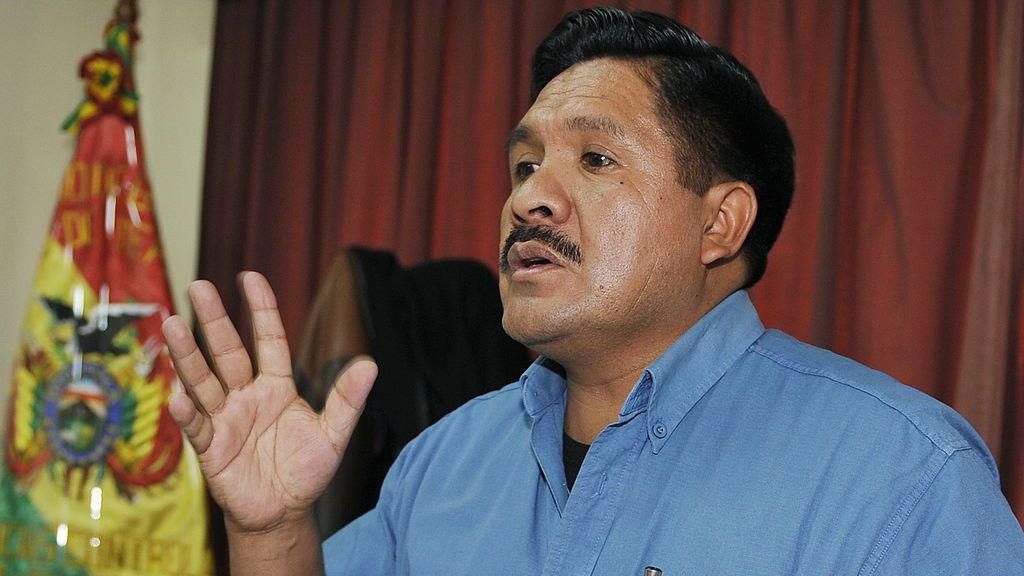
Cocaine lab found on property of Bolivia’s former anti-drug czar
In a startling development, Bolivia’s former counternarcotics czar, Felipe Cáceres, has been arrested following the discovery of a cocaine laboratory on one of his properties. Cáceres, who led the government department for controlled substances from 2006 to 2019, was a key figure in Bolivia’s fight against illegal drugs. The arrest took place in Puerto Villarroel, Cochabamba, a region known for its coca cultivation. While it remains unclear whether Cáceres was aware of the lab’s existence, the discovery has cast a shadow over Bolivia’s anti-drug efforts. The lab, capable of employing 10 people, was found on land owned by Cáceres, though investigations are ongoing to determine his direct involvement. Bolivia’s Interior Minister, Roberto Ríos, stated that Cáceres was detained near a sand and gravel plant he owns, located 500 meters from the lab. This incident adds to a series of scandals involving Bolivian anti-drug officials. Maximiliano Dávila, a former head of the counternarcotics police, is currently awaiting trial in the US on drug smuggling charges, while another former chief, René Sanabria, served a 14-year sentence in the US for drug trafficking. Bolivia, the world’s third-largest cocaine producer after Colombia and Peru, allows the legal cultivation of coca leaves for medicinal and traditional purposes. However, any production beyond the legally permitted 22,000 hectares is subject to destruction. Cáceres, a former leader in a coca-growers’ union, had close ties to former President Evo Morales, who has dismissed the arrest as a ‘set-up’ and accused the government of using it to divert attention from its own scandals. A lawyer for Morales’s party emphasized that investigators must prove a direct link between Cáceres and the cocaine lab.
-
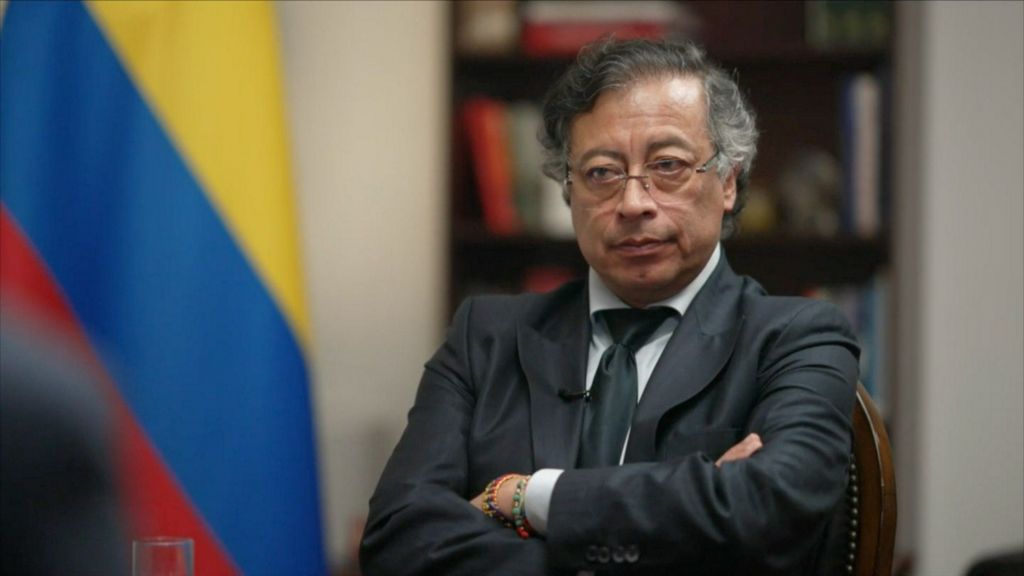
Colombia’s president calls US attacks on alleged drug boats ‘act of tyranny’
Colombian President Gustavo Petro has strongly criticized the United States for its recent airstrikes on alleged drug-trafficking boats in the Caribbean Sea, labeling them as an ‘act of tyranny.’ In an interview with the BBC, Petro called for criminal proceedings against US officials if investigations confirm that Colombians were killed in the attacks. The airstrikes, which began this month and have reportedly claimed 17 lives, were defended by President Donald Trump as necessary measures to curb the flow of fentanyl and other illegal narcotics into the US. However, legal experts and lawmakers have raised concerns about potential violations of international human rights laws. Petro questioned the proportionality of the force used, stating, ‘Why launch a missile if you could simply stop the boat and arrest the crew? That’s what one would call murder.’ He emphasized that there should be ‘zero deaths’ in operations targeting drug-smuggling speedboats, noting Colombia’s history of successful maritime cocaine seizures without fatalities. The strikes, primarily focused on Venezuela, have drawn criticism from Democratic lawmakers and UN experts, who describe them as extrajudicial executions. The White House responded by asserting Trump’s commitment to using all available power to combat drug trafficking. Petro also accused the Trump administration of humiliating his people and vowed that South American nations would not ‘bow down to the king.’ This latest clash follows Trump’s designation of several Latin American drug-trafficking organizations as terrorist entities and his deployment of additional US military forces to the southern Caribbean. Petro, who has a contentious history with Trump, argued that it is the US president’s foreign policies that are isolating the United States.
-
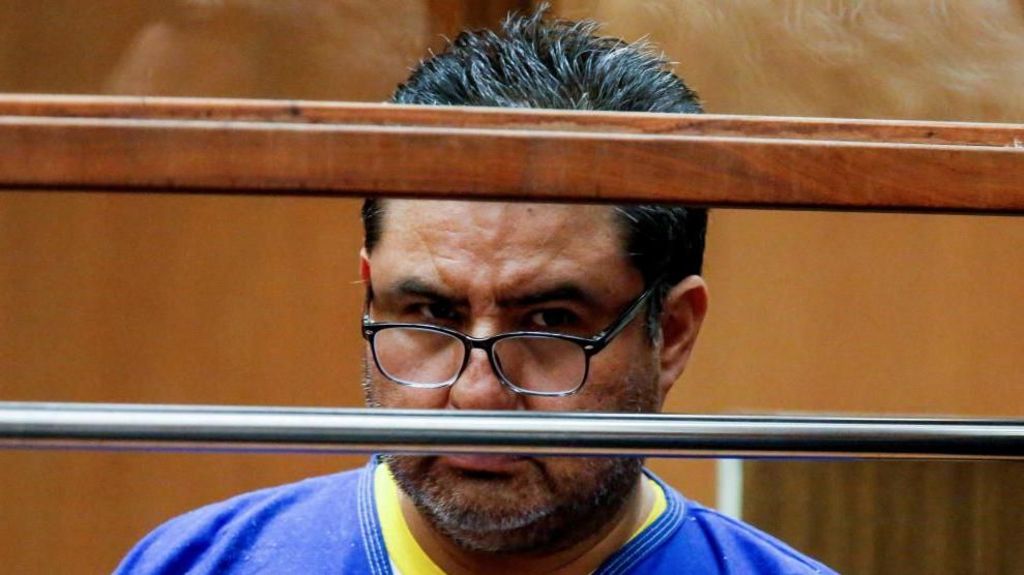
Megachurch leader pleads not guilty to sex trafficking charges
Naasón Joaquín García, the leader of the Mexico-based evangelical megachurch La Luz del Mundo, has pleaded not guilty to sex trafficking charges in a New York court. García, 56, is currently serving a 16-year prison sentence in California after admitting to sexually abusing girls from his congregation. A recently unsealed indictment alleges that García, his mother, and four associates used the church to traffic women and children to the United States. The defendants have denied all charges, with García’s lawyer dismissing the allegations as “recycled claims” that have been previously debunked. La Luz del Mundo, founded in 1926 by García’s grandfather, Eusebio Joaquín González, is a fundamentalist Christian organization with millions of followers worldwide. Despite García’s 2022 guilty plea in Los Angeles, many church members remain loyal, viewing him as “the Apostle of Jesus Christ.” The indictment, released by the US Attorney’s Office of the Southern District of New York, accuses García and his co-defendants of sex trafficking, child pornography, forced labor, and unlawful financial dealings. US Attorney Jay Clayton stated that the defendants “exploited the faith of their followers to prey upon them” and used their religious influence to silence victims. Prosecutors claim that García continued a disturbing tradition established by his father and grandfather, who allegedly manipulated young women into sexual activity under the guise of earning “special blessings.” La Luz del Mundo has publicly denied the allegations, calling them “unfounded, untrue, and slanderous.”
-
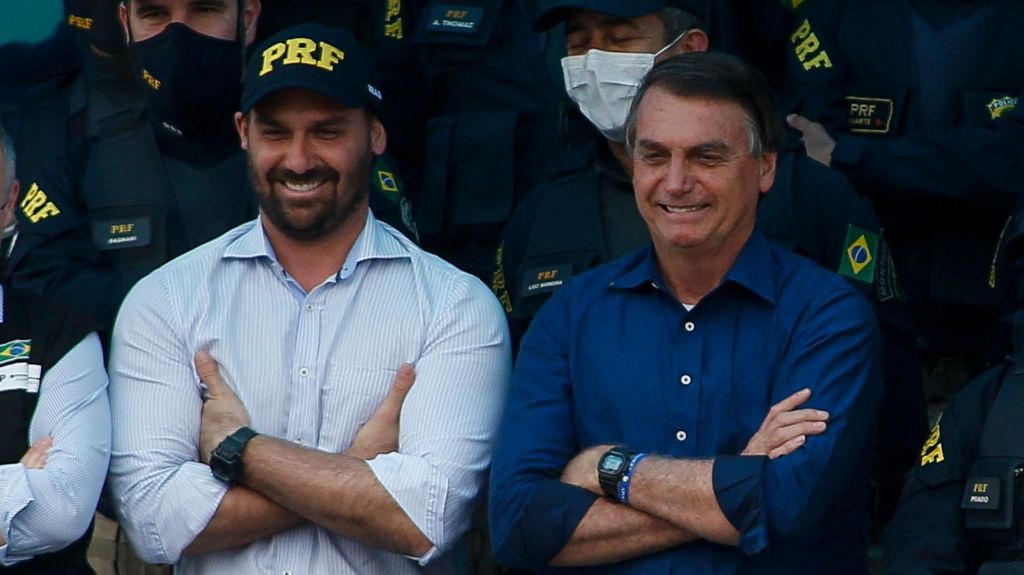
Brazil ex-president Jair Bolsonaro’s son charged with coercion
Brazil’s Attorney General’s Office has formally charged Eduardo Bolsonaro, son of former President Jair Bolsonaro, with coercion, according to an official statement released on Monday. The charges allege that the congressman repeatedly prioritized personal and family interests over those of the nation, exposing Brazil to potential sanctions from foreign governments. Eduardo, who currently resides in the United States, dismissed the accusations as “bogus” in a social media post, labeling them as “absurd” and part of an ongoing political persecution against his family. The charges come just weeks after his father, Jair Bolsonaro, was sentenced to 27 years in prison for orchestrating a coup attempt during his presidency from 2019 to 2022. Prosecutors are also seeking financial compensation for damages resulting from the alleged criminal actions. Notably, businessman Paulo Figueiredo, grandson of former dictator João Batista Figueiredo, has also been implicated in the case. Eduardo Bolsonaro relocated to the U.S. earlier this year, claiming he was living in “exile” due to fears of arrest if he returned to Brazil. He has actively sought support from the Trump administration, which has likened the legal actions against the Bolsonaro family to a “witch hunt.” Meanwhile, U.S. President Donald Trump imposed a 50% tariff on Brazil in July, a move criticized by current Brazilian President Luiz Inácio Lula da Silva as “misguided and illogical.” U.S. Secretary of State Marco Rubio has announced further sanctions, including targeting the wife of Brazil’s Supreme Court Justice Alexandre de Moraes, who presided over Jair Bolsonaro’s trial. The justice condemned the sanctions as “illegal and regrettable.” In Brazil, tens of thousands of citizens protested against a proposed amnesty bill that could potentially shield Jair Bolsonaro from prosecution. Critics have labeled the bill as the “Banditry Bill,” while supporters argue it is necessary to protect lawmakers from judicial overreach. President Lula has vowed to veto the bill if it passes the Senate, stating, “I stand with the Brazilian people. Today’s demonstrations show that the population does not want impunity or amnesty.”
-
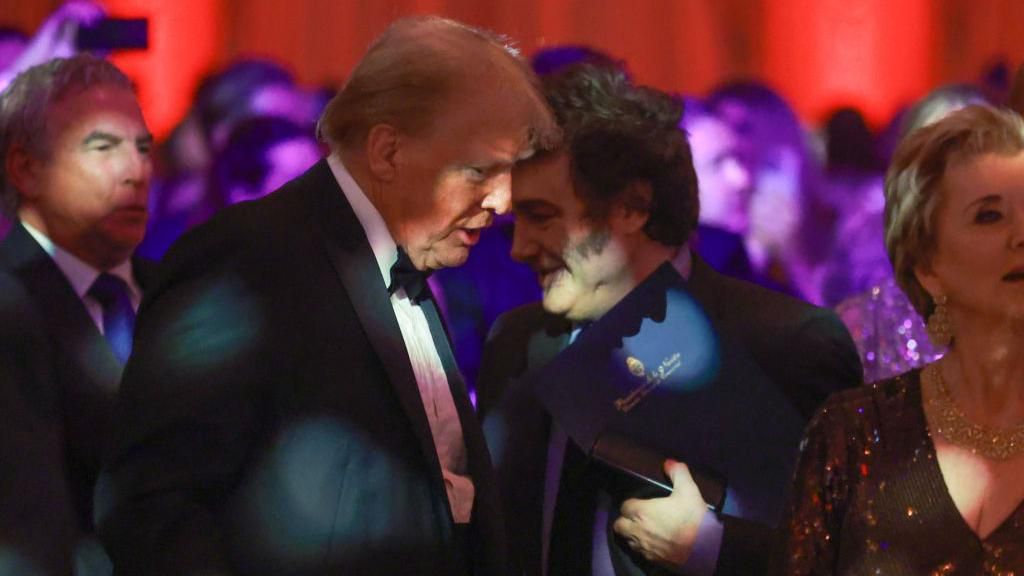
US ready to help with Argentina’s fiscal turmoil
US Treasury Secretary Scott Bessent has affirmed the United States’ readiness to intervene and stabilize Argentina’s worsening financial crisis. In a statement on social media, Bessent emphasized that ‘all options for stabilization are on the table,’ highlighting Argentina’s strategic importance as a key ally in Latin America. This declaration has provided some relief to financial markets, which have been volatile due to concerns over the future of President Javier Milei’s austerity-driven, free-market policies. The Argentine peso has experienced a sharp decline, prompting investors to offload Argentine stocks and bonds. Milei, a libertarian economist and ally of former US President Donald Trump, was elected in 2023 on a platform of radical spending cuts and reforms to combat rampant inflation. However, the peso’s instability has raised doubts about the government’s ability to uphold its economic promises. In recent weeks, the Argentine central bank has intervened, spending $1.1 billion of its reserves to support the peso, but this has further strained the country’s financial position. Bessent revealed that the US is considering measures such as purchasing Argentine pesos and dollar-denominated government debt to assist. Further details are expected after Milei meets with Trump in New York on Tuesday. Bessent expressed confidence in Milei’s commitment to fiscal discipline and pro-growth reforms, which he believes are essential to reversing Argentina’s economic decline. Milei has expressed gratitude for the US’s support, which has already bolstered Argentine stocks and dollar-denominated debt prices. Despite international backing, Milei faces domestic challenges, including recent local election losses and a bribery scandal involving his sister. Argentina’s upcoming mid-term elections in October will serve as a critical referendum on his controversial policies, which include cuts to social programs. Earlier this year, Bessent played a pivotal role in helping Argentina secure a $20 billion loan from the International Monetary Fund.