标签: Europe

欧洲

  • Nicolas Sarkozy found guilty of criminal conspiracy in Libya case

    Nicolas Sarkozy found guilty of criminal conspiracy in Libya case

    In a landmark legal ruling, former French President Nicolas Sarkozy has been convicted of criminal conspiracy in a high-profile case involving illicit funds from the late Libyan leader Muammar Gaddafi. The Paris criminal court, however, acquitted Sarkozy of additional charges, including passive corruption and illegal campaign financing. The case, which has spanned over a decade, centers on allegations that Sarkozy accepted millions of euros from Gaddafi to finance his 2007 presidential campaign. In return, Sarkozy allegedly promised to help Gaddafi improve his tarnished reputation in Western nations. Sarkozy, who served as France’s president from 2007 to 2012, has consistently denied the accusations, claiming the case is politically motivated. The investigation began in 2013 after Saif al-Islam, Gaddafi’s son, accused Sarkozy of misusing Libyan funds. Lebanese businessman Ziad Takieddine later claimed to possess evidence of Sarkozy’s campaign being heavily financed by Tripoli, with payments continuing even after his election. Sarkozy’s wife, Carla Bruni-Sarkozy, was also implicated in the case last year, facing charges of hiding evidence and associating with wrongdoers, which she denies. This verdict adds to Sarkozy’s legal troubles, which include a 2021 conviction for attempting to bribe a judge and a 2024 ruling for overspending on his 2012 re-election campaign. Despite these setbacks, Sarkozy has managed to avoid significant jail time, with recent court rulings allowing him to serve sentences at home.

  • Woman in Spanish cold case identified after 20 years

    Woman in Spanish cold case identified after 20 years

    A breakthrough in a decades-old mystery has been achieved through Interpol’s global initiative, ‘Operation Identify Me.’ The body of a woman discovered in Spain over 20 years ago has been identified as 31-year-old Russian citizen Liudmila Zavada. This marks the third successful identification under the campaign, which aims to uncover the identities of women who died under suspicious or unexplained circumstances across Europe. Launched in 2023, the initiative has already identified two other women: a British woman murdered in Belgium and a Paraguayan woman found dead in Spain. Liudmila Zavada, known as ‘the woman in pink’ due to her attire, was found in July 2005 near Barcelona. Despite initial investigations, her identity remained unknown until Turkish police matched her fingerprints to a national database, leading to a DNA confirmation with a relative in Russia. Interpol’s Secretary General, Valdecy Urquiza, hailed the identification as a source of ‘fresh hope’ for families of missing persons and a potential breakthrough for investigators. The campaign has also highlighted the challenges posed by global migration and human trafficking, which complicate the identification of bodies found outside their countries of origin. Interpol officials noted that women are disproportionately affected by gender-based violence, including domestic abuse, sexual assault, and trafficking. The agency continues to seek the identities of 44 other women found dead across Europe, most of whom are believed to be murder victims aged between 15 and 30.

  • Drone activity confirmed at multiple airports in Denmark

    Drone activity confirmed at multiple airports in Denmark

    A series of drone incursions have caused significant disruptions at multiple Danish airports, heightening concerns over airspace security and potential foreign interference. Aalborg Airport, located in northern Denmark, was temporarily closed after unidentified drones were spotted in its vicinity, forcing at least three flights to be diverted. This incident follows a similar closure at Copenhagen Airport earlier in the week, which Danish Prime Minister Mette Frederiksen described as ‘the most severe attack on Danish infrastructure so far.’

    In southern Denmark, airports in Esbjerg, Sønderborg, and Skrydstrup also reported drone activity, though they remained operational. Authorities in both regions are investigating the incidents but have yet to determine the purpose or origin of the drones. North Jutland Police Chief Inspector Jesper Bøjgaard Madsen stated, ‘We cannot yet comment on the purpose of the drones flying in the area, nor can we say anything about who the actor behind it is.’

    The disruptions come amid heightened tensions between NATO member states and Russia. Earlier this week, Estonia and Poland requested consultations with NATO after accusing Russia of violating their airspace. Romania also reported Russian drone incursions near its border with Ukraine. While Russia has denied these allegations, NATO has condemned the actions as ‘escalatory’ and warned of using ‘all necessary military and non-military tools’ to defend itself.

    Danish officials have emphasized that there is no immediate danger to the public, but they have urged residents to avoid the affected areas. The Danish Armed Forces, which use Aalborg Airport as a military base, were also impacted by the drone activity. As investigations continue, the incidents underscore the growing challenges of airspace security in an increasingly volatile geopolitical climate.

  • Greenland contraception scandal victims hear Danish PM’s emotional apology

    Greenland contraception scandal victims hear Danish PM’s emotional apology

    In a historic and emotionally charged address, Denmark’s Prime Minister Mette Frederiksen formally apologized to the women of Greenland for a controversial birth control program that forcibly implanted contraceptive coils in thousands of Inuit women during the 1960s and 1970s. Speaking to a packed audience in Nuuk, Greenland’s capital, Frederiksen expressed deep remorse for the injustices committed. ‘Dear women. Dear families. Dear Greenland. Today there is only one right thing to say to you. Sorry,’ she stated. The apology was met with mixed reactions, including a silent protest by one woman who stood with her back to the prime minister, her mouth marked with a black handprint. The program, which targeted nearly half of Greenland’s childbearing-age women, involved the insertion of intrauterine devices (IUDs) without consent, including in girls as young as 12. Many victims have suffered lifelong physical and emotional trauma, including infertility. Naja Lyberth, a prominent advocate for the affected women, emphasized the importance of the apology but criticized the lack of exploration into potential human rights violations. Frederiksen also announced plans for a ‘reconciliation fund,’ though details remain unclear. A lawsuit demanding compensation has been filed by 143 women, including Aviaq Petersen, who discovered she had an IUD inserted without her knowledge during an abortion at age 24. The apology comes amid growing scrutiny of Denmark’s historical and current policies in Greenland, including forced adoptions and the separation of Inuit children from their families. Greenland’s Prime Minister Jens-Frederik Nielsen described the birth control program as one of the darkest chapters in the country’s history. While the apology has been welcomed by many, some victims, like Elisa Christensen, expressed disappointment over the lack of compensation and tangible support. ‘The little girl inside me felt a hug from society,’ Christensen said, ‘but the grown-up Elisa doesn’t know how to use that apology.’ The case highlights ongoing tensions between Denmark and Greenland, as well as the broader implications of colonial-era policies on indigenous communities.

  • Russia will expand aggression beyond Ukraine if not stopped, Zelensky warns

    Russia will expand aggression beyond Ukraine if not stopped, Zelensky warns

    Ukrainian President Volodymyr Zelensky issued a stark warning at the United Nations General Assembly in New York, asserting that Russian aggression will continue to expand unless the international community takes decisive action. Zelensky emphasized that without a united front and increased support from allies, more nations will fall victim to Russia’s ambitions. He highlighted the growing threat of a global arms race, particularly with advancements in military technology, and called for international regulations on artificial intelligence (AI) in weaponry. ‘Weapons decide who survives,’ he declared, urging global cooperation to prevent further escalation. Zelensky’s remarks followed a shift in U.S. President Donald Trump’s stance on the Russia-Ukraine conflict, with Trump now suggesting that Ukraine could reclaim all its lost territories. However, Zelensky criticized international institutions for their inability to provide adequate security guarantees, noting that membership in long-standing alliances like NATO does not ensure safety. He also warned of the risks posed by autonomous drones and unmanned aircraft, describing them as more dangerous than traditional warfare. Additionally, Zelensky expressed concern over Russian influence in Moldova, urging the West to prevent the country from falling under Moscow’s control. He lamented missed opportunities to protect Georgia and Belarus from Russian dominance. The Ukrainian leader’s speech coincided with accusations from Moldovan President Maia Sandu, who claimed that the Kremlin is funding efforts to incite violence and spread fear in Moldova ahead of its upcoming elections. Meanwhile, NATO members Estonia, Poland, and Romania reported violations of their airspace by Russian drones and jets, prompting calls for consultations within the alliance. Zelensky praised Trump for his support and revealed that the U.S. is considering security guarantees for Ukraine post-war, potentially including increased military aid. Trump’s recent comments marked a departure from his previous suggestion of ‘land swaps’ as a condition for peace, instead describing Russia as a ‘paper tiger’ that has been ‘fighting aimlessly.’ Kremlin spokesman Dmitry Peskov dismissed Trump’s characterization, asserting that Russia remains a formidable force. The ongoing conflict continues to dominate international discussions, with U.S. Secretary of State Marco Rubio meeting Russian Foreign Minister Sergei Lavrov to reiterate calls for an end to hostilities and a durable resolution to the war.

  • Irish presidential election: Who are the runners and riders?

    Irish presidential election: Who are the runners and riders?

    Ireland is gearing up for a significant political transition as President Michael D Higgins prepares to step down in November, marking the end of his impactful decade-long tenure. Widely regarded as one of the nation’s most popular leaders, Higgins has redefined the role of the Irish presidency by actively addressing pressing issues such as housing shortages and foreign policy. His departure has set the stage for a competitive election scheduled for October 24, with three prominent candidates emerging as frontrunners. Catherine Connolly, an independent candidate supported by major left-wing parties, brings a wealth of experience as a barrister, clinical psychologist, and former deputy speaker of the Dáil. Jim Gavin, representing Fianna Fáil, is celebrated for his achievements as a Gaelic football manager and his military background. Heather Humphreys, the Fine Gael candidate, is a seasoned cabinet minister with a diverse portfolio of experience. The election process, governed by the Single Transferable Vote system, will see voters rank candidates in order of preference, with results expected by October 25. The winner will assume the presidency for a seven-year term, shaping Ireland’s future on both domestic and international stages.

  • Italy condemns ‘drone attack’ on Gaza aid flotilla and deploys frigate

    Italy condemns ‘drone attack’ on Gaza aid flotilla and deploys frigate

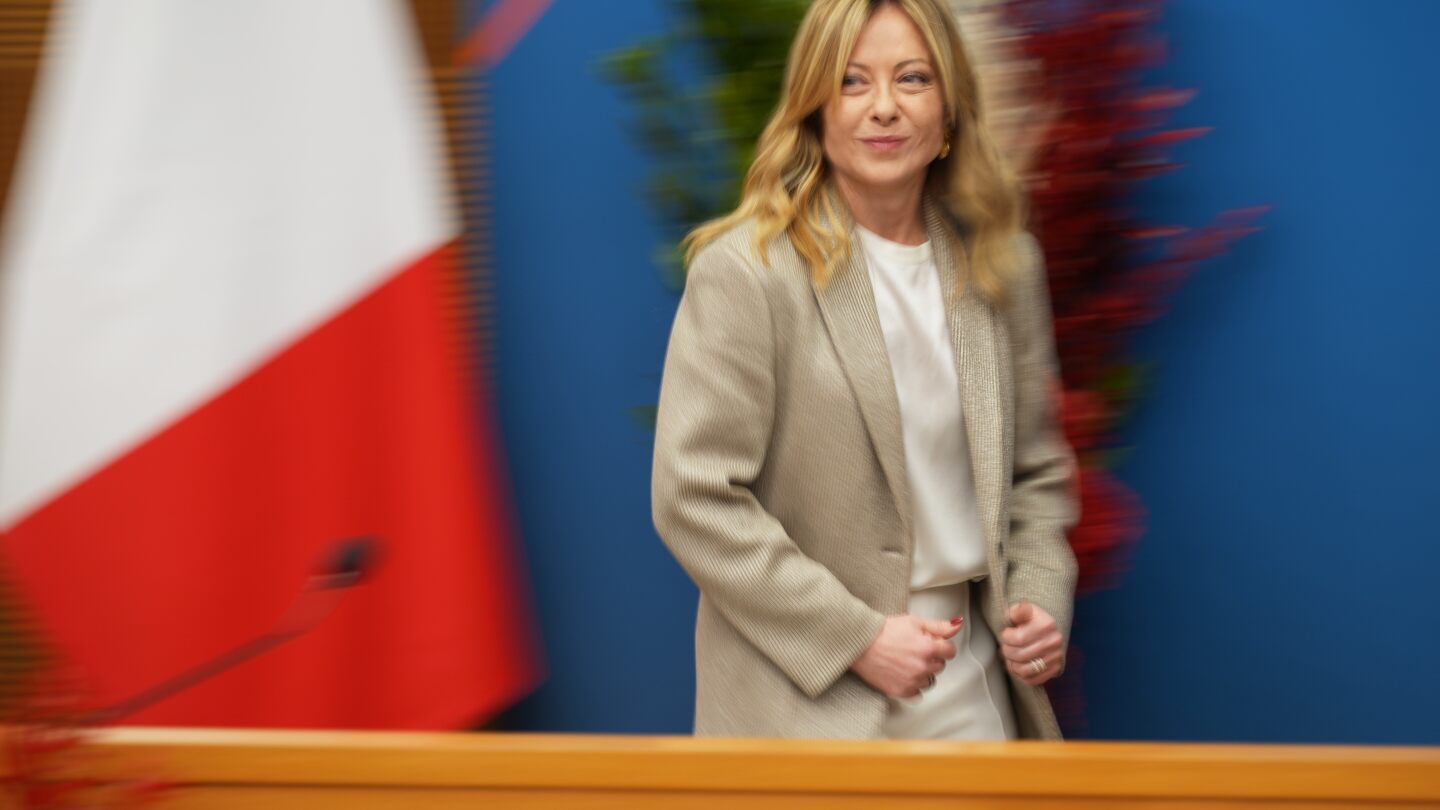
    Italy’s Defense Minister Guido Crosetto has strongly condemned an alleged drone attack on the Global Sumud Flotilla (GSF), a humanitarian mission attempting to breach Israel’s naval blockade of Gaza. The flotilla, comprising 52 boats, is currently stationed off the coast of Crete. Crosetto has deployed an Italian Navy frigate to assist Italian citizens on board, following reports of explosions, unidentified objects being dropped, and communications jamming. The GSF has accused Israel of a ‘dangerous escalation,’ though Israel has yet to comment. Unverified footage released by the GSF shows a man jumping onto a yacht’s deck after an apparent explosion nearby, while another video captures a visible explosion from the vessel Spectre. The GSF claims at least 13 explosions occurred around several boats, with drones dropping objects on at least 10 vessels, though no material damage was reported. Passengers have requested assistance from the Greek coastguard, and a Frontex vessel dispatched to the area found no evidence of damage. Prominent activists, including Swedish climate campaigner Greta Thunberg, have vowed to continue the mission despite the risks. Thunberg described the incident as a ‘scare tactic’ and emphasized the group’s determination to deliver aid. Israel’s Foreign Ministry has accused the flotilla of being ‘organized by Hamas’ and reiterated its commitment to enforcing the naval blockade. The GSF, however, maintains its goal is to ‘break the illegal siege on Gaza by sea, open a humanitarian corridor, and end the ongoing genocide of the Palestinian people.’ The mission follows a UN-backed report confirming famine in Gaza City, with warnings of its spread to central and southern Gaza. The Hamas-run health ministry reports at least 440 deaths from malnutrition since the war began. Italy’s stance on the conflict has shifted, with Prime Minister Giorgia Meloni now aligning more closely with positions favoring Palestinian statehood, amid domestic political pressure and widespread protests.

  • Rosenberg: Russia brushes off Trump’s claim of ‘paper tiger’ in aimless war

    Rosenberg: Russia brushes off Trump’s claim of ‘paper tiger’ in aimless war

    Former U.S. President Donald Trump’s recent comments on Ukraine and Russia have sparked significant diplomatic ripples, particularly in Moscow. Trump’s characterization of Russia as a ‘paper tiger’ engaged in ‘aimless fighting’ in Ukraine has drawn sharp reactions, though the Kremlin’s response has been notably restrained. Trump further suggested that Ukraine could reclaim all territories seized by Russia, a statement that has raised eyebrows in Moscow. Additionally, his endorsement of NATO countries shooting down Russian aircraft entering their airspace added fuel to the fire. Kremlin spokesman Dmitry Peskov downplayed these remarks, emphasizing Russia’s resilience and dismissing the notion of a ‘paper bear.’ Peskov also highlighted President Vladimir Putin’s appreciation for Trump’s efforts toward peace, despite the critical tone. Analysts suggest that Moscow’s muted response stems from a belief that Trump’s stance on Ukraine is not fixed and could be influenced through diplomatic channels. Meanwhile, Russia’s economic challenges, exacerbated by sanctions and war expenditures, continue to mount, though they appear to have little impact on the Kremlin’s strategic decisions in Ukraine. As tensions persist, Trump’s comments underscore the complex and evolving dynamics of U.S.-Russia relations.

  • How will the EU’s new border system work?

    How will the EU’s new border system work?

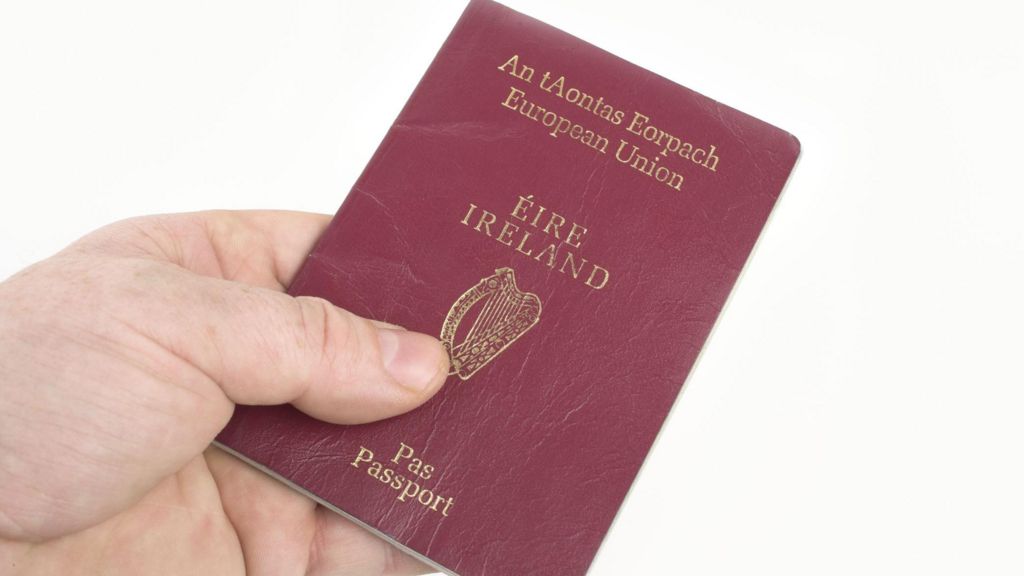
    Travelers between the UK and Europe are set to experience significant changes this autumn with the phased introduction of the European Union’s Entry/Exit System (EES). Designed to enhance security and streamline border controls, the EES will replace the current manual passport stamping process for non-EU citizens entering and leaving the Schengen Area. The system, which has faced multiple delays, will officially commence on October 12, 2024, with a gradual rollout expected to be completed by April 10, 2026. The Schengen Area comprises 29 European countries, including popular destinations for UK travelers such as France, Spain, Italy, and Greece.

  • Ukraine in maps: Tracking the war with Russia

    Ukraine in maps: Tracking the war with Russia

    The ongoing conflict in Ukraine, now in its fourth year, has seen significant developments as Russian forces continue to expand their territorial control, particularly in the eastern regions of Luhansk and Donetsk. Despite fierce Ukrainian resistance, Moscow’s military has made incremental gains, bolstered by increased use of unmanned aerial vehicles (drones) to reduce casualties. The strategic ‘fortress belt’ in western Donetsk, a heavily fortified defensive line, remains a critical stronghold for Ukraine, though analysts predict it could take years for Russia to achieve its objectives in the region.