标签: Europe

欧洲

  • Radio Free Europe’s Hungarian service shuts down after Trump funding cuts

    Radio Free Europe’s Hungarian service shuts down after Trump funding cuts

    The Hungarian service of Radio Free Europe, Szabad Európa, officially ceased operations on Friday following the Trump administration’s decision to withdraw funding. This move marks the end of a pro-democracy news outlet that had been a vital source of independent journalism in Hungary. Radio Free Europe/Radio Liberty (RFE/RL), a U.S. government-funded organization established during the Cold War, has long provided news to regions under authoritarian regimes, broadcasting in 27 languages across 23 countries. The Hungarian service was initially terminated in 1993 but was revived in 2020 in response to Hungary’s declining media freedom under Prime Minister Viktor Orbán. In a farewell statement, Szabad Európa expressed gratitude to its audience for their trust and support, noting that its articles would remain accessible online. The shutdown aligns with broader cuts to international broadcasters like RFE/RL and Voice of America, as well as domestic public broadcasters PBS and NPR, under the Trump administration. Kari Lake, a senior adviser to the U.S. Agency for Global Media, justified the decision, stating that Szabad Európa’s operations in Hungary were ‘not aligned with U.S. national interests’ and undermined Trump’s foreign policy. Orbán, a close ally of Trump, has been accused of consolidating control over Hungary’s media landscape, with Reporters Without Borders estimating that his party controls 80% of the country’s media resources. In 2021, Orbán was labeled a media ‘predator’ by the watchdog, the first EU leader to receive such a designation. Earlier this year, his government introduced legislation targeting foreign-funded critical media outlets, further tightening its grip on press freedom.

  • Russian glide bomb hits an apartment block and kills 5 in southern Ukraine

    Russian glide bomb hits an apartment block and kills 5 in southern Ukraine

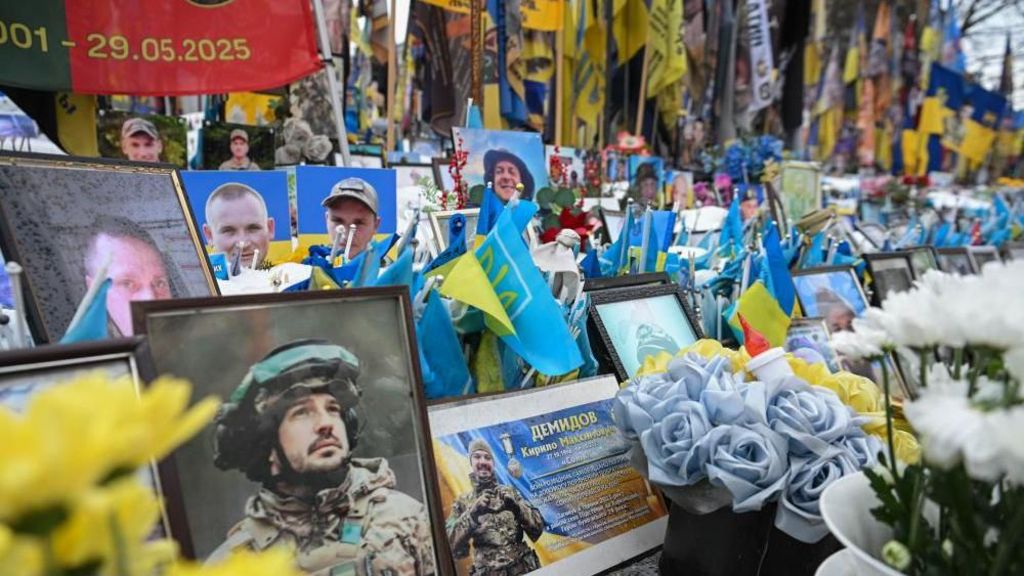
    A devastating Russian glide bomb attack targeted a residential district in Zaporizhzhia, southern Ukraine, resulting in the deaths of five individuals and injuring ten others, including a teenage girl. The assault, which occurred overnight, damaged high-rise apartment buildings and a local market, marking the third such incident in the city since the war began. The glide bomb, a modified Soviet-era weapon launched from high-altitude Russian jets, has proven devastating for Ukraine’s frontline cities, with no effective countermeasures currently available. This attack follows a recent barrage of Russian drones and missiles on Ternopil, which claimed 31 lives, including six children, and left 94 injured. Meanwhile, Ukrainian officials are evaluating a U.S. proposal to end the conflict, as President Volodymyr Zelenskyy anticipates discussions with U.S. President Donald Trump. The relentless targeting of civilian areas underscores the ongoing humanitarian crisis in Ukraine, nearly four years after Russia’s full-scale invasion.

  • Trump’s growing impatience to end Ukraine war is a concern for Kyiv

    Trump’s growing impatience to end Ukraine war is a concern for Kyiv

    Ukrainian President Volodymyr Zelensky has adopted a measured approach to a US-drafted peace proposal, refraining from outright criticism despite its apparent alignment with many of Moscow’s demands. The White House has countered assertions that Ukraine was excluded from the drafting process, emphasizing that the plan emerged from recent US-Russia discussions. In his nightly address, Zelensky underscored Ukraine’s commitment to peace, diplomacy, and constructive dialogue, stating, “We are ready for honest, efficient, and constructive work.” However, concerns linger over specific provisions, such as relinquishing the Donbas region, downsizing Ukraine’s military, and barring international troops—concessions previously rejected by Kyiv. Ukrainian MP Yaroslav Yurchyshyn criticized the proposal as a “quick peace at the expense of the weaker side.” Recent developments have further strained Ukraine’s position, including Russian advances in the east, widespread power outages due to Moscow’s strikes on Ukraine’s energy grid, and internal political turmoil fueled by corruption allegations. US Secretary of State Marco Rubio acknowledged that achieving peace would necessitate tough compromises. The draft reportedly offers Ukraine “reliable security guarantees” and suggests using frozen Russian assets for reconstruction, while excluding NATO membership but leaving EU accession open. European nations, notably the UK and France, have been sidelined in the drafting process, with the proposal explicitly opposing foreign troop presence. European allies are pressing for their voices to be heard, potentially influencing Zelensky to seek amendments. However, time is of the essence, as US officials, operating under President Donald Trump’s directive, aim to finalize the deal within weeks, not months. Trump, eager to end the conflict swiftly, appears to have abandoned hopes of direct negotiations between Zelensky and Russian President Vladimir Putin, focusing instead on securing a bilateral agreement.

  • Pilot dies in small plane crash in Republic of Ireland

    Pilot dies in small plane crash in Republic of Ireland

    A tragic aviation incident occurred near Tramore in County Waterford, Republic of Ireland, on Thursday at approximately 12:50 local time. The small aircraft, a privately-owned Vulcanair P68C, crashed during its approach to Waterford Airport, resulting in the death of the sole pilot on board. Irish police, known as gardaí, confirmed that the pilot was alone in the plane at the time of the accident. Emergency services, including Coast Guard Rescue 117, swiftly responded to the scene. The pilot’s body was later transported to University Hospital Waterford, as reported by Irish broadcaster RTÉ. The aircraft was en route from Sligo, Ireland, to Beziers, France, when it abruptly turned around off the south coast of Ireland and headed back towards Waterford Airport. The Air Accident Investigation Unit conducted an initial examination of the crash site on Thursday and announced that four inspectors would return for further investigation on Friday morning. This incident has raised concerns about aviation safety in the region, and further details are awaited as the investigation progresses.

  • Eurovision changes rules after Israel voting controversy

    Eurovision changes rules after Israel voting controversy

    The Eurovision Song Contest is implementing significant changes to its voting and promotional rules following widespread controversy surrounding Israel’s performance in the 2025 competition. Israel’s Yuval Raphael secured the highest public vote but ultimately finished second overall after jury votes were factored in. This outcome sparked concerns among participating countries, leading to a comprehensive review of the contest’s regulations. Starting next year, fans will be limited to casting 10 votes each, down from 20, and juries will be reintroduced for the semi-finals to ensure musical quality and diversity. Additionally, contestants and broadcasters will be prohibited from engaging in promotional campaigns supported by third parties, including governments, amid allegations that an Israeli government agency funded ads and used state social media accounts to influence voting. Eurovision director Martin Green emphasized the need to maintain the contest’s impartiality and neutrality, stating that the changes aim to address disproportionate promotional activities that undermine the event’s spirit. The presence of Israel at Eurovision has also faced opposition due to the ongoing conflict in Gaza, with countries like Spain, Ireland, and the Netherlands considering a boycott if Israel participates in 2026. Green expressed hope that the new measures would reassure broadcasters and preserve Eurovision as a celebration of music and unity. The final of the 70th Eurovision Song Contest will be held on May 16, 2026, in Vienna, Austria, marking the city’s third time hosting the event.

  • Archaeologists lift the lid on a 1,700-year-old Roman sarcophagus hidden beneath Budapest

    Archaeologists lift the lid on a 1,700-year-old Roman sarcophagus hidden beneath Budapest

    A remarkably well-preserved Roman sarcophagus, dating back approximately 1,700 years, has been discovered in Budapest, Hungary, shedding light on the life of a young woman and the Roman era she lived in. The limestone coffin was unearthed during a large-scale excavation in Óbuda, a northern district of Budapest that was once part of Aquincum, a thriving Roman settlement on the Danube frontier. The sarcophagus, found with its stone lid still intact and sealed with metal clamps and molten lead, contained a complete skeleton surrounded by dozens of artifacts, offering a rare glimpse into ancient Roman burial practices. Gabriella Fényes, the lead archaeologist of the excavation, emphasized the uniqueness of the find, stating that the sarcophagus was hermetically sealed and undisturbed, making it an exceptional discovery. The coffin was located among the ruins of abandoned houses in an area of Aquincum that was repurposed as a burial ground in the 3rd century. Nearby, researchers also uncovered a Roman aqueduct and eight simpler graves, though none matched the richness or pristine condition of the sealed tomb. The sarcophagus contained an array of objects, including two intact glass vessels, bronze figures, 140 coins, a bone hair pin, a piece of amber jewelry, and traces of gold-threaded fabric, all of which suggest the grave belonged to a young woman of high social status. Fényes noted that these items were likely given to the deceased by her relatives for her eternal journey, reflecting the care and love they had for her. The discovery is particularly significant as it provides insights into the Roman province of Pannonia, which encompassed much of modern-day Hungary. Anthropologists will now examine the remains to learn more about the woman’s age, health, and origins. Gergely Kostyál, a Roman-period specialist and coleader of the project, highlighted the rarity of finding an untouched sarcophagus from the 4th century, as it was common practice to reuse earlier sarcophagi. Excavators also removed a layer of mud from inside the coffin, which Fényes hopes may contain additional treasures, such as jewelry. For Fényes, the discovery is not only scientifically valuable but also emotionally resonant, offering a poignant glimpse into the devotion and love of an ancient people.

  • Russian envoy Kirill Dmitriev: Putin propagandist or key to peace with Ukraine?

    Russian envoy Kirill Dmitriev: Putin propagandist or key to peace with Ukraine?

    Kirill Dmitriev, a prominent Russian diplomat and head of the Russian Direct Investment Fund (RDIF), has emerged as a key figure in Russia’s efforts to end its diplomatic isolation in the West. At 50, Dmitriev stands out among Russian officials for his deep understanding of the United States, having studied and worked there for years. His unique blend of diplomatic acumen and commercial expertise has made him a pivotal player in U.S.-Russia relations, particularly during the Trump administration.

  • Bears in the backyard, wolves at the door: Greek villages have a growing predator problem

    Bears in the backyard, wolves at the door: Greek villages have a growing predator problem

    In the rural village of Levea, Greece, farmer Anastasios Kasparidis was met with a grim scene: three of his sheep lay dead, unmistakably mauled by a bear. The large paw prints in the soil confirmed the predator’s presence, a once-rare but now increasingly common occurrence in northwestern Greece. Kasparidis, who also reported losses of chickens and pigs among neighboring farmers, has since moved his remaining flock to a safer pen near his home. “The bears would eat them all,” he lamented. This incident underscores a growing tension in the region, where the resurgence of protected species like brown bears and wolves, celebrated by environmentalists, has sparked fears among rural residents for their livelihoods and safety. Brown bears, Greece’s largest predator, have seen their population quadruple since the 1990s, with an estimated 870 now roaming northern Greece, according to the environmental organization Arcturos. Wolves, too, have expanded their range, now found as far south as Athens and the Peloponnese. The recovery of these species has been bolstered by the increasing population of wild boars, whose numbers have surged due to reduced hunting, milder winters, and cross-breeding with domestic pigs. However, this wildlife rebound has led to more frequent human encounters, often resulting in fear and conflict. In Levea, residents report regular bear sightings, while wild boars frequently roam through the village. Similar stories emerge from nearby Valtonera, where community president Konstantinos Nikolaidis noted that wild animals now enter the village, making nighttime walks unsafe. The situation has prompted calls for extended hunting seasons and reduced protections for wolves, a move recently supported by EU lawmakers. Experts, however, caution against simplistic solutions. Panos Stefanou of Arcturos emphasized that habitat loss, food scarcity, and human depopulation in rural areas are key factors driving wildlife into human spaces. Measures like proper waste disposal, using deterrent lights, and avoiding feeding strays are recommended to mitigate conflicts. “Killing the animals is not what will solve the problem,” Stefanou stressed, advocating for a balanced approach to coexistence.

  • Poland’s struggle to fix its justice system holds lessons for other countries

    Poland’s struggle to fix its justice system holds lessons for other countries

    WARSAW, Poland — Two years into Donald Tusk’s government, Poland’s ambitious plans to reverse the judicial overhaul by its nationalist predecessor, Law and Justice (PiS), have encountered significant obstacles. PiS, which ruled from 2015 to 2023, consolidated political control over key judicial institutions by appointing sympathetic judges and punishing critics. These changes, condemned by European courts, have left Poland’s legal system in disarray. Despite Tusk’s promises to restore judicial independence, progress has been hindered by PiS-aligned presidents and deep political polarization. Tusk’s first justice minister, Adam Bodnar, was replaced in July due to perceived inaction. His successor, Waldemar Żurek, has adopted a more aggressive stance, pursuing legal action against PiS figures, including former Justice Minister Zbigniew Ziobro, accused of misusing funds for surveillance software. However, Żurek’s efforts face potential vetoes from President Andrzej Duda, a PiS ally. The government’s inability to pass reforms has led to a focus on prosecuting PiS allies, aiming to expose alleged abuses of power. Analysts warn that Poland’s judicial crisis is part of a broader democratic challenge, exacerbated by political polarization. Żurek emphasizes the need to engage with all citizens, not just legal experts, to safeguard democracy. Despite incremental progress, the path to restoring judicial independence remains fraught with challenges, as PiS remains a formidable political force.

  • Friday-night drug deals helping Russian war machine, UK crime agency warns

    Friday-night drug deals helping Russian war machine, UK crime agency warns

    The National Crime Agency (NCA) has revealed a shocking connection between cocaine purchases in the UK and the funding of Russian arms factories. A Russian-led money-laundering network operating in Britain has been using a Kyrgyzstan-based bank to facilitate payments for Russia’s military-industrial complex, including arms production for the Ukraine war. The NCA’s investigation, dubbed Operation Destabilise, has uncovered a sprawling criminal ecosystem that processes cash for drug gangs, illegal firearms suppliers, and people smugglers.