标签: Europe

欧洲

  • Weekly quiz: Whose crown was stolen from the Louvre?

    Weekly quiz: Whose crown was stolen from the Louvre?

    This week witnessed a series of significant events across the United States and beyond. Millions of Americans participated in the ‘No Kings’ protests, voicing their opposition to President Donald Trump’s policies in cities nationwide. Meanwhile, Amazon Web Services experienced a near-catastrophic outage that threatened to disrupt internet services globally. In the entertainment world, fans of the popular show ‘Strictly’ were left in shock as presenters Tess Daly and Claudia Winkleman announced their departure. Amidst these headline-grabbing events, the week also saw developments in France, including updates on crime, jewellery, and museums in Paris. For those keen on testing their memory of these events, quizzes curated by Ben Fell offer a chance to revisit last week’s happenings or delve into the archives for a broader perspective.

  • Lithuanian president says Russian military planes violated the Baltic country’s airspace

    Lithuanian president says Russian military planes violated the Baltic country’s airspace

    VILNIUS, Lithuania — Lithuanian President Gitanas Nausėda has strongly denounced the violation of Lithuania’s airspace by Russian military aircraft on Thursday evening, labeling it a flagrant infringement on the territorial integrity of the European Union and NATO member state. In a statement posted on the social media platform X, Nausėda announced that Lithuania’s foreign ministry would summon representatives from the Russian Embassy in Vilnius to formally protest the incident. He emphasized that the breach constitutes a direct violation of international law and underscores the urgent need to bolster European air defense capabilities. The Baltic region has been on high alert following a series of recent drone incidents and airspace violations by Russian warplanes, which have raised fears that President Vladimir Putin may be testing NATO’s resolve. Some European leaders have accused Russia of engaging in a hybrid war strategy, a claim Moscow vehemently denies.

  • Who’s in the running to become the next president of Ireland?

    Who’s in the running to become the next president of Ireland?

    As Ireland gears up for its presidential election, the political landscape is abuzz with speculation and anticipation. BBC News NI’s Dublin Correspondent Gabija Gataveckaite provides an insightful overview of the key candidates vying for the prestigious role. The election, which is set to determine the next head of state, has drawn a diverse array of contenders, each bringing unique qualifications and visions for the nation’s future. The race is expected to be highly competitive, with candidates from various political backgrounds and independent figures entering the fray. The presidency, largely a ceremonial position, holds significant symbolic importance in Ireland, representing unity and national identity. As the campaign unfolds, voters will be closely scrutinizing the candidates’ platforms, leadership qualities, and commitment to addressing key societal issues. The outcome of this election will not only shape Ireland’s political trajectory but also influence its standing on the global stage.

  • King and Pope make history by praying side by side

    King and Pope make history by praying side by side

    In a landmark moment of religious and historical significance, King Charles III and Pope Leo shared a prayer in the Sistine Chapel, marking an unprecedented act of unity between the leaders of the Church of England and the Catholic Church. This symbolic gesture, conducted under the watchful gaze of Michelangelo’s ‘The Last Judgment,’ bridged a divide that has persisted since the 16th-century Reformation. The service, enriched by music and prayers centered on nature, offered a serene interlude amidst the ongoing scrutiny surrounding Prince Andrew’s ties to Jeffrey Epstein. Despite the gravity of the occasion, the relentless presence of the media was a constant reminder of the modern challenges faced by public figures. King Charles humorously remarked on the omnipresence of cameras, to which Pope Leo responded with a relaxed, ‘You get used to it,’ reflecting his own adaptation to the demands of his high-profile role. The visit, meticulously choreographed, included moments of profound reflection, such as a private prayer at the tomb of St. Paul, and exchanges of gifts, including an icon symbolizing King Charles’s interest in the Orthodox Church. The day concluded with a sense of historical fulfillment, as the visit reinforced the growing friendship between the Catholic and Anglican churches, a bond that continues to strengthen both at the grassroots and leadership levels.

  • Man found guilty of Kieran Quilligan murder

    Man found guilty of Kieran Quilligan murder

    In a chilling case that has gripped the Republic of Ireland, 33-year-old Niall Long has been found guilty of the murder of Kieran Quilligan, a 47-year-old man whose skeletal remains were discovered in a carrier bag in a County Cork ravine. The victim had been missing for five months before his remains were found by An Garda Síochána (Irish police) in February 2024. Quilligan was last seen alive on September 1, 2023. The Central Criminal Court in Cork heard that Quilligan was ‘lured’ to his death, according to prosecution senior counsel Donal O’Sullivan, who praised the meticulous investigative efforts of the gardaí in uncovering the remains. Due to the advanced state of decomposition, the exact cause of death could not be determined. However, a pathologist testified that injuries, including fractures to the ribs, chest, neck, and skull, indicated a ‘severe assault.’ The jury is set to resume deliberations on Friday regarding Long’s co-accused, 27-year-old Luke Taylor, who denies involvement in the murder. The case has shed light on the challenges of investigating such harrowing crimes and the dedication of law enforcement in pursuing justice.

  • Pump prices could rise after US, EU hit Russian oil companies with new sanctions and oil spikes

    Pump prices could rise after US, EU hit Russian oil companies with new sanctions and oil spikes

    In a significant move to pressure Russia amid its ongoing conflict with Ukraine, the United States imposed sweeping sanctions on Russia’s oil industry on Thursday. This decision sent shockwaves through global energy markets, with U.S. benchmark crude prices surging by 6% to $62 per barrel. Analysts predict that American consumers could soon face higher gasoline prices, with the full impact expected to materialize within days. Patrick De Haan, head of petroleum analysis at GasBuddy, noted that while the exact timeline remains uncertain, motorists are likely to see price increases at the pump as early as next week. The sanctions target major Russian oil companies, including Rosneft and Lukoil, and come in response to bipartisan calls for stronger economic measures against Moscow. The European Union also announced parallel sanctions on Russian oil and gas, further intensifying the global response. Brent crude, the international benchmark, rose by $3.57 to $66.15 per barrel, reflecting the market’s reaction to the geopolitical tensions. The OPEC+ alliance, which includes Russia as a key non-OPEC member, has been gradually increasing oil production this year, but the new sanctions could disrupt this stability. The broader economic implications include potential inflationary pressures, as higher energy costs often ripple through various industries, affecting prices for goods and services. The situation remains fluid, with analysts suggesting that the duration of these price increases will depend on how Russia and the U.S. respond in the coming weeks.

  • Ukraine urges EU to back loan using frozen Russian cash

    Ukraine urges EU to back loan using frozen Russian cash

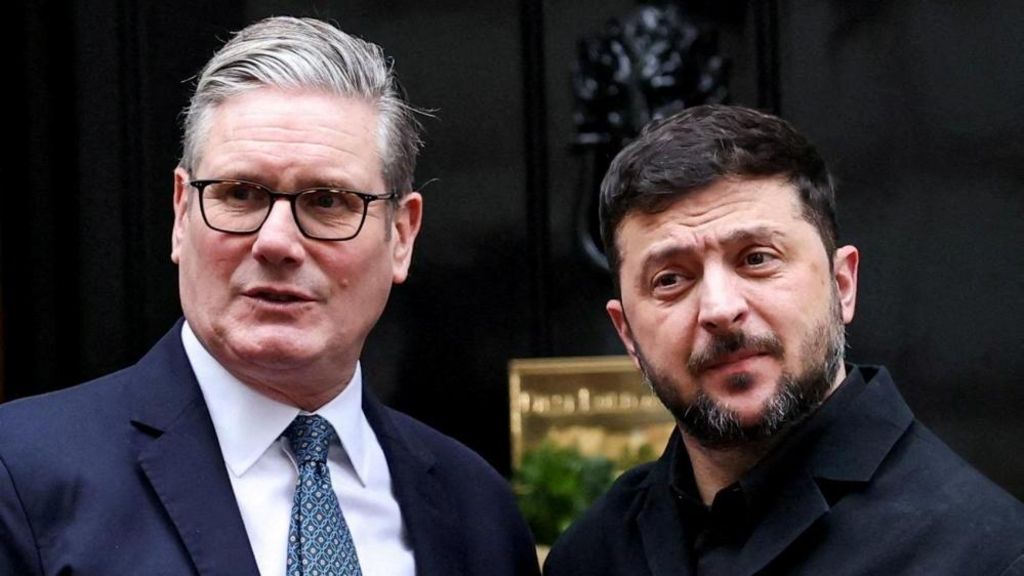
    Ukrainian President Volodymyr Zelensky has made a compelling appeal to the European Union to support a plan that would release billions of euros in frozen Russian assets to bolster Ukraine’s defense efforts. Speaking during the EU leaders’ summit in Brussels, Zelensky expressed hope for a ‘positive decision’ regarding the utilization of €140 billion (£122 billion) in Russian funds currently held in a Belgian clearing house. This proposal, which has sparked significant debate, would complement the existing sanctions imposed on Russia, including recent measures targeting the Kremlin’s oil revenues. The EU’s latest sanctions, announced on Thursday, follow similar actions by the United States against Russia’s oil industry, marking the first time President Donald Trump has sanctioned Moscow amid growing frustration over President Vladimir Putin’s refusal to end the conflict. Trump also confirmed the indefinite postponement of a planned meeting with Putin in Budapest, citing unproductive discussions. The US sanctions specifically targeted Russian oil giants Rosneft and Lukoil. Meanwhile, European ministers have been deliberating on how to allocate the frozen Russian assets as a ‘reparations loan’ to Ukraine. Zelensky, attending the Brussels summit, emphasized the moral and financial responsibility of Russia, stating, ‘Russia brought war to our land, and they have to pay for this war.’ However, the proposal faces legal and political hurdles, with Belgium expressing reluctance due to potential legal challenges from Russia. EU foreign affairs chief Kaja Kallas acknowledged the complexities but stressed that ‘Russia is responsible for the damages in Ukraine and has to pay.’ Russia has vehemently criticized the plan, with foreign ministry spokeswoman Maria Zakharova warning of a ‘painful response’ to any confiscatory measures. The EU’s latest sanctions also targeted three Chinese businesses involved in purchasing Russian crude oil, a move condemned by China as undermining economic cooperation. The overarching goal of these measures, according to Kallas, is to ‘deprive Russia of the means to fund this war’ and send a clear message that ‘Russia can’t outlast us.’

  • EU leaders endorse a plan to ensure that Europe can defend itself from outside attack by 2030

    EU leaders endorse a plan to ensure that Europe can defend itself from outside attack by 2030

    In a decisive move to bolster Europe’s defense capabilities, European Union leaders have endorsed a comprehensive strategy titled ‘Readiness 2030.’ This initiative aims to fortify the 27-nation bloc against potential external aggressions by the end of the decade, with a particular focus on countering Russian threats. The plan was unveiled during a summit in Brussels, where leaders emphasized the existential challenge posed by Russia’s ongoing war in Ukraine and its broader implications for global security.

  • ‘A hugely symbolic moment’: King Charles and Pope pray together

    ‘A hugely symbolic moment’: King Charles and Pope pray together

    In a groundbreaking moment of interfaith unity, King Charles III, the head of the Church of England, joined Pope Francis in a public prayer session. This historic event marks the first time a British monarch, who also serves as the Supreme Governor of the Church of England, has engaged in such a public display of spiritual solidarity with the leader of the Roman Catholic Church. The meeting, described as ‘hugely symbolic,’ underscores the ongoing efforts to bridge divides between Christian denominations. Both leaders emphasized the importance of mutual respect, dialogue, and collaboration in addressing global challenges. This unprecedented act of unity is seen as a significant step toward fostering greater understanding and cooperation between the Anglican and Catholic communities worldwide.

  • Rosenberg: Trump abandons carrot and wields stick over Putin in Ukraine talks

    Rosenberg: Trump abandons carrot and wields stick over Putin in Ukraine talks

    In a dramatic turn of events, President Donald Trump has called off the highly anticipated US-Russia summit in Budapest, signaling a shift in his approach to dealing with Moscow. This decision comes just weeks after the announcement of the meeting, which was intended to address the ongoing conflict in Ukraine. The cancellation underscores the growing frustration within the Trump administration over Russia’s unwillingness to compromise or make concessions to end the war.