标签: Europe

欧洲

  • ‘Be serious… don’t speak every day’: Macron criticises Trump approach to Iran war

    ‘Be serious… don’t speak every day’: Macron criticises Trump approach to Iran war

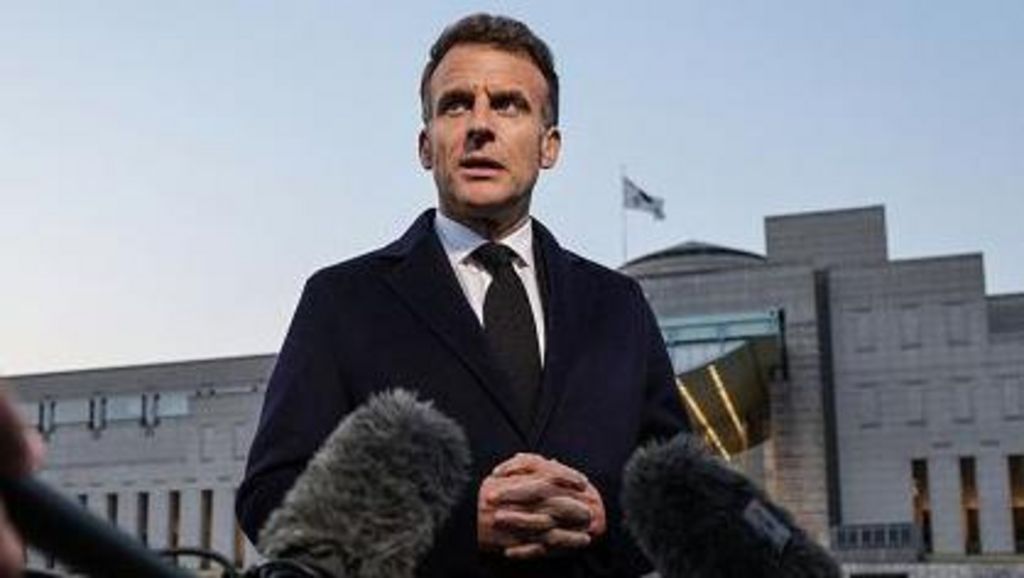
    As French President Emmanuel Macron touched down in Seoul for an official state visit to South Korea, he launched a pointed, comprehensive critique of U.S. President Donald Trump’s approach to the escalating Iran conflict, while also dismissing Trump’s recent personal attacks on his marriage as unbefitting of a head of state.

    The ongoing U.S.-Israeli military campaign in Iran has now entered its second month, with France and other European nations offering limited backing for U.S. regional operations but refusing to be drawn into direct participation in the conflict. Macron opened his press briefing by arguing that matters of war and peace demand a steady, serious policy, in a clear rebuke of Trump’s pattern of shifting, contradictory statements on the conflict.

    “This is not a public entertainment spectacle. We are discussing questions of war and peace, and the lives of ordinary people,” Macron told reporters. “When you approach this issue with the seriousness it deserves, you do not reverse your position every single day. Perhaps there is no need for constant public commentary; sometimes, allowing tensions to de-escalate is the wiser course.”

    The Trump administration has delivered consistently mixed messaging on the Iran war over recent weeks: officials and the president himself have alternately claimed a ceasefire is imminent, declared the conflict already won, and insisted the U.S. will continue military operations indefinitely. Macron also pushed back on Trump’s open questioning of the U.S.’s long-standing commitment to NATO membership, arguing that the alliance’s core strength relies on mutual trust, not constant public wavering.

    “Alliances like NATO hold their value in the unspoken understanding between members – the bedrock of trust that underpins every agreement,” Macron explained. “Constantly casting doubt on your own commitment drains the organization of all meaningful purpose. Partners are supposed to stand by their agreements and show up when crises emerge, rather than speculating publicly every day about whether they will honor their commitments. There is far too much unproductive, scattered chatter right now.”

    Macron made clear that France would not take ownership of a military campaign that the U.S. and Israel planned and launched independently. “They chose to act alone, and now they express regret that they are alone. This is not our war,” he emphasized.

    The French president also called out the inconsistency of Trump’s claims regarding U.S. strikes on Iranian nuclear facilities carried out in June 2025. At the time, Trump announced the strikes had completely “obliterated” Iran’s nuclear infrastructure. But following the outbreak of full-scale war in February 2026, Trump described the new offensive as the “last best chance” to eliminate Iran’s nuclear weapons program.

    “I remind everyone that six months ago, we were told all infrastructure had been destroyed and the issue was fully resolved,” Macron noted. He argued that no limited military strike, even one extended over several weeks, can permanently resolve the global concerns around Iran’s nuclear program. Instead, he called for the deployment of independent international inspectors to verify Iran’s nuclear activities and a binding diplomatic framework to halt further uranium enrichment, pointing out that Iranian technical expertise and hidden facilities cannot be eliminated by military force alone.

    The tension between the two leaders escalated further after Trump made crude personal remarks about Macron’s marriage to Brigitte Macron during a private lunch this week. The U.S. president mocked Macron’s relationship, imitating a French accent to claim Brigitte Macron mistreats the French president, a comment widely interpreted as referencing a 2025 video that showed Brigitte Macron shoving Macron lightly on the face. When asked about the comments, Macron dismissed them out of hand.

    Macron called the remarks “inelegant” and well below the standard expected of a head of state, adding “I will not dignify these comments with a response. They do not deserve one.” The personal attack triggered widespread backlash across the French political spectrum, even from Macron’s most outspoken ideological opponents. Manuel Bompard, a leading figure of the hard-left France Unbowed party, said “For Donald Trump to speak to him like that, and to speak of his wife in such terms, I find that completely unacceptable.”

    In response to U.S.-Israeli strikes on Iranian territory, Tehran has closed the Strait of Hormuz, the critical global chokepoint through which roughly a fifth of the world’s daily oil supplies pass. With no quick resolution to the closure in sight, Trump has said that nations most affected by the energy supply disruption should handle the situation on their own. Macron rejected calls for a new military operation to reopen the strait, calling the idea completely unrealistic.

    “A military operation to reopen the strait would expose any vessels passing through to massive risks from Iranian Revolutionary Guard coastal defenses, ballistic missiles, and a wide range of other threats,” he explained, noting that any such operation would be extremely time-consuming and put countless lives in danger.
  • Macron calls Trump’s remarks on his marriage ‘inelegant’

    Macron calls Trump’s remarks on his marriage ‘inelegant’

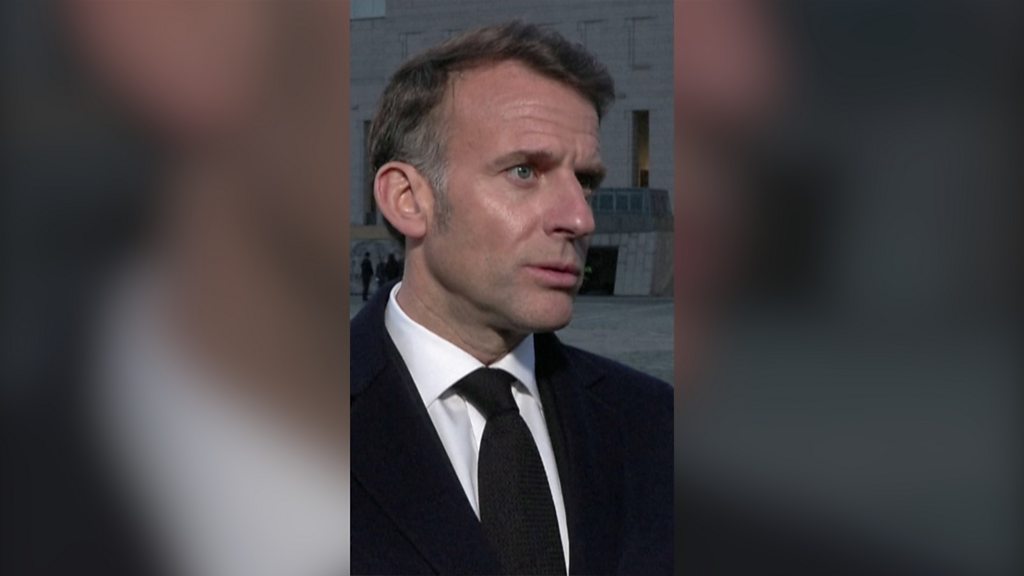
    In a rare public rebuke of remarks from former U.S. President Donald Trump, French head of state Emmanuel Macron has pushed back against comments Trump made about his personal marriage, calling the statements out of line and lacking basic diplomatic decorum.

    The clash between the two high-profile political figures centers on comments Trump made publicly regarding Macron’s marriage to Brigitte Macron, who is 24 years his senior. When asked to respond to the former American president’s words during a recent public appearance, Macron did not hold back in his assessment.

    Macron explicitly stated that Trump’s observations about his private marital life fell “neither elegant nor up to standard,” pushing back against what he framed as inappropriate intrusion into his personal affairs by the former U.S. leader. The incident has drawn new attention to the sometimes tense dynamic between Macron and Trump, who have a history of sparring over both policy and personal matters. While the exchange remains focused on the personal comments, it also underscores the broader frictions that have intermittently marked interactions between the two prominent global political figures.

  • A look at the UK’s Royal Navy, which has faced jibe after jibe from Trump and Hegseth

    A look at the UK’s Royal Navy, which has faced jibe after jibe from Trump and Hegseth

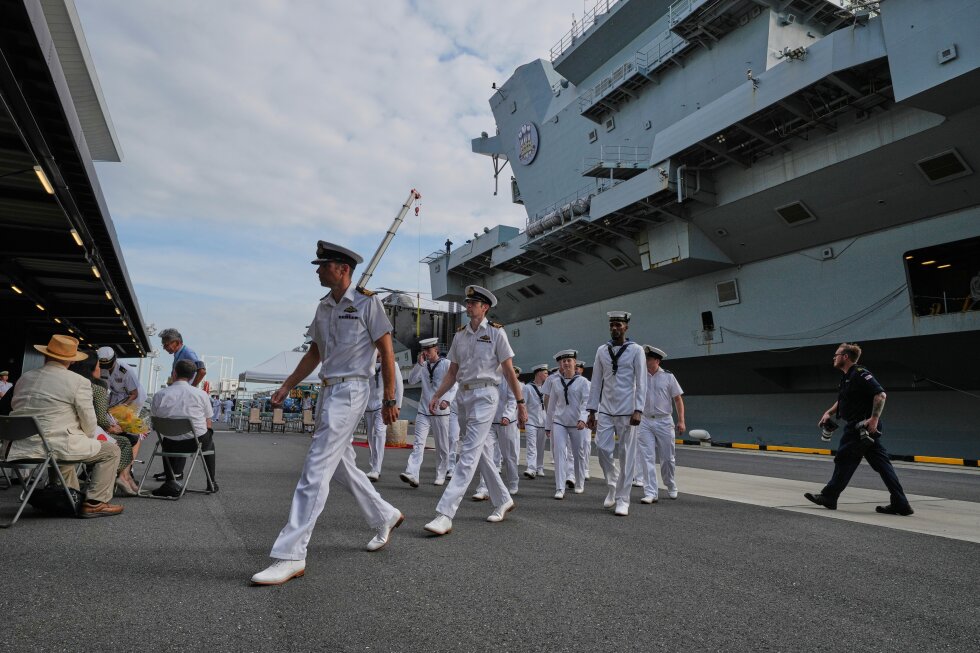
    LONDON – A fresh wave of diplomatic tension has emerged between the United States and the United Kingdom after U.S. President Donald Trump and Defense Secretary Pete Hegseth launched sharp public criticism of the Royal Navy’s operational capabilities, remarks that cut deep for a nation with centuries of iconic maritime heritage – but which also touch on long-running debates about Britain’s eroding military standing.

    The friction between the two allies traces back to the outbreak of the Iran war on February 28, when newly installed British Prime Minister Keir Starmer rejected a U.S. request to grant American military forces access to UK military bases. While Starmer’s government has since partially reversed that decision, allowing U.S. operations from bases including the key Indian Ocean outpost Diego Garcia for limited defensive purposes, Trump has remained vocal about feeling betrayed by the UK’s initial refusal.

    In an interview with Britain’s Daily Telegraph published Wednesday, Trump went as far as dismissing the Royal Navy’s two flagship new aircraft carriers as mere “toys.” “You don’t even have a navy,” he told the newspaper. “You’re too old and had aircraft carriers that didn’t work.” Not to be outdone, Hegseth took a sarcastic shot at the service, suggesting the “big, bad Royal Navy” should step up to secure commercial shipping lanes in the Strait of Hormuz, a critical global chokepoint for energy trade.

    The two 65,000-ton carriers at the center of Trump’s attack, HMS Queen Elizabeth and HMS Prince of Wales, are the largest and most lethal warships ever built for the Royal Navy. While they are smaller and less power-projected than the U.S. Navy’s supercarriers, defense analysts widely regard them as highly capable platforms, particularly for integrated coalition operations – even if they faced well-documented technical teething problems in their early years of service.

    It is true that the Royal Navy of 2025 bears little resemblance to the globally dominant force that controlled the world’s oceans during the height of the British Empire. But experts emphasize that the service is far weaker than its Cold War peak, but not as impotent as Trump and Hegseth’s remarks portray it, holding a similar operational standing to the French Navy, its closest European peer.

    “There is a grain of truth to the critique: the Royal Navy is smaller today than it has been in hundreds of years,” explained Professor Kevin Rowlands, editor of the Royal United Services Institute (RUSI) Journal and a former Royal Navy captain. “On the other hand, the service notes it is entering its first period of sustained growth since World War II, with more new ships scheduled for construction than at any point in decades.”

    A look back at recent British naval history puts the current size of the fleet in context. As recently as 1982, the UK was able to assemble a 127-ship task force – including two aircraft carriers – to retake the Falkland Islands after Argentina’s invasion, a campaign that then-U.S. President Ronald Reagan openly opposed. That operation is now widely viewed as the final demonstration of Britain’s traditional naval dominance; no deployment of anywhere near that scale could be mounted today.

    Analysis of UK Ministry of Defence and House of Commons Library data by the Associated Press shows the steady, dramatic contraction of the Royal Navy’s combat fleet over the past 50 years. In 1975, the service counted 166 active vessels, including aircraft carriers, destroyers, frigates, and attack submarines. By 2025, that number had fallen to just 66. The UK went seven years in the 2010s without any operational aircraft carriers at all, despite today having two in service. The destroyer fleet has shrunk by half to just six vessels, while the frigate force has been cut from 60 ships to only 11.

    The delayed deployment of the destroyer HMS Dragon to the Middle East in the immediate aftermath of the Iran war outbreak became a high-profile symbol of the Royal Navy’s stretched capabilities for critics. While naval personnel worked around the clock to reconfigure the vessel for its new mission after it had been preparing for a completely different deployment, the incident reinforced widespread perceptions that British military power has dwindled significantly since the fall of the Berlin Wall in 1989.

    That decline did not happen by accident. During much of the Cold War, the UK invested between 4% and 8% of its annual gross domestic product in defense. After the collapse of the Soviet Union, that share steadily dropped to a low of 1.9% of GDP in 2018, giving ammunition to Trump’s criticisms.

    Like many Western allies, successive UK governments embraced the post-Cold War “peace dividend,” redirecting funding once allocated to the military to domestic priorities including public health and education – a shift accelerated by the Labour governments of Tony Blair and Gordon Brown. When the global financial crisis hit in 2008, Conservative-led governments introduced harsh austerity measures that froze defense spending even as Russia’s aggression began to reshape European security, most notably after its 2014 annexation of Crimea.

    Only after Russia’s full-scale invasion of Ukraine in 2022 did cross-party consensus emerge that decades of defense cuts had gone too far. The previous Conservative government began reversing the trend of declining spending, and since Labour returned to power in the 2024 general election, Starmer has moved to ramp up defense investment – a shift that has required cuts to the UK’s long-standing foreign aid budget.

    Starmer has committed to raising UK defense spending to 2.5% of GDP by 2027, with an updated target of 3.5% of GDP by 2035 to meet a NATO goal championed by Trump. That commitment translates to tens of billions of pounds in additional defense spending, which would fund a major expansion of military equipment across all three services.

    But accelerating that expansion is easier said than done. The UK’s public finances have already been strained by the economic fallout from the Iran war, leaving no clear path to find extra funding for faster military growth.

    For his part, RUSI’s Rowlands expects the U.S. criticism to continue despite its overstated claims. “We are dealing with an administration that doesn’t do nuance,” he noted.

  • Skies turn red as Saharan dust passes over Crete

    Skies turn red as Saharan dust passes over Crete

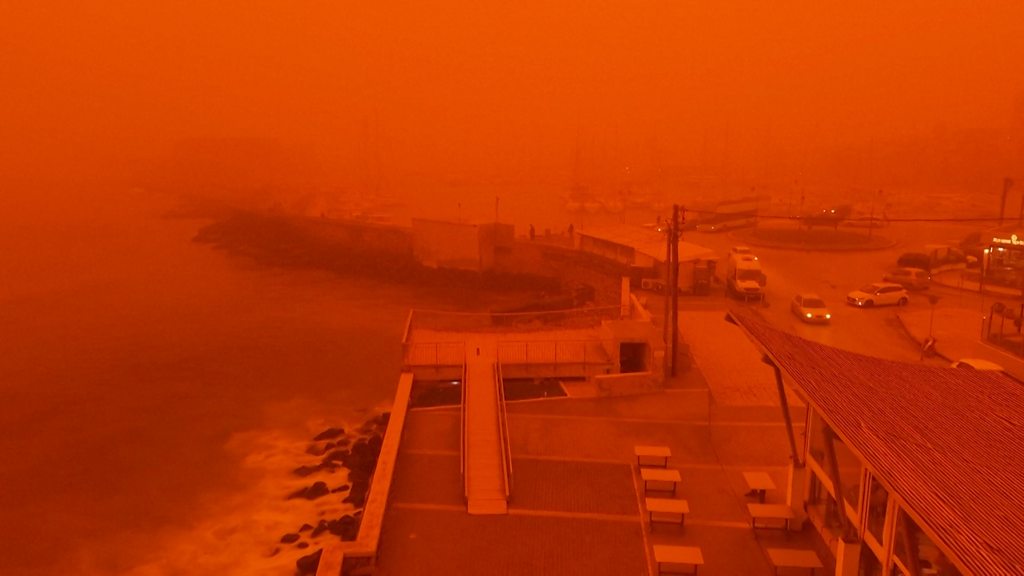
    A dramatic and unusual weather event has unfolded across Greece this week, as two separate severe meteorological phenomena collided to disrupt daily life across multiple regions. While powerful storm systems battered parts of the Greek mainland with destructive gale-force winds and flash flooding, the southern island of Crete faced a far more surreal threat: a dense wall of dust carried thousands of miles from the Sahara Desert that turned the once blue Mediterranean skies a striking, ominous red.

    Meteorological experts explain that strong southerly winds picked up millions of tons of fine dry dust from the Sahara Desert in North Africa earlier this week, lifting the particulate matter high into the atmosphere before transporting it north across the Mediterranean Sea. When the dust plume reached Greek airspace, it settled over Crete first, reducing visibility and creating the eerie red-hued sky that has been widely shared across social media by stunned local residents and tourists.

    Meanwhile, other areas of Greece grappled with more conventional but equally damaging severe weather. The accompanying storm system brought sustained gale-force winds that have downed power lines, toppled trees, and disrupted maritime travel across the Aegean Sea. Heavy, sustained rainfall has also triggered flash flooding in low-lying coastal and inland communities, forcing local authorities to issue emergency warnings and evacuate some vulnerable neighborhoods.

    As of the latest updates, Greek emergency services have been deployed across affected regions to respond to flood damage, clear blocked roadways, and assist residents impacted by the dual weather events. While the Saharan dust plume is expected to disperse gradually over the next 48 hours as winds shift, forecasters are warning that residual storm activity may bring additional scattered rainfall to parts of the country through the end of the week.

  • Danish warship sunk by Nelson’s British fleet discovered after 225 years

    Danish warship sunk by Nelson’s British fleet discovered after 225 years

    On the 225th anniversary of one of the most pivotal naval battles of the Napoleonic era, marine archaeologists from Denmark’s Viking Ship Museum have announced a landmark discovery: the wreck of the Danish flagship *Dannebroge*, sunk by British forces under Admiral Horatio Nelson during the 1801 Battle of Copenhagen, has been located on the seabed of Copenhagen Harbor.

    The conflict that claimed the *Dannebroge* was rooted in 19th century European geopolitics. Denmark had joined the League of Armed Neutrality, an alliance of Northern European powers including Russia, Prussia and Sweden, that sought to protect neutral shipping from British blockades during the Napoleonic Wars. To prevent the Danish navy from falling under French control, Nelson led a British fleet in a surprise attack on the Danish blockade positioned outside Copenhagen Harbor on April 2, 1801. The brutal, hours-long clash killed and wounded thousands of combatants, and remains remembered as one of Nelson’s most famous military victories. It was during this battle that Nelson, who had lost vision in his right eye decades earlier, allegedly ignored a recall order from his superior, famously remarking, “I have only one eye, I have a right to be blind sometimes” — an anecdote that gave rise to the enduring idiom “to turn a blind eye.”

    As the Danish flagship and Nelson’s primary target, the 48-meter *Dannebroge* commanded by Commodore Olfert Fischer bore the brunt of the British attack. Cannon fire shredded its upper deck, and incendiary shells sparked an uncontrollable blaze. “When a cannonball hits a ship, it’s not the cannonball that does the most damage to the crew, it’s wooden splinters flying everywhere, very much like grenade debris,” explained Morten Johansen, head of maritime archaeology at the Viking Ship Museum, describing the nightmare conditions for sailors on board. The badly damaged vessel drifted northward in the harbor before eventually exploding, with historical records noting the blast produced a deafening roar heard across the entire city of Copenhagen.

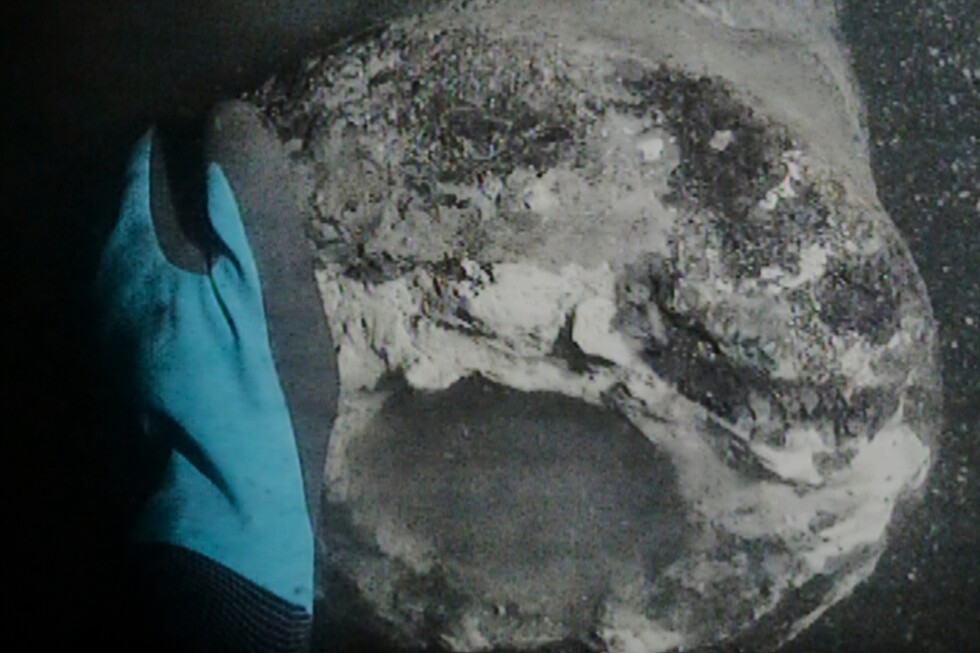
    For more than two centuries, the exact location of the wreck remained a mystery. That changed when archaeologists launched targeted surveys of the area late last year, zeroing in on a site that aligned with historical accounts of the *Dannebroge*’s final resting position, 15 meters below the water’s surface. Working in thick seabed sediment with near-zero visibility, the team has already confirmed the wreck’s identity: the dimensions of recovered wooden fragments match 19th century ship schematics, and dendrochronological dating, which uses tree rings to date wood, confirms the timber matches the period when the *Dannebroge* was built. So far, divers have recovered two intact cannons, military uniforms, metal insignia, footwear, glass bottles, ceramic fragments, basketry, and even a partial human lower jawbone, likely belonging to one of the 19 *Dannebroge* crew members still unaccounted for after the battle.

    Working at the site is a grueling challenge. Silt stirred up by divers’ movements keeps the water in near-complete darkness. “Sometimes you can’t see anything, and then you really have to just feel your way, look with your fingers instead of with your eyes,” said Marie Jonsson, a diver and maritime archaeologist on the project. Even more pressing is the race against time: the wreck site lies in the footprint of Lynetteholm, a massive planned coastal housing and development project scheduled to begin construction on the site in the near future, with completion targeted for 2070. The months-long underwater excavation is being rushed to recover as much of the wreck and its artifacts as possible before construction begins.

    For Denmark, the discovery of the *Dannebroge* is far more than a archaeological find: the 1801 battle is deeply woven into the country’s national identity. “It’s a big part of the Danish national feeling,” Johansen noted. While the battle has been extensively documented by historians for more than two centuries, much of what is known comes from secondhand accounts from outside observers. Archaeologists believe the wreck holds untold new details about what life was really like for sailors caught in the brutal fighting, and may uncover long-lost personal stories of the men who served on the flagship. “There are bottles, there are ceramics, and even pieces of basketry,” Jonsson said. “You get closer to the people onboard.” The Associated Press was the only international news outlet granted exclusive access to the excavation site.

  • Peter Magyar, the former Orban ally vying for power in Hungary

    Peter Magyar, the former Orban ally vying for power in Hungary

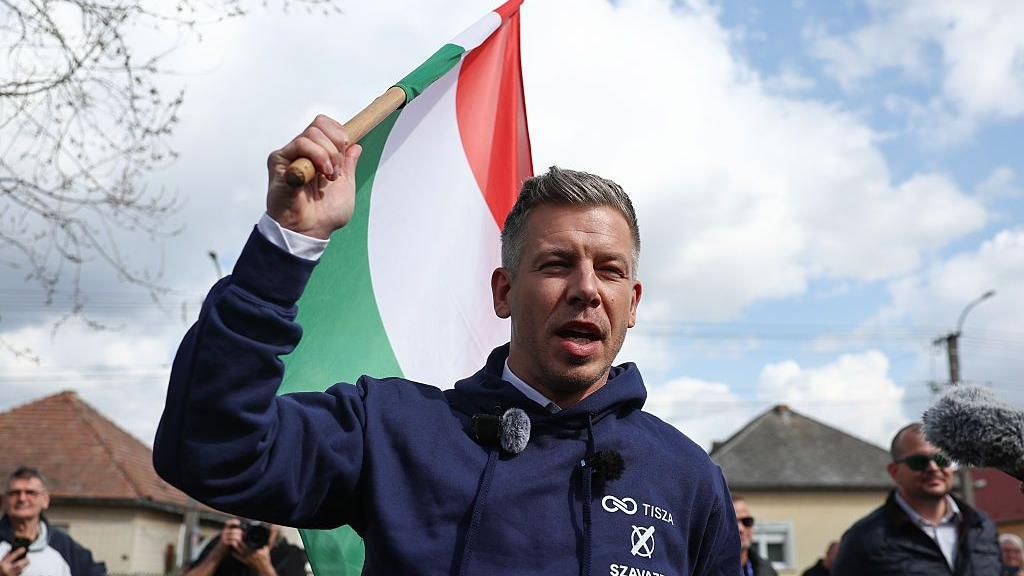
    As Hungary gears up for its 12 April parliamentary elections, the political landscape of the Central European nation has been upended by a surprising challenger whose rapid rise has sent shockwaves through Viktor Orban’s long-dominant ruling party. Forty-five-year-old Peter Magyar, a one-time insider within Orban’s Fidesz party who only entered full opposition politics two years ago, now stands as the most serious threat to Orban’s 16 consecutive years in power since the prime minister first won office in 2010. Opinion polls currently place Magyar within striking distance of an election victory.\n\nMagyar’s campaign has been defined by relentless energy and a urgent, nationally rooted message. Borrowing his original slogan “Now or Never” from a 19th-century Hungarian revolutionary poet’s rallying cry for national independence, he has condensed the message to just “Now” on campaign materials, crossing out the “or Never” to amplify the sense that this is Hungary’s critical moment for change. Over the course of the campaign, he has crisscrossed every corner of the country, with plans to visit all 106 of Hungary’s parliamentary constituencies, delivering up to six public speeches a day. Over more than two years of grassroots organizing, he has built a robust support base even in the small towns and rural villages that have long been Fidesz’s strongest electoral strongholds. In 2024, he completed a 300-kilometer walk from Budapest to the Romanian border, framing the journey as an effort to “reunite” a divided nation and win over disillusioned traditional Fidesz voters.\n\nMagyar’s break from the party he once belonged to did not come out of nowhere, but it was accelerated by a high-profile 2024 political scandal that brought down two of Fidesz’s top female leaders. Before February 2024, Magyar was deeply embedded in the Fidesz political machine: he joined the party as a university student in 2002, married rising Fidesz star Judit Varga (who would later become Hungary’s justice minister), and held a series of key positions, including a diplomatic posting to Hungary’s permanent mission in Brussels, leadership of Fidesz’s European Parliament negotiating team, and board seats on multiple state-owned enterprises.\n\nThe scandal that shattered Fidesz’s ranks erupted when Hungarian President Katalin Novak granted a pardon to an official who helped cover up systemic sexual abuse at a state-run children’s home. Public outrage forced Novak to resign, and Varga – who had co-signed the pardon as justice minister and was slated to lead Fidesz’s 2024 European election campaign – was also forced to step down, ending her rising political career within the party. With his ex-wife pushed out of Fidesz and their marriage having already ended in 2023, Magyar made a bombshell move: he appeared live on a leading pro-opposition YouTube channel Partizán to publicly renounce the Fidesz leadership. The interview, watched by more than a million viewers in a country of just 9.6 million people, instantly went viral.\n\n”Everyone warned me against it – friends, family, people I’ve known for years,” Magyar told the host during the interview. “I’ve been inside this system, inside this circle, for a very long time.” In a subsequent Facebook post, he declared he would no longer remain part of a system where top leaders hid behind female subordinates to take the blame for their mistakes. Speaking to the BBC after the interview, Magyar noted that his disillusionment with Fidesz had grown gradually over years: “The Fidesz we see today is very, very different from the one I joined in 2002. For a long time, I accepted the argument that holding power required the compromises they made. But 2024 became the turning point.” He also acknowledged he feared for the future of his three children after making the leap into opposition, but said the need for change outweighed those personal risks.\n\nA month after his viral interview, on Hungary’s 15 March national holiday marking the 1848 revolution against Habsburg rule, Magyar cemented his status as the leading opposition voice. While Orban delivered a fiery speech from Budapest’s National Museum attacking the European Union and calling for Hungary to “occupy Brussels,” Magyar addressed a crowd of an estimated 10,000 supporters, accusing Fidesz of widespread systemic corruption and economic mismanagement. He used the event to announce the formation of his new political movement, later taking over a small dormant party called Tisza to qualify for elections. He further escalated his attacks by releasing a secretly recorded 2023 conversation with his ex-wife that referenced a high-profile corruption trial, a move that drew condemnation from Varga, who accused him of abuse – a charge Magyar has repeatedly denied. Orban’s inner circle has attacked Magyar as a traitor who betrayed his family first, then his country, framing him as a proxy for Brussels. Orban himself has downplayed the challenge, dismissing Magyar simply as “someone who left Fidesz.”\n\nDespite the attacks, Magyar’s political momentum proved unstoppable. In the 2024 European Parliament elections, Tisza won 29.6% of the national vote and seven seats, finishing behind Fidesz’s 44.8% but demonstrating that Magyar could draw significant support away from the ruling party. By autumn 2024, Tisza had pulled ahead of Fidesz in national opinion polls. During commemorations of the 1956 anti-Soviet uprising last year, Magyar led a rival march to Orban’s, directly challenging the prime minister’s long-standing close ties to the Kremlin. He pointedly asked Orban, who rose to political prominence calling for Soviet troops to withdraw from Hungary in 1989: “Mr. Prime Minister, why won’t you say ‘Russians go home’ any more?” He accused Orban of betraying the legacy of 1956 to remain what he called “the Kremlin’s most loyal ally,” pushing back against Orban’s framing of Tisza as a “warmonger” movement carrying out a “Brussels war agenda.”\n\nA key factor in Magyar’s rise is his positioning as a non-liberal alternative to Orban, unlike the fragmented liberal opposition that repeatedly failed to unseat the prime minister in previous elections. Magyar has openly criticized the old liberal opposition, dismissing former Socialist leader Ferenc Gyurcsany as no better than Orban, and has systematically consolidated anti-Orban support under his own banner. He has also directly confronted the pro-Orban media outlets that dominate Hungary’s media landscape, going public early this year to reveal an alleged Russian-style smear and honey-trap campaign targeting him.\n\nMagyar announced that intelligence operatives had leaked surveillance footage implying he had used drugs during a private meeting with an ex-girlfriend. He pre-empted the leak by acknowledging he had consensual sex with the woman but denied any drug use, calling the incident a set-up by state security services. He subsequently passed multiple drug tests to prove his innocence, and none of the corruption or personal scandals that Orban’s camp has leveled against him have damaged his public support to date.\n\nAs a former insider, Magyar argues he has a unique advantage over Orban: he knows the ruling party’s tactics and vulnerabilities intimately. “I know them, I know their tricks, and I know they are terrified,” he told reporters. For Hungarians, he says, this election is a once-in-a-generation opportunity to change the course of the country after 16 years of Orban’s rule. \n\nOn policy, Magyar has centered his campaign on promises to root out systemic corruption, revitalize Hungary’s stagnant economy, reach out to the country’s marginalized Roma community, and unlock billions of euros in frozen EU development funds that have been withheld due to Brussels’ concerns over rule of law erosion under Orban. For his part, Orban has campaigned on framing Magyar as a puppet of the EU and Kyiv, positioning himself as the champion of national sovereignty and a “real party of peace” amid the ongoing war in Ukraine.

  • Eurovision Song Contest launches first-ever Asia edition

    Eurovision Song Contest launches first-ever Asia edition

    After decades of dominating the global live music competition scene, the iconic Eurovision Song Contest is breaking new ground with the launch of its first standalone regional edition exclusively for Asia. The landmark expansion, which marks one of the most significant shifts in the contest’s 70-year history, has already generated widespread buzz across the continent’s vibrant music industry, with industry analysts and fans alike debating whether the massive popular appeal of Korean pop (K-pop) and Taiwanese pop (T-wave) will be the secret ingredient that turns the new Asia-focused iteration into a global and regional hit.

    For years, Eurovision has built its reputation as a platform that celebrates cultural diversity, theatrical performances, and breakout musical talent, drawing hundreds of millions of viewers across Europe and beyond to its annual broadcast. The decision to launch a regional Asia edition comes as the contest’s organizers look to tap into the world’s largest and fastest-growing music market, where streaming has exploded in popularity and regional pop genres have built massive global fanbases over the past two decades.

    Industry insiders note that K-pop, in particular, has already established an unrivaled global footprint, with acts topping charts across North America, Europe, and Asia, selling out stadium tours, and amassing billions of streams on digital platforms. Meanwhile, T-pop (often referred to as the T-wave) has carved out its own loyal regional following, blending infectious pop melodies with local cultural influences to create a unique sound that resonates with young audiences across East and Southeast Asia.

    The question on many industry observers’ minds is whether the Eurovision formula, which has worked so well for Europe, can be successfully adapted to Asia’s diverse musical landscape. Many optimistic analysts argue that the combination of Eurovision’s established brand recognition and the star power of popular regional genres like K-pop and T-pop will draw massive viewership, attract top sponsors, and cement the Asia edition as a permanent fixture on the global entertainment calendar. Skeptics, however, note that Asia’s fragmented regulatory environment, diverse linguistic and cultural differences, and already crowded landscape of regional music competitions could present unexpected hurdles for the new venture.

    As organizers prepare to roll out details about competing entries, broadcast schedules, and venue plans in the coming months, all eyes are on how the first Eurovision Asia edition will take shape, and whether regional pop trends will carry the new competition to widespread success.

  • Rescuers give up hope for the humpback whale stranded in the Baltic Sea

    Rescuers give up hope for the humpback whale stranded in the Baltic Sea

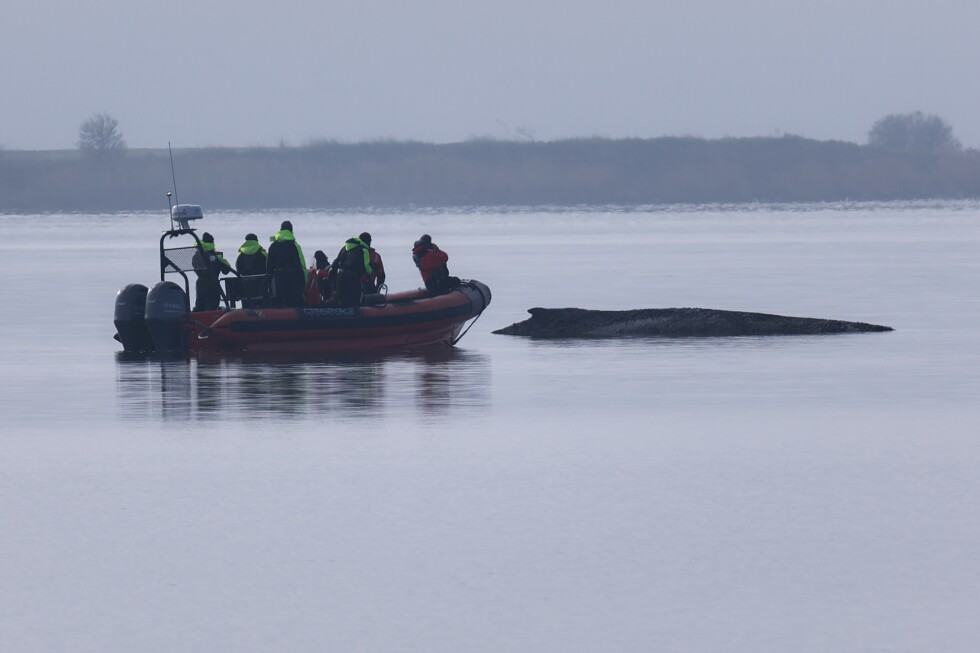
    BERLIN — For nearly three weeks, a wayward humpback whale that wandered far from its natural Atlantic habitat into Germany’s Baltic Sea coast has captivated national attention, but rescue teams announced Wednesday they have ended all efforts to save the animal, concluding the exhausted mammal will not survive its current stranding.

    Nicknamed ‘Timmy’ by the public and media following weeks of repeated strandings and close calls, the whale became trapped for the second time in as many days on Tuesday, when it swam into a shallow inlet off Germany’s small Baltic island of Poel. Poel sits just off the coast near the northern port of Wismar, roughly 30 miles northeast of Timmendorfer Strand, where rescuers pulled Timmy free from even shallower waters just one week earlier using a heavy excavator. That successful rescue proved temporary, however: within days, the lost whale once again found itself stuck in low, unnavigable waters.

    In the days following the first successful rescue, authorities adopted a careful, low-intervention strategy aimed at letting the already exhausted animal rest and rebuild its strength. Teams occasionally used small boats to gently nudge the whale toward deeper open water, but prioritized minimizing stress to give Timmy the best chance to swim out to the North Sea and eventually back to the Atlantic on its own.

    That strategy has now been abandoned, lead scientific coordinator Burkard Baschek told reporters at a televised press conference Wednesday. Baschek, who also serves as scientific director of the Ocean Museum Germany, said monitoring on Wednesday revealed deeply concerning signs: the whale was breathing at highly irregular intervals, drone footage showed almost no movement of sediment beneath its 12-15 meter body, and it barely responded when rescue teams approached.

    Though Timmy showed a small uptick in activity after crews pulled back to give it space, Baschek noted that the change was not enough to signal any real chance of recovery. ‘It is not activity that gives us grounds for hope,’ he said. ‘We firmly believe that the animal will die there.’

    Two prior times during the whale’s three-week odyssey along the Baltic coast, Timmy managed to gather enough strength to free himself from shallow waters. But repeated strandings have left the whale severely weakened, and falling seasonal tides have only worsened the dangerous conditions in the inlet. ‘The prospects that it will free itself are very small,’ Baschek added. ‘The approach of maximum rest and respect for nature demands at some point that we let it go.’

    Timmy’s unplanned journey through the Baltic has been front-page news across Germany, with national media running constant updates on the whale’s status that turned the lost animal into a viral national sensation. The humpback was first spotted in the region on March 3, far outside its normal range: the Baltic Sea is not a natural habitat for the species, and its shallow, cooler waters do not support the large prey humpbacks rely on for long-term survival.

    Experts still do not know exactly what led the whale so far off course. The most common theories suggest Timmy may have followed a large shoal of herring into the Baltic, or lost his bearings during his annual northward migration. Even under the best conditions, the journey back to open Atlantic waters would have been a monumental challenge: the trip from the inlet to the North Sea, and then out to the Atlantic, stretches hundreds of kilometers, a taxing swim for even a healthy humpback.

  • Devastated Italians reckon with ‘third apocalypse’ of World Cup failure

    Devastated Italians reckon with ‘third apocalypse’ of World Cup failure

    On a crisp spring morning in central Rome, 65-year-old Tommaso Silvestri leaned against a brick wall beside a neighborhood newsstand, his eyes drifting across bold, gloomy front pages dominated by headlines labeling Italy’s latest international football exit an “apocalypse,” “scandal,” and “disaster.”

    “We’ve made a real mess of it,” Silvestri told reporters, shaking his head in quiet disappointment. “We had players who couldn’t even find the target. The golden days of Italian football are well and truly gone.”

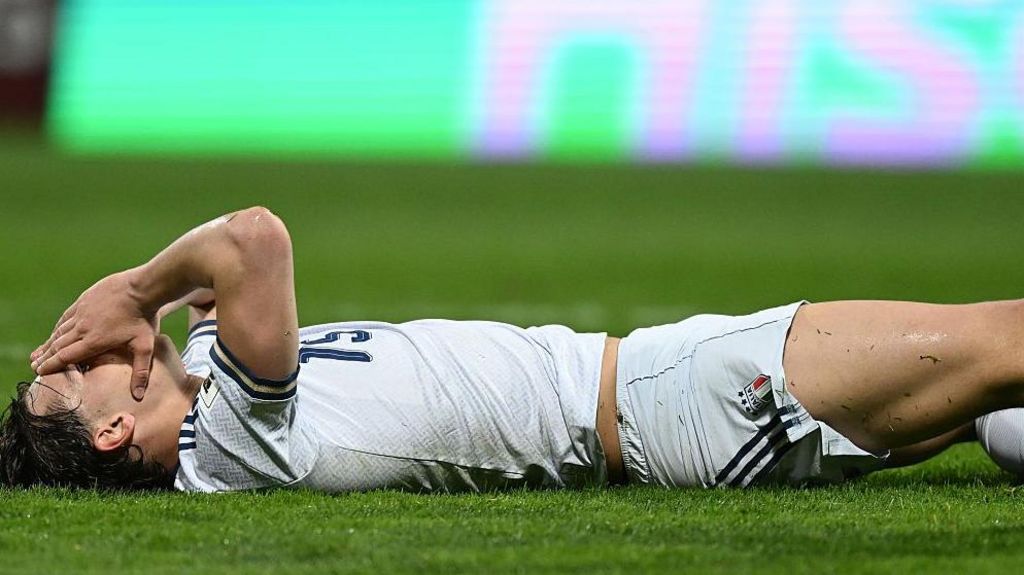
    The heartbreak unfolded Tuesday night in Zenica, where four-time World Cup champions Italy fell to a devastating 4-1 penalty shootout defeat against Bosnia and Herzegovina, sealing the nation’s third consecutive elimination from World Cup qualification. The match turned against the Azzurri before halftime, when defender Alessandro Bastoni was sent off with a red card, reducing Italy to 10 men for the rest of regulation. A late equalizer from Moise Kean briefly sent Italian fans into a frenzy of hope, forcing the contest to penalties — only for Pio Esposito to miss the team’s opening spot kick, setting the stage for elimination.

    Italy’s run of international disappointment stretches back nearly two decades, dating to the team’s iconic 2006 World Cup title. Outside of a shock, beloved European Championship victory over England at Wembley in 2021, the Azzurri have consistently underperformed in major global tournaments, leaving long-time fans disheartened.

    “We are what our results say we are,” Silvestri said. “When you shoot and can’t even hit the goal, you’re not going to go far. When it comes to taking the game home, Italy just doesn’t get there anymore.”

    The defeat sparked immediate, fierce reaction across Italian political and civic circles. Senate president Ignazio La Russa, a senior leader of Prime Minister Giorgia Meloni’s far-right Brothers of Italy party, lamented the outcome in a public post on X.

    “Everything has a limit,” La Russa wrote. “We’re not going to the World Cup. We supported them, we hoped, we even railed against a couple of questionable refereeing decisions… but deep down we feared it. In fact, we knew it.”

    Prominent anti-mafia author Roberto Saviano, best known for *Gomorrah*, went further, pointing to deep-rooted systemic failures across every layer of Italian football, from top-level club governance to grassroots youth development.

    “Clubs are corrupt and at the mercy of criminal organisations. True laundering vaults,” Saviano wrote in an Instagram post. “No investment in young players, no care for second-generation talent. It’s easier to buy foreign players than to develop new athletes.”

    Across Rome, a city steeped in decades of Azzurri triumph, long-time supporters expressed deep anger and disillusionment. Seventy-one-year-old Giovanni Colli, sipping espresso at a sidewalk café near the Pantheon, told reporters he felt “betrayed” by the result.

    “Not going to the World Cup three times in a row, how on earth did it happen?” Colli said. “What a huge disappointment. Everyone should resign. Give the young players a chance.”

    The grief of the moment was captured by Azzurri head coach Rino Gattuso, a 2006 World Cup-winning midfielder who only took the national team job last June. A teary-eyed Gattuso struggled to hold back his emotions as he addressed reporters after the match, before retreating to the dressing room.

    “We don’t deserve this, it’s not fair. I’m sorry I couldn’t make it happen,” Gattuso said, his voice breaking. Despite the crushing defeat, he added that he remained proud of his team’s effort: “I’m proud of my boys and what they gave on the pitch.”

    Gattuso acknowledged the team’s missed opportunities, a recurring theme of the night. “When you have chances and don’t take them, football punishes you,” he said. “This hurts. We gave everything we could. It’s a real shock.”

    Elisabetta Esposito, a veteran sport journalist with leading Italian outlet *La Gazzetta dello Sport*, told the BBC that the defeat exposes a broader, long-running crisis in Italian football that will not be fixed with quick fixes. Esposito noted that loyalty to top domestic clubs increasingly overshadows national team pride, a shift that has eroded public support for the Azzurri.

    “The risk is that this third consecutive failure to qualify will deepen young people’s disengagement from the Azzurri,” Esposito said. “The disappointment is profound, but the country is not only disappointed but almost disillusioned. It’s as if a new generation no longer knows what it means to cheer for their country.”

    From a technical perspective, Esposito added, every part of the game broke down for Italy. The team lacked consistent chemistry built through long-term work together, and rushed, short-sighted decisions focused on immediate wins will not fix the underlying issues. “Rebuilding will require a long-term strategy,” she emphasized.

    Even casual observers across Italy acknowledged the weight of the moment. Walking her dog through a busy central Rome street, 56-year-old Teresa expressed surprise when told of the result, echoing the national sense of gloom. “Oh, we are not going to the World Cup? I don’t know much about football, but that’s a bit of disaster, isn’t it?”

  • Indonesia delays deportation of Scottish crime boss to Spain for murder and drug trafficking charges

    Indonesia delays deportation of Scottish crime boss to Spain for murder and drug trafficking charges

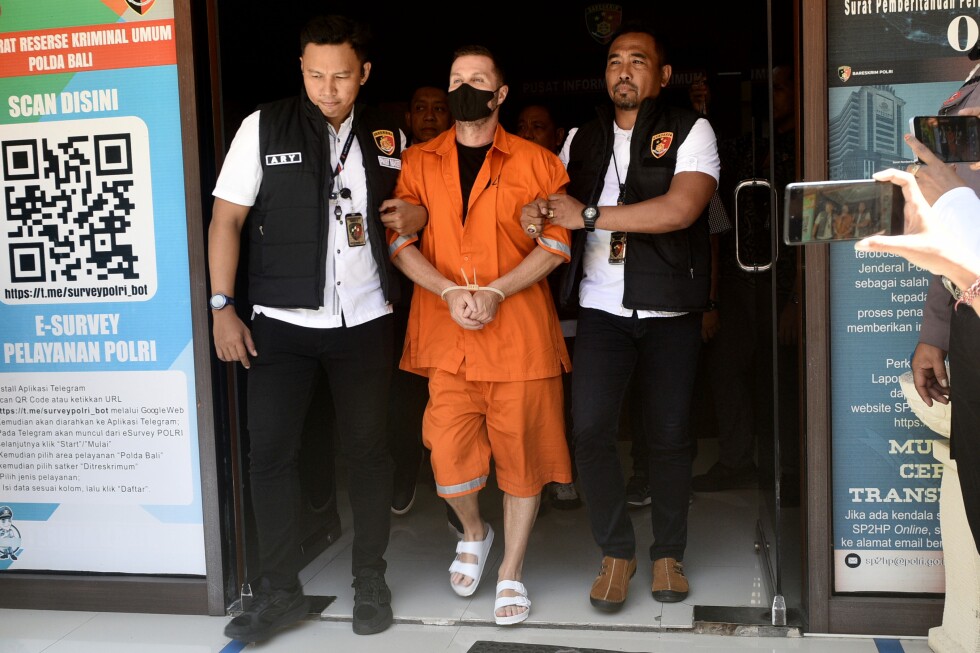
    In a last-minute adjustment to law enforcement proceedings, Indonesian authorities have postponed the deportation of 45-year-old Steven Lyons, a high-profile alleged Scottish transnational crime leader taken into custody last week on the popular Indonesian resort island of Bali. Lyons, who is accused of overseeing an international criminal syndicate linked to large-scale drug trafficking, cross-border money laundering, and gang-related violence, was initially scheduled to be extradited via a Qatar Airways flight from Bali to Spain, with a layover in Doha, on Wednesday evening.

    Husnan Handano, a spokesperson for Bali’s regional immigration office, confirmed the delay in a statement Wednesday, announcing that the deportation will now proceed on Thursday. Handano did not offer any explanation for the last-minute schedule change.

    The fugitive suspect was apprehended this past Saturday shortly after he landed at Bali’s Ngurah Rai International Airport, arriving from Singapore. Automated immigration screening flagged Lyons based on an Interpol Red Notice, an international police alert that requests the global law enforcement community to locate and provisionally arrest a suspect pending extradition. The alert was filed at the formal request of Spanish authorities, who have sought Lyons for approximately two years.

    As the alleged head of the so-called Lyons Crime Family, a transnational criminal network originally based in Scotland, the suspect is accused of controlling major drug trafficking routes that move narcotics from Spain into the United Kingdom. His syndicate is also suspected of operating an elaborate money laundering scheme that uses registered shell companies across multiple jurisdictions, including Spain, Scotland, England, Dubai, Qatar, Bahrain, and Turkey to obscure the origins of criminal proceeds.

    Prior to Lyons’ arrest in Bali, coordinated law enforcement raids led by Scottish and Spanish investigators had already resulted in multiple arrests connected to the syndicate’s activities. Additional suspects linked to the network have been taken into custody in Turkey, the Netherlands, and the United Arab Emirates.

    Public records and local Scottish media reporting have documented Lyons’ long ties to organized crime: he survived a 2006 shooting in Glasgow that left his cousin dead. Following the attack, he relocated first to Spain, and later settled in Dubai, the United Arab Emirates. Last May, Lyons’ brother and a known criminal associate were shot and killed in a suspected gangland targeted killing at a beachfront bar in Fuengirola, a coastal town in southern Spain. Lyons has also been linked to a 2024 murder in Spain, according to Spanish law enforcement records.

    Bali Police Chief Daniel Adityajaya confirmed that Lyons’ arrest was the product of a long-running joint transnational investigation involving law enforcement agencies from Spain, Scotland, and Indonesia. Interpol’s global alert system was critical in flagging the suspect as he attempted to enter Indonesia, allowing local officers to take him into custody immediately upon arrival.