标签: Europe

欧洲

  • A very focused Matt Weston of Britain has midpoint lead in Olympic skeleton, with Heraskevych out

    A very focused Matt Weston of Britain has midpoint lead in Olympic skeleton, with Heraskevych out

    CORTINA D’AMPEZZO, Italy — British skeleton racer Matt Weston demonstrated extraordinary focus at the Olympic track on Thursday, remaining completely unaware of a major controversy unfolding around him as he secured the lead in the men’s skeleton competition. The World Cup champion and Olympic favorite posted the fastest times in both heats, finishing the day with an impressive time of 1 minute, 52.09 seconds.

    While Weston concentrated solely on his performance, Ukrainian slider Vladyslav Heraskevych was unexpectedly disqualified from the competition just before the event began. The dramatic development became the day’s biggest Olympic story, occurring trackside moments before the start. Weston remained oblivious to the situation until hours later when journalists confronted him with questions.

    “I had someone shove a mic in my face saying, ‘What about this?’” Weston revealed. “And I’m like, ‘Well, I hadn’t heard of it.’”

    Weston’s performance places him in a strong position for Friday’s final two runs, though his lead remains narrow. German competitors Axel Jungk, the reigning Olympic silver medalist, and defending champion Christopher Grotheer trail closely behind at 0.30 and 0.46 seconds respectively.

    American slider Austin Florian, who recorded the best start in the field, acknowledged awareness of Heraskevych’s disqualification since the Ukrainian was scheduled to compete immediately before him. “We’re generally pretty focused on what we’re doing. We’re aware of it,” Florian commented. “Everyone’s aware of it, obviously. And we try not to let it affect us.”

    Despite the competitive environment, Weston expressed genuine disappointment for Heraskevych, whom he considers both a friend and technical inspiration. The British slider studies the Ukrainian’s driving techniques as part of his own strategic preparation.

    “I think he’s an insane slider. He’s really, really good, very technical, very smooth,” Weston praised. “I get him on the push, but he’s always one that I look at his lines to see what he’s doing because he’s always pretty consistent. I think he could have done very well here. Another reason why I’m a bit gutted for him as a person.”

  • Manchester United co-owner Jim Ratcliffe says he’s sorry if some offended by anti-immigrant comments

    Manchester United co-owner Jim Ratcliffe says he’s sorry if some offended by anti-immigrant comments

    LONDON — Jim Ratcliffe, the billionaire co-owner of Manchester United and founder of chemical giant Ineos, has issued a public apology following widespread condemnation of his inflammatory remarks about immigration in the United Kingdom. The controversy erupted after an interview with Sky News in which Ratcliffe, one of Britain’s wealthiest individuals, claimed the nation had been “colonized” by immigrants and expressed concerns about economic challenges linked to immigration and welfare.

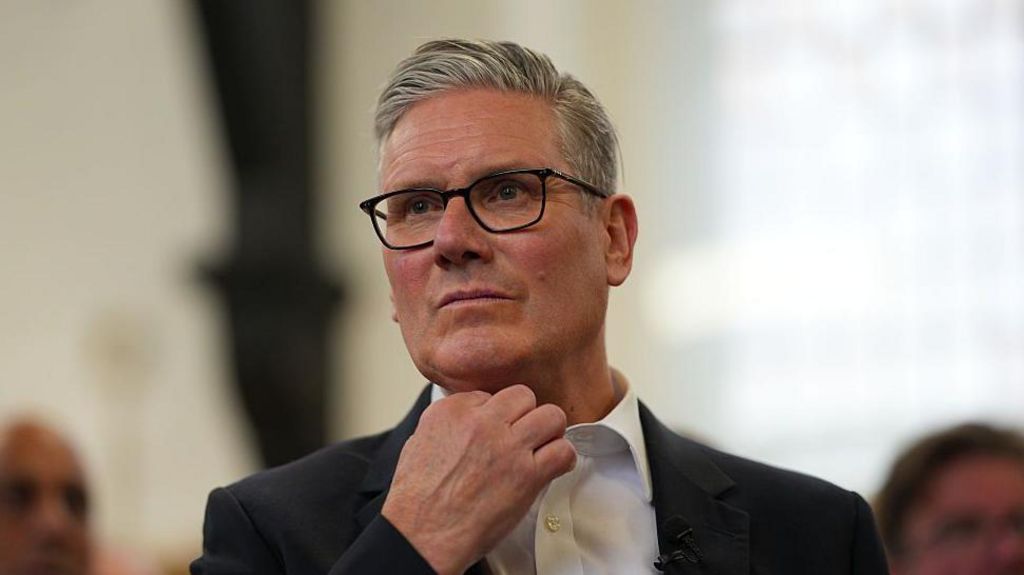
    The comments drew immediate and sharp criticism from across the political spectrum, including from Prime Minister Keir Starmer, who labeled the statements as “offensive and wrong.” The remarks also sparked significant backlash from football fans and the public, putting the prominent businessman under intense scrutiny.

    In a statement released on Thursday, Ratcliffe expressed regret for his choice of language. “I am sorry that my choice of language has offended some people in the U.K. and Europe,” he stated, though he stopped short of retracting the substance of his economic arguments. The apology comes amid heightened sensitivity around immigration discourse in British politics and society.

    The incident has highlighted the complex intersection of business, sports ownership, and political commentary, particularly given Ratcliffe’s status as a influential figure with considerable platform. The billionaire, who resides in the tax haven of Monaco, made the comments during a wide-ranging discussion that also covered challenges facing the European chemicals industry and weaknesses in the UK economy.

  • Marseille is sinking and PSG has only Lens as a serious title rival in Ligue 1

    Marseille is sinking and PSG has only Lens as a serious title rival in Ligue 1

    PARIS — The French Ligue 1 championship landscape has undergone significant transformation as Marseille’s title aspirations have effectively dissolved following their devastating 5-0 defeat against Paris Saint-Germain. This crushing loss precipitated the immediate dismissal of manager Roberto De Zerbi and sparked visible fan discontent, with supporters confronting players at the airport to express their profound disappointment.

    With Marseille now trailing by twelve points and dropping to fourth position, RC Lens has emerged as the only serious contender capable of challenging PSG’s dominance. Sitting merely two points behind the league leaders, Lens demonstrates remarkable consistency and determination as the season approaches its critical phase.

    This weekend’s fixtures present compelling narratives: PSG travels to face a struggling Rennes side that has suffered four consecutive defeats while conceding twelve goals. Meanwhile, Marseille attempts to reconcile with their disillusioned fanbase during a home encounter against Strasbourg. Lens faces Paris FC, and Lyon continues their surprising ascent under coach Paulo Fonseca, seeking a thirteenth consecutive victory across all competitions against Nice.

    Individual performances have captured attention, particularly Ousmane Dembélé’s exceptional display against Marseille—featuring two goals and an assist—signaling his return to peak form after injury setbacks. Lens winger Allan Saint-Maximin also impressed with a spectacular debut goal, promising to be a valuable asset in the title pursuit.

    Beyond the pitch, PSG president Nasser al-Khelaifi received recognition from FIFA’s Gianni Infantino for his instrumental role in opposing the controversial Super League project, highlighting the ongoing structural evolution within European football.

  • Italy’s Federica Brignone completes comeback, claims gold in women’s super-G at Winter Olympics

    Italy’s Federica Brignone completes comeback, claims gold in women’s super-G at Winter Olympics

    CORTINA D’AMPEZZO, Italy — Italian alpine skier Federica Brignone achieved a monumental career milestone Thursday by capturing her first Olympic gold medal in the women’s super-G event at the 2026 Winter Games. The 35-year-old champion completed a remarkable recovery journey less than a year after sustaining multiple fractures in her left leg that required two surgical procedures and extensive rehabilitation.

    Brignone mastered the challenging Trofane course in foggy conditions with limited visibility, posting a winning time of 1:23.41. Her victory establishes her as the oldest female gold medalist in Olympic alpine skiing history and marks her fourth Olympic medal overall, matching Deborah Compagnoni’s record for most medals by an Italian women’s skier.

    The technical course proved demanding for several top competitors. France’s Romane Miradoli secured silver while Austria’s Cornelia Huetter took bronze. Notable contenders including downhill specialist Breezy Johnson of the United States, who collided with a gate and ended in the safety fencing, and Italy’s Sofia Goggia, current World Cup super-G leader, failed to complete their runs successfully.

    Brignone’s triumph held special significance as she served as one of Italy’s flag bearers during the opening ceremonies. Still experiencing discomfort from her previous injury, she had humorously requested curler Amos Mosaner to carry her on his shoulders during the procession. The victory sparked enthusiastic celebrations among Italian supporters and earned praise from skiing legend Lindsey Vonn, who tweeted congratulations acknowledging Brignone’s extraordinary comeback story.

  • Italy last hosted the Olympics in 2006. These women were there, and now are volunteers in Milan

    Italy last hosted the Olympics in 2006. These women were there, and now are volunteers in Milan

    MILAN — Behind the gleaming spectacle of the Milan-Cortina Winter Olympics operates a dedicated force of approximately 18,000 volunteers, whose blue uniforms have become synonymous with the Games’ operational backbone. Among these essential personnel are seasoned veterans whose commitment spans two decades, returning to serve Italy’s third Winter Olympics with undiminished passion.

    Three Italian women exemplify this enduring spirit through their remarkable journeys. Cristina Romagnoli, who previously volunteered at the 2006 Turin Games while supporting Team Ireland, now contributes at the short track speedskating venue. At 45, she actively involves her daughters in the Olympic atmosphere, hoping to pass the torch of volunteerism to the next generation.

    Angela Frisina’s story reveals the transformative power of Olympic service. Beginning at age 50 during the Turin Games, volunteering shattered her routine existence of “work, son, home” and launched her into two decades of continuous community service. Now 70, she serves as an usher at women’s ice hockey events, connecting with international visitors she credits with broadening her worldview.

    The most unconventional journey belongs to Olivia Azzalin, whose Turin Games experience yielded both professional fulfillment and personal transformation. While working with the organizing committee, she met her future husband, and their family expanded shortly after the Games. Now 53, she volunteers at the Olympic Village cafeteria, assisting athletes with recycling procedures after watching their competitions on television.

    These women represent the enduring legacy of Olympic volunteerism—a force that sustains the Games’ operations while creating profound personal connections. Their stories illustrate how temporary service can evolve into lifelong dedication, creating human networks that persist long after the closing ceremonies conclude.

  • EU legal adviser says billions in funding for Hungary were wrongly released

    EU legal adviser says billions in funding for Hungary were wrongly released

    In a significant development within the European Union’s legal framework, the Advocate General for the EU’s highest court has recommended overturning the European Commission’s controversial 2023 decision to release billions in suspended funds to Hungary. Tamara Ćapeta, representing the European Court of Justice, presented a non-binding opinion on Thursday arguing that the Commission prematurely disbursed approximately €10.2 billion ($12.1 billion) despite Hungary’s failure to implement required judicial reforms addressing rule-of-law deficiencies and corruption concerns.

    The funds had been initially suspended in 2022 following extensive concerns about democratic backsliding under Prime Minister Viktor Orbán’s right-wing populist government. The Commission had identified systemic issues including inadequate corruption prevention measures, compromised judicial independence, and problematic public procurement processes that potentially allowed EU funds to be channeled to politically connected businesses.

    While Advocate General opinions are not legally binding, they typically influence the court’s final rulings. The case was brought forward by the European Parliament in 2024, challenging the Commission’s assessment that Hungary had implemented sufficient reforms to justify fund release.

    The ongoing dispute occurs against the backdrop of Hungary’s significant reliance on EU funds as a major net recipient, with additional billions remaining frozen amid continued concerns about democratic standards. Orbán, who has governed since 2010, consistently rejects criticisms as foreign interference in national sovereignty, while his government faces mounting domestic political challenges from center-right opposition leader Péter Magyar, who promises democratic restoration and improved EU relations.

  • U.S. allies at NATO focus on Europe as the Trump administration steps back

    U.S. allies at NATO focus on Europe as the Trump administration steps back

    BRUSSELS — NATO’s European members demonstrated a unified front on Thursday, downplaying concerns about waning U.S. engagement after American Defense Secretary Pete Hegseth skipped the alliance’s defense ministerial meeting. This marked the second consecutive high-level absence following Secretary of State Marco Rubio’s December no-show at foreign ministers’ talks.

    The pattern of substituted representation—with Under Secretary of Defense Elbridge Colby attending in Hegseth’s place—has raised questions about Washington’s commitment to the transatlantic alliance. Yet European officials maintained diplomatic composure. Icelandic Foreign Minister Þorgerður Katrín Gunnarsdóttir remarked, ‘Sadly for him, he is missing a good party,’ while German Defense Minister Boris Pistorius noted, ‘Each of us has a full agenda… it’s his decision and his duties he has to fulfill.’

    This recalibration of responsibilities reflects a fundamental shift in NATO’s dynamics. Where the alliance once sought to ‘keep the Americans in, the Russians out and the Germans down,’ according to its first secretary-general, today’s reality shows Germany emerging as a major defense contributor. Following Russia’s invasion of Ukraine four years ago, Berlin committed €100 billion to military modernization.

    NATO Secretary-General Mark Rutte acknowledged the changing landscape: ‘They have to take care of the whole world. This is the United States. They have always consistently pleaded for Europe doing more, Canada doing more.’ This transition sees European nations increasing conventional defense spending while the U.S. maintains nuclear deterrence guarantees.

    The meeting produced concrete initiatives, including the launch of ‘Arctic Sentry’—a collective response to U.S. security concerns in the High North and a diplomatic effort to deter former President Trump’s ambitions regarding Greenland. The program will coordinate existing national exercises under NATO oversight, with participation from Denmark, France, Germany, and likely Finland and Sweden.

    Meanwhile, European allies are filling gaps in Ukrainian support as U.S. military aid diminishes. The UK announced an additional £500 million in air defense packages, while Sweden pledged funds for American weapons purchases and the Netherlands committed flight simulators for F-16 training. The Ukraine Defense Contact Group, once led by the Pentagon, is now chaired by the UK and Germany.

    Dutch Defense Minister Ruben Brekelmans emphasized the importance of ‘the no-surprise policy’ between NATO and the U.S., reflecting lingering concerns about unpredictable American actions. The Greenland annexation threat particularly rattled allies, with Belgian Defense Minister Theo Francken calling it ‘a crisis that was not needed’ and hoping the new Arctic security arrangement would prevent future ‘food fights over the Atlantic.’

  • UK economy subdued at end of 2025 as budget uncertainty weighed on businesses and consumers

    UK economy subdued at end of 2025 as budget uncertainty weighed on businesses and consumers

    LONDON — Britain’s economy experienced near-stagnation during the final quarter of 2026, according to official data released Thursday, with economic analysts attributing the slowdown to widespread uncertainty surrounding governmental budget policies that suppressed both business investment and consumer spending.

    The Office for National Statistics reported that the world’s sixth-largest economy expanded by a mere 0.1% between October and December, mirroring the sluggish growth rate recorded in the previous quarter. While the annual growth rate improved to 1.3% from 2025’s 1.1%—marking the strongest yearly performance since 2022—the quarterly figures fell substantially below expectations.

    Economic experts identified the prolonged anticipation of Chancellor Rachel Reeves’ November budget announcement as a primary factor behind the economic hesitation. Throughout most of the quarter, businesses and consumers adopted a cautious wait-and-see approach amid speculation that the Treasury would abandon key pledges regarding income tax stability. When finally revealed, the implemented tax increases proved significantly less severe than initially feared.

    Suren Thiru, Economics Director at the Institute of Chartered Accountants in England and Wales, characterized the disappointing quarter as the culmination of another frustrating economic year. “Growth diminished alarmingly rapidly following 2025’s robust beginning, with escalating taxation, intensified uncertainty, and weak productivity progressively constraining economic activity,” Thiru observed.

    Despite some recent indicators suggesting potential growth acceleration in early 2026, the Bank of England has adopted a more cautious outlook. Last week, the central bank downgraded its growth projections for both 2026 and 2027, reducing forecasts from 1.2% to 0.9% and from 1.6% to 1.5% respectively.

    The Labour government, which has witnessed declining public support since its 2024 election victory partly due to economic concerns, now pins hopes on anticipated interest rate reductions. With inflation expected to decrease significantly throughout the year, officials anticipate the Bank might implement a quarter-point cut in March, potentially lowering the main rate to 3.50% from the current 3.75%.

    Simon Pittaway, senior economist at the Resolution Foundation think tank, emphasized the government’s critical challenge: “The imperative for 2026 involves intensifying focus on growth initiatives to establish a sustained economic recovery that will ultimately translate into improved household incomes.”

  • Russia fires another barrage at Ukrainian cities as next round of US-brokered talks is unclear

    Russia fires another barrage at Ukrainian cities as next round of US-brokered talks is unclear

    Ukrainian cities endured another devastating night of Russian missile and drone attacks as diplomatic efforts to end the conflict faced renewed uncertainty. According to Ukrainian officials, Russian forces launched a massive assault overnight Wednesday to Thursday, targeting civilian infrastructure across multiple population centers.

    The aerial offensive involved 219 long-range strike drones, 24 ballistic missiles, and a guided aircraft missile, with Kyiv, Kharkiv, Dnipro, and Odesa serving as primary targets. The attacks resulted in significant damage to residential buildings and critical infrastructure, leaving thousands without heating during freezing temperatures.

    In Dnipro, four civilians including a 4-year-old girl and a newborn boy sustained injuries from the strikes. Kyiv reported damage to several residential buildings with two injuries, while Odesa saw a residential high-rise partially destroyed and commercial establishments set ablaze, leaving one person wounded.

    The escalation in military aggression coincides with diplomatic maneuvering behind the scenes. Ukrainian President Volodymyr Zelenskyy revealed that Washington has proposed additional negotiations between Russian and Ukrainian delegations scheduled for next week in either Miami or Abu Dhabi. While Ukraine has “immediately confirmed” its participation, Zelenskyy indicated that Moscow appears to be “hesitating” about committing to the talks.

    Kremlin spokesman Dmitry Peskov offered a vague acknowledgment that another round of discussions was expected “soon” but provided no concrete details. The potential negotiations form part of a yearlong peace initiative by the Trump administration, which has reportedly set a June deadline for both parties to reach an agreement.

    Substantial obstacles remain to any comprehensive settlement. The two nations remain deeply divided over critical issues including the status of Ukrainian territories currently occupied by Russian forces, particularly in the eastern Donbas region. Moscow continues to demand additional territorial concessions from Kyiv, while Ukraine seeks Western-backed security guarantees, EU membership prospects, and a postwar reconstruction package before considering any proposed 20-point settlement.

    Meanwhile, Russia has persisted in targeting Ukrainian civilian areas and energy infrastructure, ignoring U.S. proposals for an “energy ceasefire” that would also restrict Ukrainian drone strikes on Russian oil facilities.

  • WhatsApp says Russia has tried to fully block the messaging app

    WhatsApp says Russia has tried to fully block the messaging app

    Russia has initiated a comprehensive blockade against WhatsApp, marking the most recent escalation in the Kremlin’s systematic campaign to dominate the nation’s digital landscape. The messaging platform confirmed the government’s action on Wednesday, characterizing it as a deliberate strategy to coerce citizens into adopting state-controlled alternatives.

    A spokesperson for WhatsApp condemned the move, stating, ‘This attempt to isolate over 100 million Russians from secure, private communication represents a regressive policy that ultimately compromises public safety. We remain committed to maintaining reliable connections for our users.’ The company explicitly linked the ban to government efforts to promote MAX, a state-supported messaging application that privacy advocates have labeled a surveillance tool.

    This development continues Russia’s pattern of internet restrictions that intensified following the 2022 invasion of Ukraine. Previous casualties include major social platforms like Facebook, Twitter, and Instagram. Kremlin spokesman Dmitry Peskov defended the action through state media, insisting that Meta Platforms must comply with Russian regulations to restore service.

    The digital crackdown now appears to be expanding to other platforms. Russian communications regulator Roskomnadzor recently announced impending restrictions on Telegram, accusing it of non-compliance with local laws. This announcement provoked unexpected criticism from pro-military bloggers who highlighted Telegram’s crucial role in battlefield communications for Russian forces in Ukraine.

    Despite these announcements, Telegram continues functioning normally, with experts noting its technical architecture presents greater challenges for complete blocking than WhatsApp. Some analysts suggest that eliminating WhatsApp might allow authorities to concentrate technological resources on ultimately restricting Telegram.

    President Vladimir Putin’s administration has methodically constructed what critics describe as a digital iron curtain through multifaceted measures including restrictive legislation, website bans, and advanced traffic monitoring systems. The government has previously throttled YouTube, blocked Signal and Viber, and prohibited online calling features on various platforms including WhatsApp and Telegram. In December, restrictions were extended to Apple’s FaceTime service.

    While virtual private networks (VPNs) offer partial circumvention of these restrictions, Russian authorities have concurrently targeted and blocked numerous VPN services. Simultaneously, the government aggressively promotes its domestic MAX platform, which openly acknowledges its practice of sharing user data with authorities upon request and lacks end-to-end encryption according to security experts.