标签: Asia

亚洲

  • Could David Cameron be prosecuted for threatening the ICC?

    Could David Cameron be prosecuted for threatening the ICC?

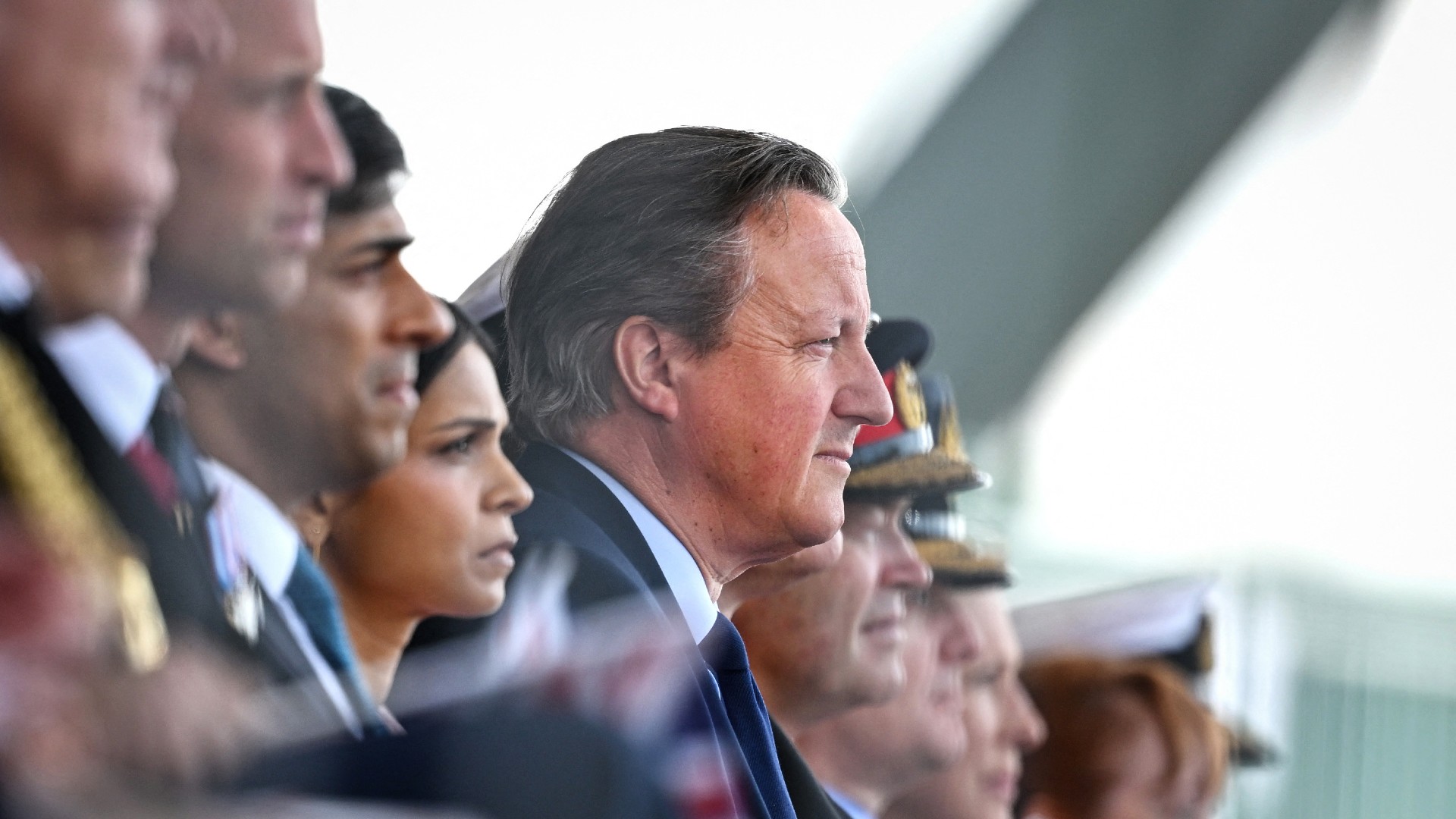
    International legal authorities have raised serious concerns about potential criminal liability for David Cameron, the United Kingdom’s former Foreign Secretary, following revelations about his alleged attempts to influence the International Criminal Court’s judicial processes. According to exclusive reporting from Middle East Eye, Cameron reportedly threatened Chief Prosecutor Karim Khan during an April 2024 telephone conversation, warning that Britain would withdraw from the Rome Statute and cease financial support if the court pursued arrest warrants for Israeli leaders.

    UN Special Rapporteur on Palestine Francesca Albanese characterized such threats as clear obstruction of justice, stating the situation demonstrates ‘incredible audacity’ from someone in a position of power. Professor Sergey Vasiliev of the Open University of the Netherlands noted that if confirmed, Cameron’s actions would represent a crossing of legal boundaries and demonstrate profound disrespect for the ICC’s judicial independence.

    The controversial exchange occurred while Prosecutor Khan’s team was preparing arrest warrants for Israeli Prime Minister Benjamin Netanyahu, Defense Minister Yoav Gallant, and three Hamas leaders. Despite Cameron’s intervention, the court formally approved the warrants six months later on November 21, charging Netanyahu and Gallant with war crimes and crimes against humanity in Gaza.

    Legal experts cite Article 70 of the Rome Statute, which prohibits offenses against the administration of justice, including intimidating court officials to influence their duties. Professor Tom Dannenbaum of the Fletcher School of Law and Diplomacy explained that while the UK maintains the right to withdraw from the ICC, conditioning such action on specific prosecutorial decisions constitutes improper political pressure that undermines judicial independence.

    The potential consequences for Cameron could include ICC arrest warrants and, if convicted, up to five years imprisonment in The Hague. Domestically, British law permits investigation under the ICC Act 2001 for obstruction of justice or misconduct in public office, offenses carrying maximum life sentences. However, experts note practical challenges including political considerations and possible functional immunity claims for actions taken in official capacity.

    The development occurs amidst heightened tensions between the ICC and Western governments, including recent US sanctions against court officials and Prosecutor Khan’s current leave of absence pending unrelated misconduct investigations.
  • Exclusive: David Cameron threatened to withdraw UK from ICC over Israel war crimes probe

    Exclusive: David Cameron threatened to withdraw UK from ICC over Israel war crimes probe

    The British government secretly threatened to withdraw funding and membership from the International Criminal Court should it proceed with arrest warrants against Israeli leaders, according to exclusive revelations from Middle East Eye.

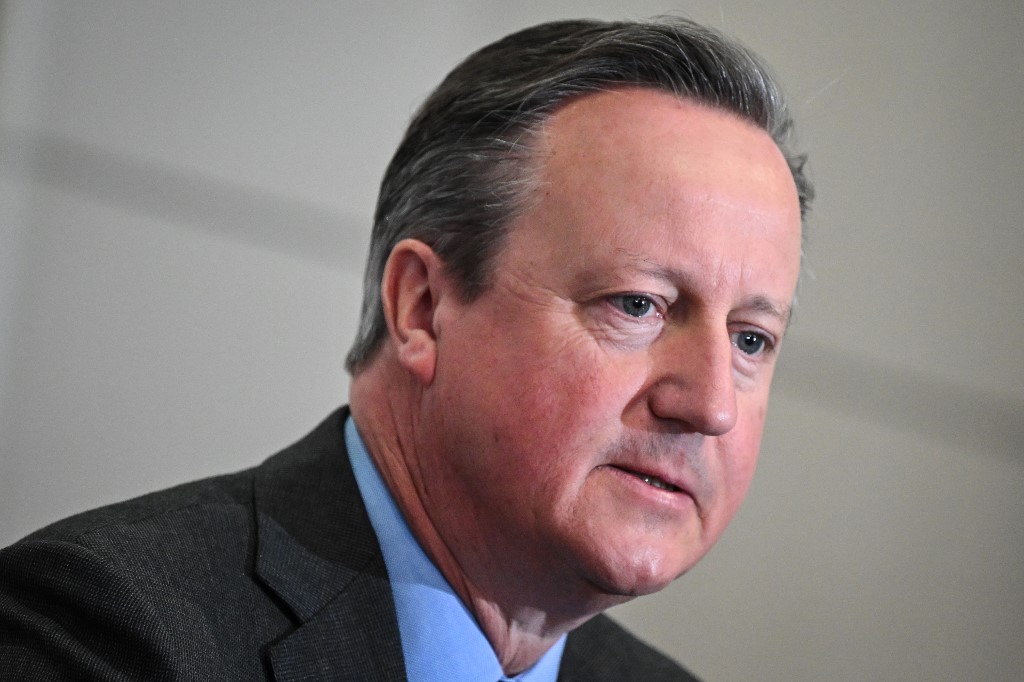
    Former Prime Minister and then-Foreign Secretary David Cameron delivered this ultimatum during a heated April 2024 telephone exchange with ICC Chief Prosecutor Karim Khan. The confrontation occurred while Khan was on official duties in Venezuela, with Cameron warning that targeting Israeli leadership would be equivalent to “dropping a hydrogen bomb” on diplomatic relations.

    Cameron explicitly stated that issuing warrants against Israeli Prime Minister Benjamin Netanyahu and Defense Minister Yoav Gallant would force the UK to “defund the court and withdraw from the Rome Statute” – the foundational treaty establishing the ICC. He argued that while prosecuting Russia for aggression against Ukraine was justified, targeting Israel during its self-defense operations following October 7 attacks was unacceptable.

    The foreign secretary aggressively interrupted Khan throughout the conversation, claiming the warrants would create “profound implications” within British politics and his Conservative Party. He accused the prosecutor of singling out Israel while ignoring other nations like Iran.

    Khan remained resolute despite the pressure, emphasizing that his office had engaged with Israel for three years without meaningful cooperation. He warned that UK withdrawal would signal the death of the rules-based international system, stating: “If this were to occur then we would have to accept that the rules-based system would be dead.”

    The prosecutor later expressed surprise at the blunt nature of the threats, noting that similar pressure applied to a national prosecutor would potentially constitute a criminal offense. He described his disappointment that senior officials would “debase themselves and their nation” through such tactics.

    The confrontation preceded Khan’s formal announcement of warrant applications on May 20, 2024, which also targeted Hamas leaders Yahya Sinwar, Ismail Haniyeh and Mohammed Deif. The Sunak government subsequently filed a formal objection challenging ICC jurisdiction over Israeli nationals, though the newly elected Labour government under Keir Starmer withdrew this objection in July.

    The ongoing tension reflects broader international divisions regarding the ICC’s Palestine investigation, with the United States imposing sanctions on Khan and four ICC judges while freezing the prosecutor’s assets. The court continues to maintain its independence despite these pressures, recently ordering that any future warrants related to Palestine investigations remain confidential.

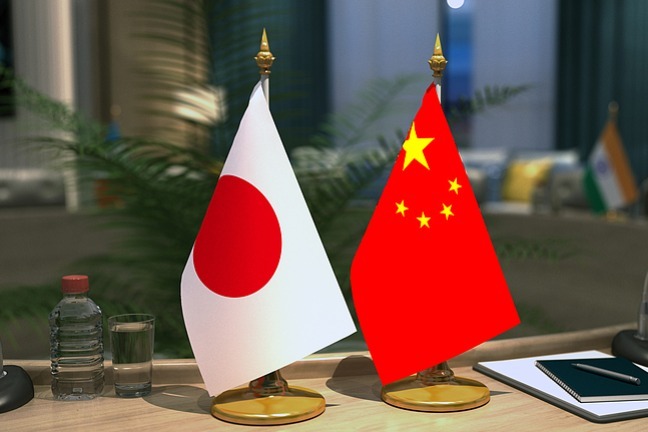
  • Wang: People-to-people ties can deepen China-Japan relations

    Wang: People-to-people ties can deepen China-Japan relations

    Foreign Minister Wang Yi highlighted the importance of fostering people-to-people connections to enhance China-Japan relations during a meeting with Yohei Kono, president of the Japanese Association for the Promotion of International Trade (JAPIT), in Beijing on Wednesday. Wang emphasized that such engagements have historically played a crucial role in advancing bilateral ties and remain vital in the current geopolitical climate. He praised Kono for his unwavering commitment to promoting friendship between the two nations, even during challenging times. Wang also underscored the significance of remembering historical lessons, particularly as this year marks the 80th anniversary of the victory in the Chinese People’s War of Resistance Against Japanese Aggression and the World Anti-Fascist War. He echoed Japanese Prime Minister Shigeru Ishiba’s recent remarks on the importance of learning from history to avoid repeating past mistakes. Kono reaffirmed JAPIT’s dedication to fostering friendly cooperation and stressed that while history cannot be altered, the future can be shaped through collective efforts. The discussions also touched on strengthening trilateral cooperation and cultural exchanges among China, Japan, and South Korea, with both sides agreeing on the need to integrate industrial and supply chains to counter de-globalization challenges. They emphasized the importance of mutual understanding and friendship among the people of the three nations to promote regional peace, stability, and prosperity.

  • China hopes Japan will reflect on its historical crimes, adhere to path of peaceful development: FM spokesperson

    China hopes Japan will reflect on its historical crimes, adhere to path of peaceful development: FM spokesperson

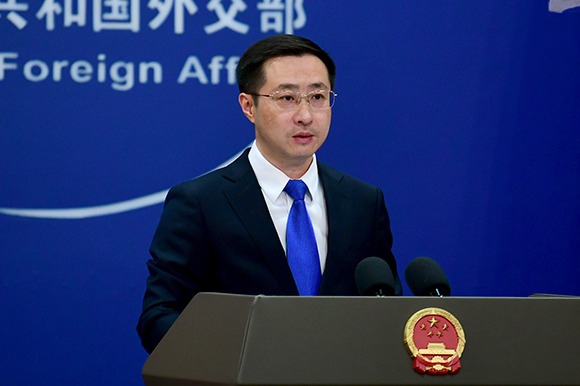
    In a recent statement, China has called on Japan to deeply reflect on its historical crimes, learn from the past, and steadfastly adhere to the path of peaceful development. This appeal was made by Chinese Foreign Ministry spokesperson Lin Jian during a routine press briefing on Wednesday. Lin’s remarks were in response to a recent statement by Japanese Prime Minister Shigeru Ishiba, who emphasized the importance of historical reflection and the avoidance of past war mistakes. Lin noted that China places significant importance on Ishiba’s position, recalling that during a meeting between Chinese and Japanese leaders in Lima, Peru, in November 2024, Ishiba had expressed Japan’s commitment to facing history squarely and looking toward a peaceful future. Lin stressed that adopting a correct historical stance, showing remorse, and apologizing for past aggressions are crucial for Japan’s reintegration into the international community. These actions not only affect the political foundation of China-Japan relations but also Japan’s relationships with its neighbors and its global image. Lin urged Japan to completely sever ties with any attempts to whitewash or obscure its history of aggression, take a responsible stance toward history, and commit to peaceful development through concrete actions to regain the trust of its Asian neighbors and the international community.

  • Li: Expand trade ties with Japan

    Li: Expand trade ties with Japan

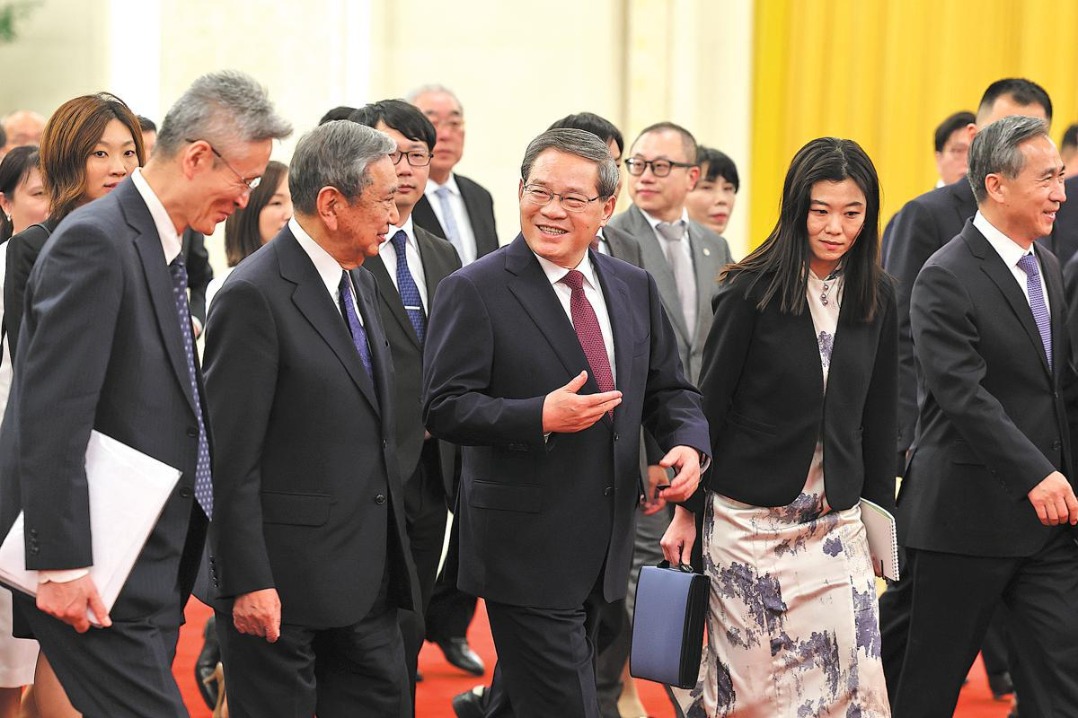
    Premier Li Qiang emphasized the importance of expanding trade and investment between China and Japan during a meeting with a Japanese business delegation in Beijing. The meeting, held at the Great Hall of the People, was led by Yohei Kono, president of the Japanese Association for the Promotion of International Trade. Premier Li highlighted the strategic and mutually beneficial relationship between the two nations, recalling the recent agreement between President Xi Jinping and Japanese Prime Minister Shigeru Ishiba to advance bilateral ties. He stressed the need for proactive actions to strengthen political mutual trust and people-to-people connections, urging both countries to manage differences constructively and promote stable bilateral relations. Premier Li also pointed out the challenges posed by the evolving international landscape and called for leveraging the industrial complementarity and technological expertise of both nations to explore new areas of cooperation, such as the digital economy, green economy, and biopharmaceuticals. He reaffirmed China’s commitment to high-standard opening-up and welcomed Japanese enterprises to expand their presence in China. The meeting followed the sixth China-Japan High-Level Economic Dialogue in Tokyo, where both sides reached a 20-point consensus to deepen economic cooperation. Kono acknowledged China as Japan’s most important economic partner and emphasized the need for enhanced communication to safeguard multilateralism and the free trade system. Since the normalization of diplomatic relations in 1972, bilateral trade has grown over 300-fold, with accumulated investment nearing $140 billion.

  • Fallen WWII Chinese laborers honored in Japan

    Fallen WWII Chinese laborers honored in Japan

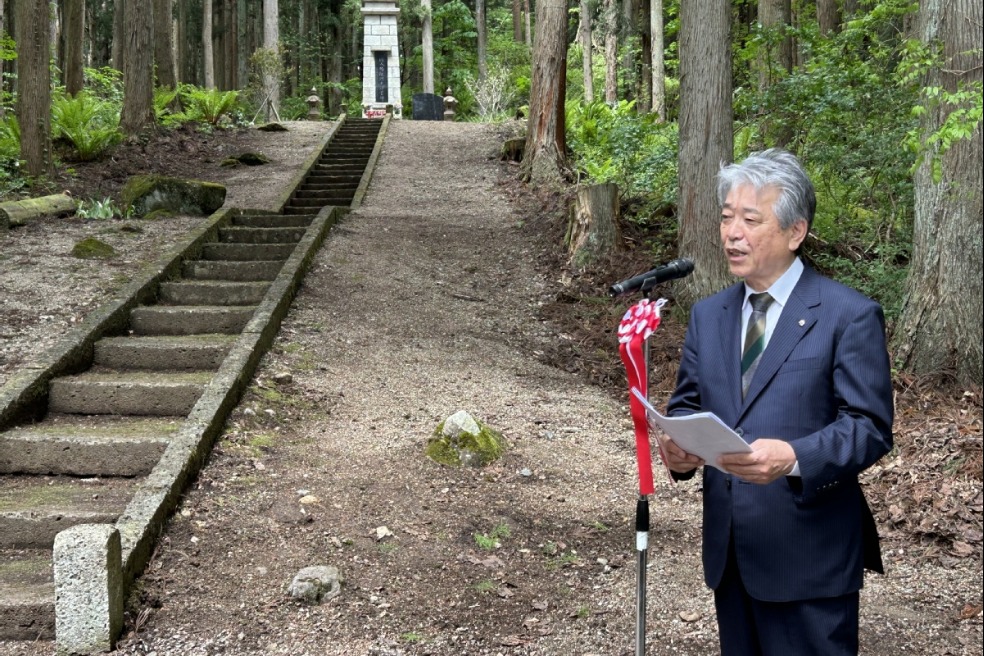
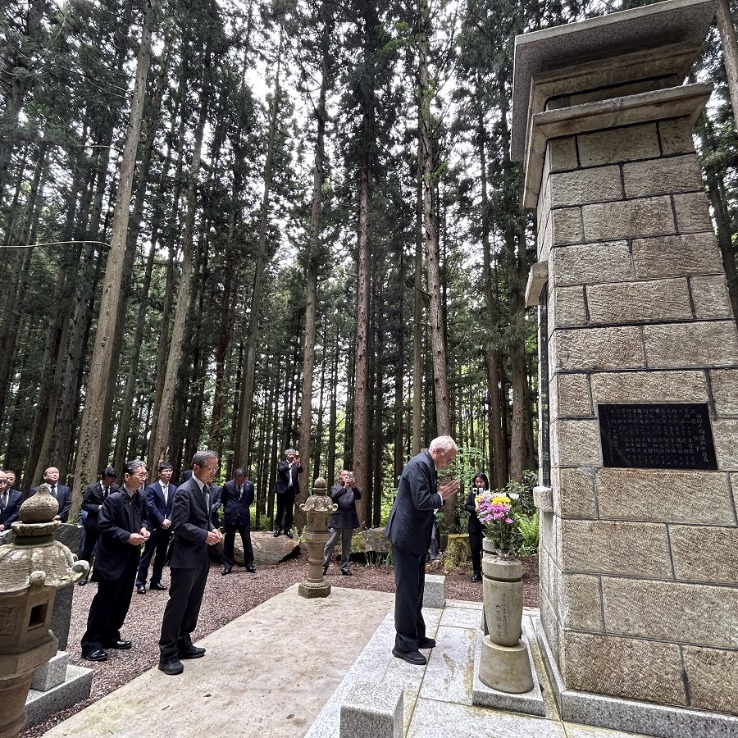
    In a poignant ceremony held in Inawashiro, Fukushima Prefecture, Japan, diplomats and advocates for Japan-China friendship gathered to honor the memory of Chinese laborers who perished during World War II. The event, which took place on May 18, marked the completion of the renovation of a monument dedicated to these fallen workers and included a commemorative tree-planting ceremony. Historical records reveal that near the end of WWII, approximately 40,000 Chinese individuals were forcibly brought to Japan, enduring brutal labor conditions and inhumane treatment, leading to the deaths of nearly 7,000 people. Among them, about 1,000 were sent to Fukushima, where 25 lost their lives due to persecution. The monument, initially unveiled in 1971 and expanded in 1988, underwent a significant renovation in 2023, supported by Japan-China friendship organizations. Cui Weilei, Chinese consul general in Niigata, emphasized the importance of remembering history not to perpetuate hatred but to learn from the past and foster a peaceful future. He urged Japan to reflect on its historical responsibilities and reject the revival of militarism. Hisashi Endou, president of the Fukushima Prefectural Japan-China Friendship Association, highlighted the spirit of gratitude and reconciliation, noting that the monument was built with the support of a repatriated Japanese POW. The ceremony also saw the participation of Shinji Oguma, a member of Japan’s House of Representatives, who stressed the significance of a strong Japan-China relationship for regional and global peace. Wang Jiangkun, a PhD graduate from the University of Aizu, expressed hope that younger generations would continue to build a future of understanding and cooperation between the two nations.

  • Japan-China friendship advocates mark renovation of monument honoring WWII Chinese laborers

    Japan-China friendship advocates mark renovation of monument honoring WWII Chinese laborers

    In a poignant ceremony held on May 18 in Inawashiro, Fukushima Prefecture, diplomats and advocates for Japan-China friendship gathered to honor the completion of the renovation of a monument dedicated to Chinese laborers who perished during World War II. The event, which included a commemorative tree-planting ceremony, served as a reminder of the shared history and a renewed commitment to fostering peace between the two nations.

    Historical records reveal that towards the end of World War II, approximately 40,000 Chinese individuals were forcibly taken to Japan and subjected to harsh forced labor, resulting in the deaths of 6,830 people. Among these, about 1,000 were sent to Fukushima, where 25 died under inhumane conditions. In 1971, a 17-foot-tall monument was erected in Inawashiro to mourn these souls and stand against militarism. The monument underwent its first expansion in 1988 and recently completed a second major renovation in 2023, supported by Japan-China friendship organizations.

    Participants at the ceremony emphasized the importance of learning from history, looking towards the future, and working together to safeguard peace. They also expressed their support for the continued improvement of China-Japan relations. The event was attended by notable figures, including Hisashi Endou, president of the Fukushima Prefectural Japan-China Friendship Association, who delivered a speech during the ceremony.

    The renovation of the monument and the commemorative ceremony underscore the ongoing efforts to acknowledge past injustices and build a foundation for a peaceful and cooperative future between Japan and China.

  • China urges Japan to ensure the quality of aquatic products

    China urges Japan to ensure the quality of aquatic products

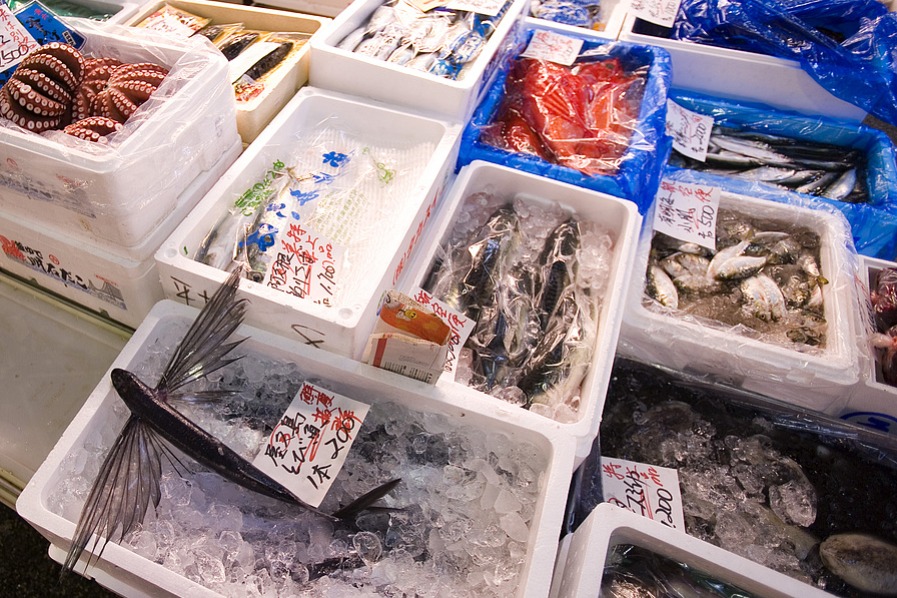
    China has formally urged Japan to implement robust measures to guarantee the safety and quality of its aquatic products, reiterating its steadfast opposition to Japan’s unilateral discharge of Fukushima nuclear-contaminated water. The call was made during a technical exchange between China’s General Administration of Customs and Japanese officials on Thursday, as confirmed by Foreign Ministry spokesman Lin Jian. The discussions focused on enhancing inspection and monitoring protocols to ensure the safety of aquatic products. Lin emphasized that any resumption of aquatic product imports from Japan must be grounded in continuous, independent scientific data collected by China. He further stressed that Japan must take concrete actions to ensure its exports comply with Chinese legal and regulatory standards. Japan, in response, acknowledged China’s concerns and reaffirmed its commitment to international monitoring and independent sampling to meet Chinese requirements. Lin reiterated China’s unwavering stance against the unilateral ocean discharge of nuclear-contaminated water, pledging continued collaboration with the international community to ensure strict oversight of such activities.

  • China rips Japan over aircraft’s intrusion

    China rips Japan over aircraft’s intrusion

    China has issued a stern protest to Japan following the unauthorized entry of a Japanese civilian aircraft into the airspace over the Diaoyu Islands. The incident, which occurred on Saturday, has prompted Beijing to demand an immediate halt to such provocative actions, warning that they could jeopardize the stability of bilateral relations. Liu Jinsong, Director-General of the Asian Affairs Department at China’s Foreign Ministry, conveyed the protest to Yokochi Akira, the Chief Minister of the Japanese Embassy in Beijing, emphasizing the gravity of the situation. The Chinese Coast Guard swiftly responded by deploying ship-based helicopters to warn and expel the intruding aircraft during a routine patrol in the area. Japan’s Ministry of Defense, however, accused Chinese helicopters of violating its territorial airspace—a claim vehemently denied by Zhang Xiaogang, a spokesman for China’s Ministry of National Defense. Zhang reiterated that the Diaoyu Islands and their affiliated islets are an inherent part of Chinese territory, and any unauthorized entry constitutes a serious breach of China’s sovereignty. He defended the Coast Guard’s actions as ‘completely legitimate and legal,’ urging Japan to restrain its citizens and avoid further provocations. Both Liu Jinsong and China Coast Guard spokesman Liu Dejun emphasized that China will continue to take all necessary measures to safeguard its territorial integrity and maritime rights. The incident underscores the ongoing tensions between the two nations over the disputed islands, with China calling for Japan to act responsibly to maintain regional stability.

  • High-level exchanges seen as positive

    High-level exchanges seen as positive

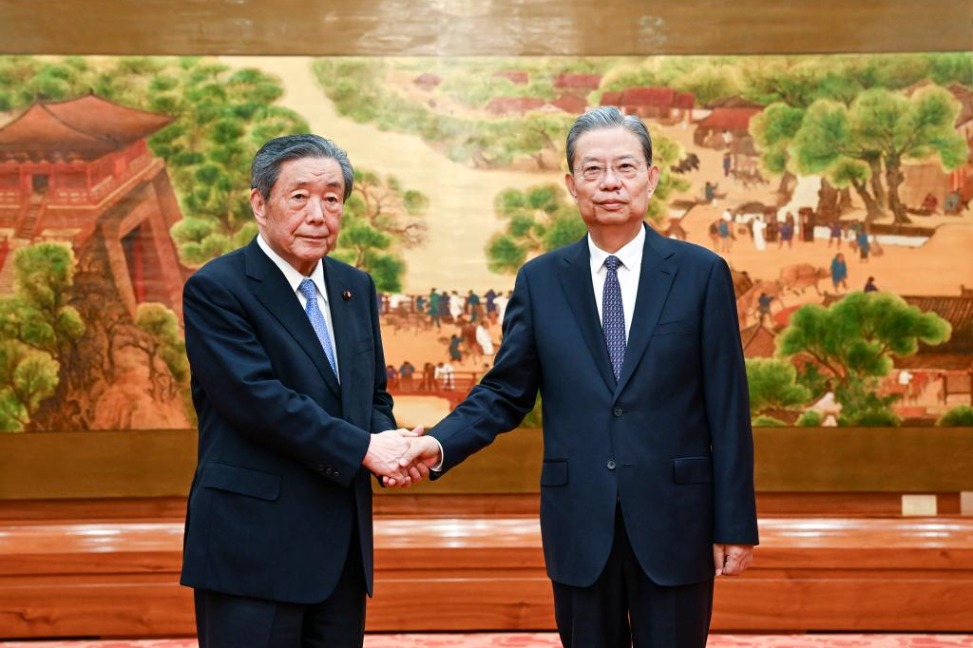
    Recent high-level visits by Japanese political figures to China have been interpreted as a strategic move to bolster economic cooperation and mitigate risks posed by Washington’s unilateral and protectionist policies, according to analysts. These visits, led by prominent figures such as Hiroshi Moriyama, chairman of the Japan-China Friendship Parliamentarians’ Union and secretary-general of Japan’s Liberal Democratic Party, underscore a shared commitment to enhancing bilateral relations. Moriyama, accompanied by a bipartisan delegation, met with Zhao Leji, chairman of China’s National People’s Congress Standing Committee, on April 29, 2025. During the meeting, Zhao emphasized the importance of win-win cooperation and long-term bilateral development. Moriyama echoed this sentiment, expressing a willingness to strengthen trade and cultural exchanges while addressing differences constructively. The visits follow a trip by Komeito party leader Tetsuo Saito and his delegation earlier in April, further highlighting Japan’s bipartisan consensus on fostering ties with China. Analysts, including Da Zhigang of the Heilongjiang Provincial Academy of Social Sciences, noted that these interactions aim to counterbalance the disruptive effects of US tariff policies and promote regional stability. Xiang Haoyu of the China Institute of International Studies added that while these visits signal a positive shift, underlying issues such as political mistrust and fragile public sentiment remain challenges. Both sides have pledged to uphold multilateralism and strengthen regional collaboration, particularly in Southeast Asia, to address global economic uncertainties.